
Creating Inclusive Learning Environments with Games
Discover how to start creating inclusive learning environments with game-based tools. A practical guide for educators on fostering genuine inclusion.
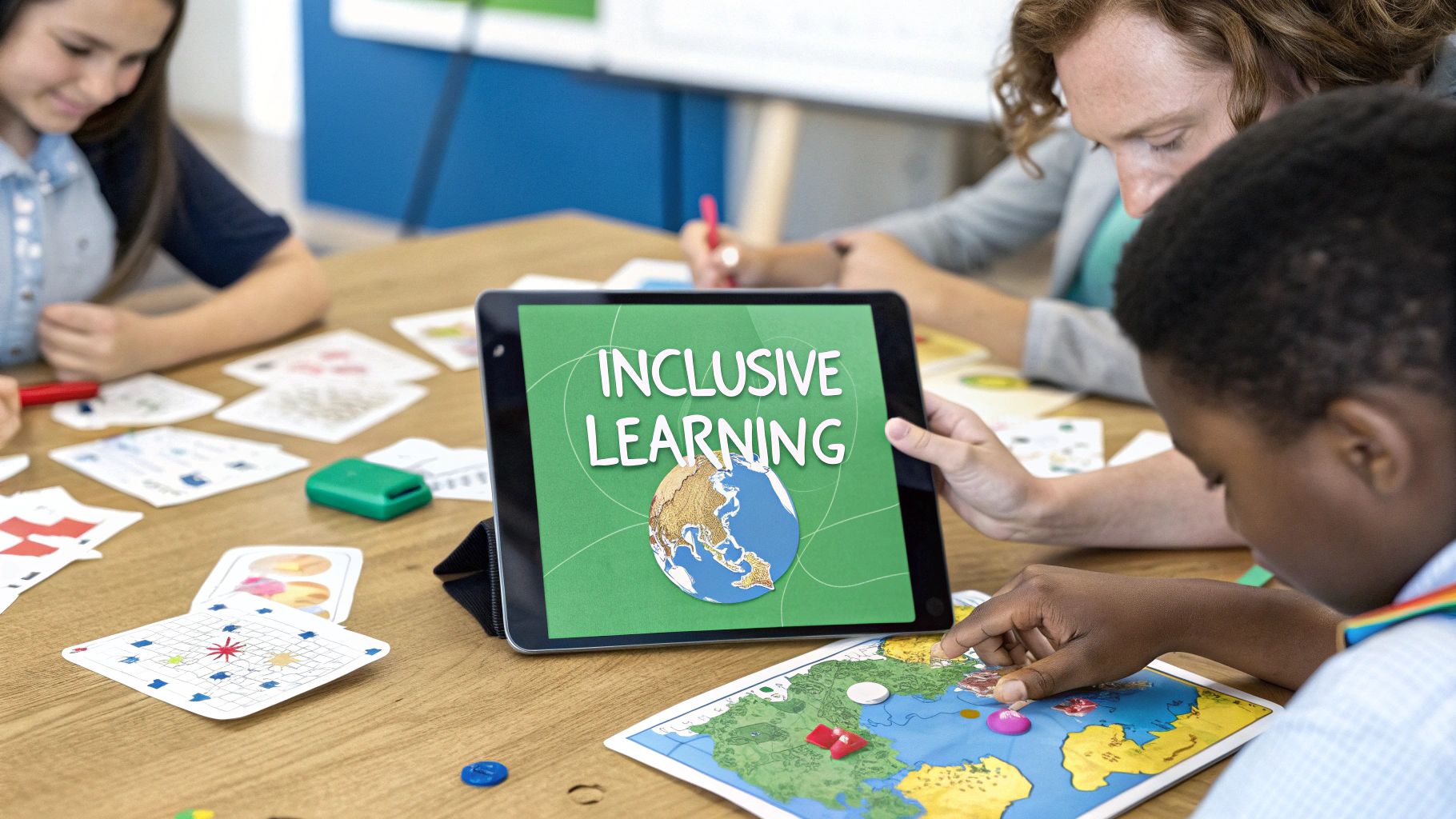
When we talk about creating an inclusive classroom, we're aiming for something much deeper than just physical access. It’s about building a space where every single student's cognitive, social, and emotional needs are not only met but nurtured.
The goal is to make sure each learner feels seen, supported, and appropriately challenged. It's about cultivating a genuine sense of belonging.
What an Inclusive Classroom Really Looks Like
Before we jump into game-based strategies, let's get on the same page about what an inclusive classroom truly is. It's not about buzzwords or a checklist. It's an environment intentionally designed to dismantle barriers before they can ever affect a student.
In this kind of space, diversity in ability, background, and perspective isn't just tolerated—it's celebrated as a core strength of the learning community.
This requires a fundamental shift in how we approach lesson planning. Instead of creating a one-size-fits-all lesson and then scrambling to retrofit it for a few students, the lesson itself is built on a foundation of flexibility and choice from the very beginning. This proactive approach is the heart of Universal Design for Learning (UDL), a framework that is absolutely essential for creating learning experiences where everyone can succeed.
The results of this mindset shift speak for themselves:
- Boosted Engagement: When students see their own experiences and identities reflected in the curriculum, their motivation to jump in and participate skyrockets.
- Improved Academic Outcomes: A supportive and predictable environment lowers learning anxiety, freeing up students’ cognitive resources to focus on the material. The natural result is better performance.
- Enhanced Social-Emotional Skills: By interacting with peers from all walks of life, students build critical life skills like empathy, collaboration, and mutual respect.
To really nail this down, it helps to think about the core pillars that hold up an inclusive learning space.
The Pillars of an Inclusive Classroom
This table breaks down the essential elements for building an inclusive learning space, offering a quick reference for educators.
| Pillar | Description | Example In Action |
|---|---|---|
| Proactive Design | Lessons are built from the ground up with learner variability in mind, not retrofitted later. | A geography project offers students the choice to present their findings as a written report, a slideshow, or a short video. |
| Sense of Belonging | Every student feels like a valued and respected member of the community. | The classroom library features books with characters from diverse cultural backgrounds, family structures, and ability levels. |
| High Expectations | All students are challenged with rigorous, grade-level content and given the support to meet those expectations. | A teacher uses scaffolding techniques, like graphic organizers, to help a struggling reader access a complex historical text. |
| Shared Responsibility | Inclusion isn't just the job of one teacher; it's a collective commitment from the entire school community. | General and special education teachers co-plan lessons to ensure all strategies are integrated seamlessly. |
Ultimately, these pillars work together to create an environment where every student has the opportunity to thrive.
Beyond the Classroom Walls
This push for inclusion isn't just happening in individual schools; it's a global imperative. But we have a long way to go. Millions of children around the world still face systemic hurdles that prevent them from getting an equitable education.
In fact, as of 2020, only about 10% of countries had laws that fully guaranteed inclusion in education. You can dive deeper into these global educational challenges on the World Bank's website.
An inclusive classroom is one where students don't have to ask for what they need; the environment is already designed to provide it. It shifts the focus from fixing the student to improving the system.
The data below paints a clear picture of where we stand and where we need to focus our efforts.
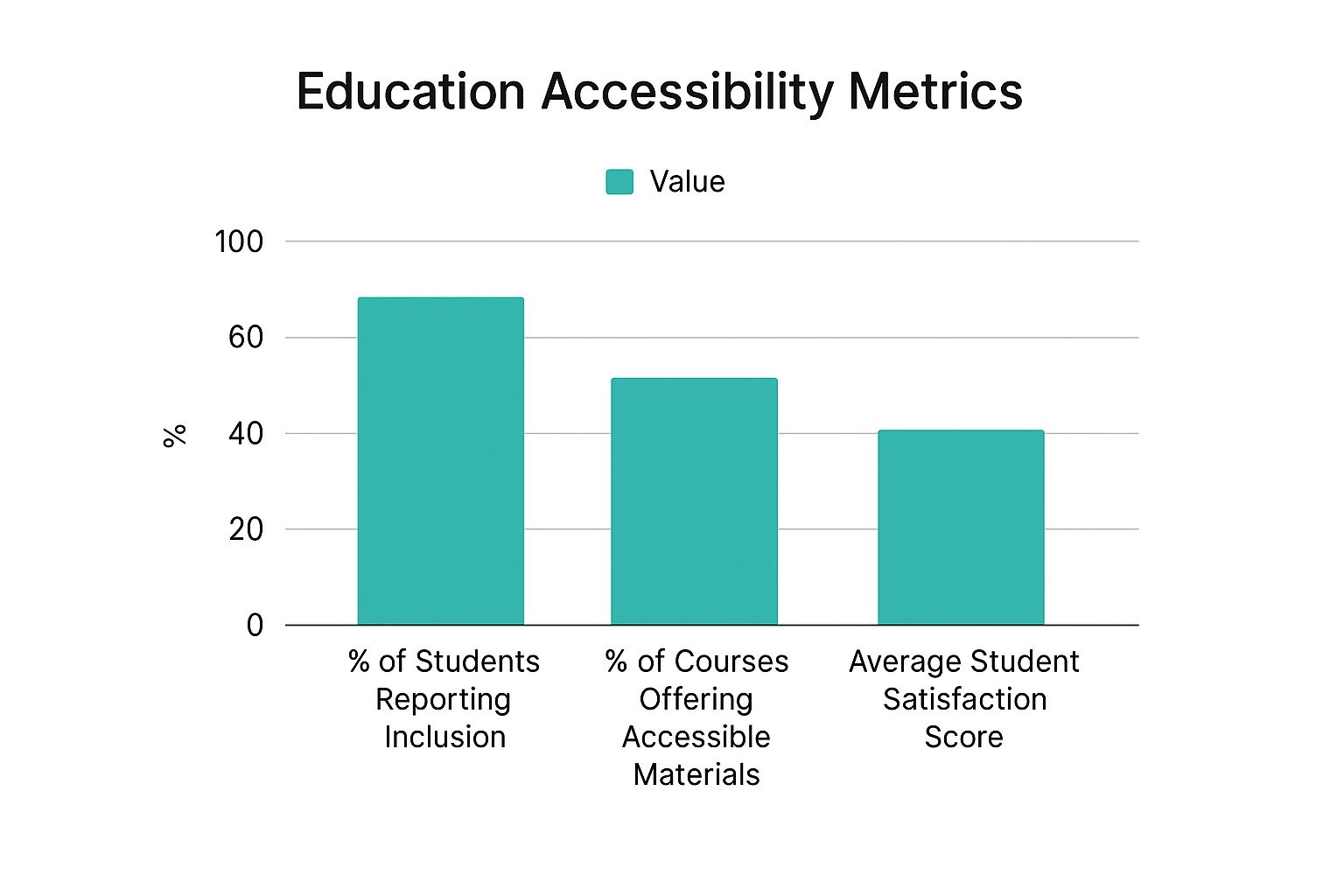
There's a noticeable gap between how included students feel and whether they actually have access to the materials they need to succeed. This is precisely the gap we can start to close with thoughtful, engaging, and accessible strategies—like the game-based approaches we're about to explore.
Designing Games for Every Learner in Mind
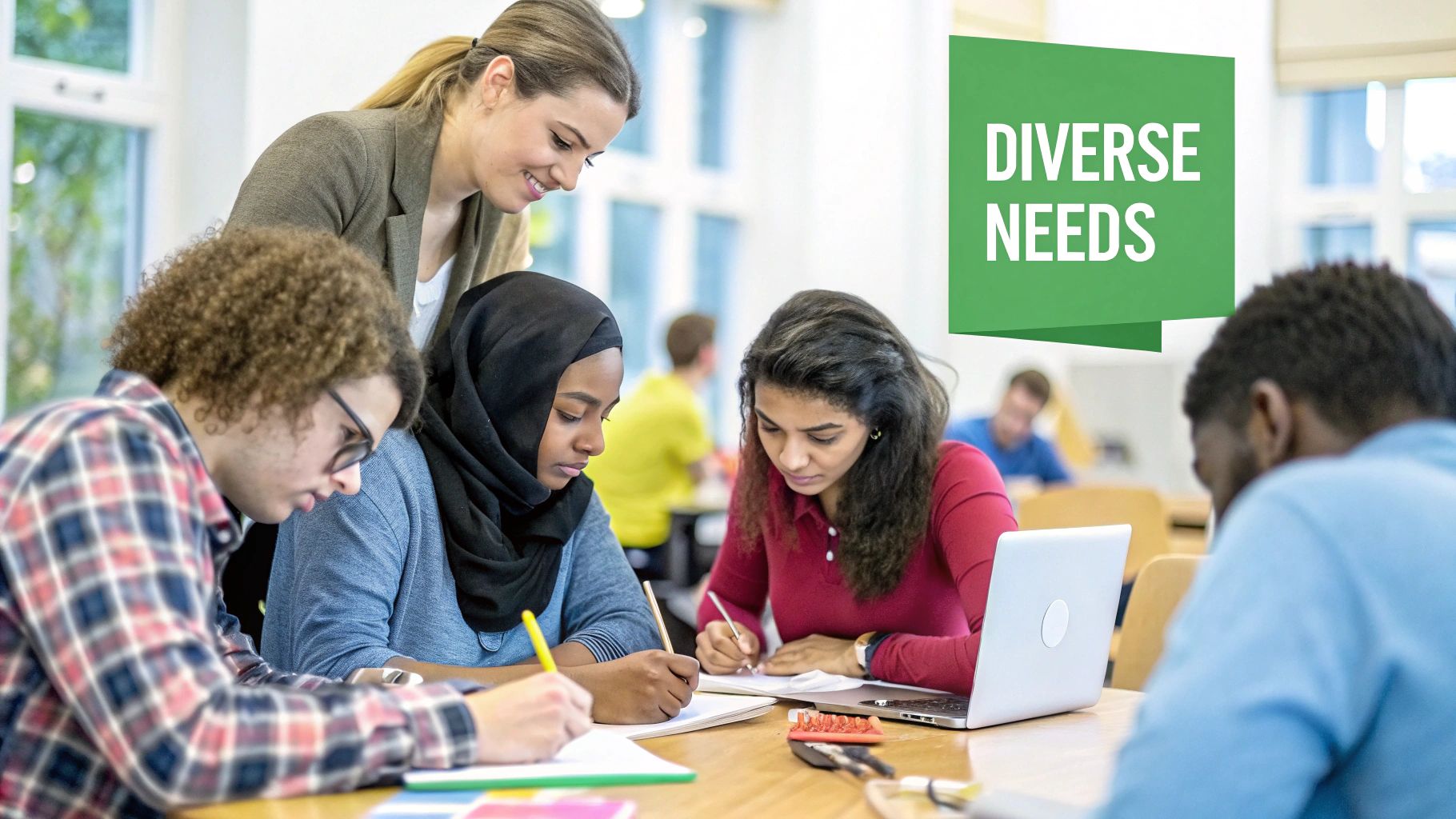
Great game-based learning doesn't just happen when a student clicks "start." It begins way before that, with thoughtful design that bakes inclusivity right into the lesson's DNA.
When we talk about creating inclusive learning environments, it's all about anticipating the different needs in your classroom from the very beginning—not scrambling to adapt later.
Using a platform like EarthChasers, you can ditch the old one-size-fits-all lesson plan. Instead, you can build flexible goals with multiple routes to success. This way, every student feels engaged and confident, not overwhelmed.
Establishing Tiered Learning Objectives
One geography lesson can actually do a few different things at once. By setting tiered objectives, you can establish a core goal for everyone while offering different levels of complexity within the same game. It’s a simple way to make sure every student finds the right amount of challenge.
Let's say you're doing an EarthChasers quest on global trade. Your tiered objectives could look something like this:
- Tier 1 Foundational: Students simply identify the seven continents and major oceans on the game map.
- Tier 2 Application: Students track a specific trade route between two continents, calling out key countries and landforms they pass.
- Tier 3 Analysis: Students dig into in-game data to analyze how a feature like the Suez Canal impacts the time and cost of that same trade route.
See what happened? Everyone is playing the same fun game, but their missions are fine-tuned to their skill level. This pushes everyone to grow without making anyone feel singled out.
Anticipating and Supporting Diverse Needs
A truly inclusive game is designed for the real mix of learners you have in front of you. It's all about being proactive. Before you launch a lesson, take a minute to think about the potential hurdles and build the solutions right into the activity.
Here are a few practical strategies to consider:
- Language Support: For multilingual learners, you could pre-teach a few key terms like "longitude," "hemisphere," or "topography." A shared digital glossary they can pull up during the game is also a fantastic resource.
- Processing Speed: Some kids just need more time to think, and that’s perfectly fine. With EarthChasers, you can easily skip the timed challenges and focus on goals based on exploration and discovery. This lets students move at a pace that works for them.
- Executive Functioning: For students who get overwhelmed by big tasks, a simple checklist can be a game-changer. Break down a big quest into smaller, bite-sized objectives.
When you're planning, just ask yourself this: "What might stop a student from succeeding here, and how can I remove that barrier before we even start?" This simple shift in mindset is the absolute core of inclusive design.
By embedding these supports from the start, you free students up to focus on learning geography instead of wrestling with the mechanics of the game. You can find even more inspiration by exploring other educational technology tools for teachers. This kind of proactive planning is what turns a fun game into a genuinely powerful and fair learning experience for every single student.
Setting Up Your Physical and Digital Space
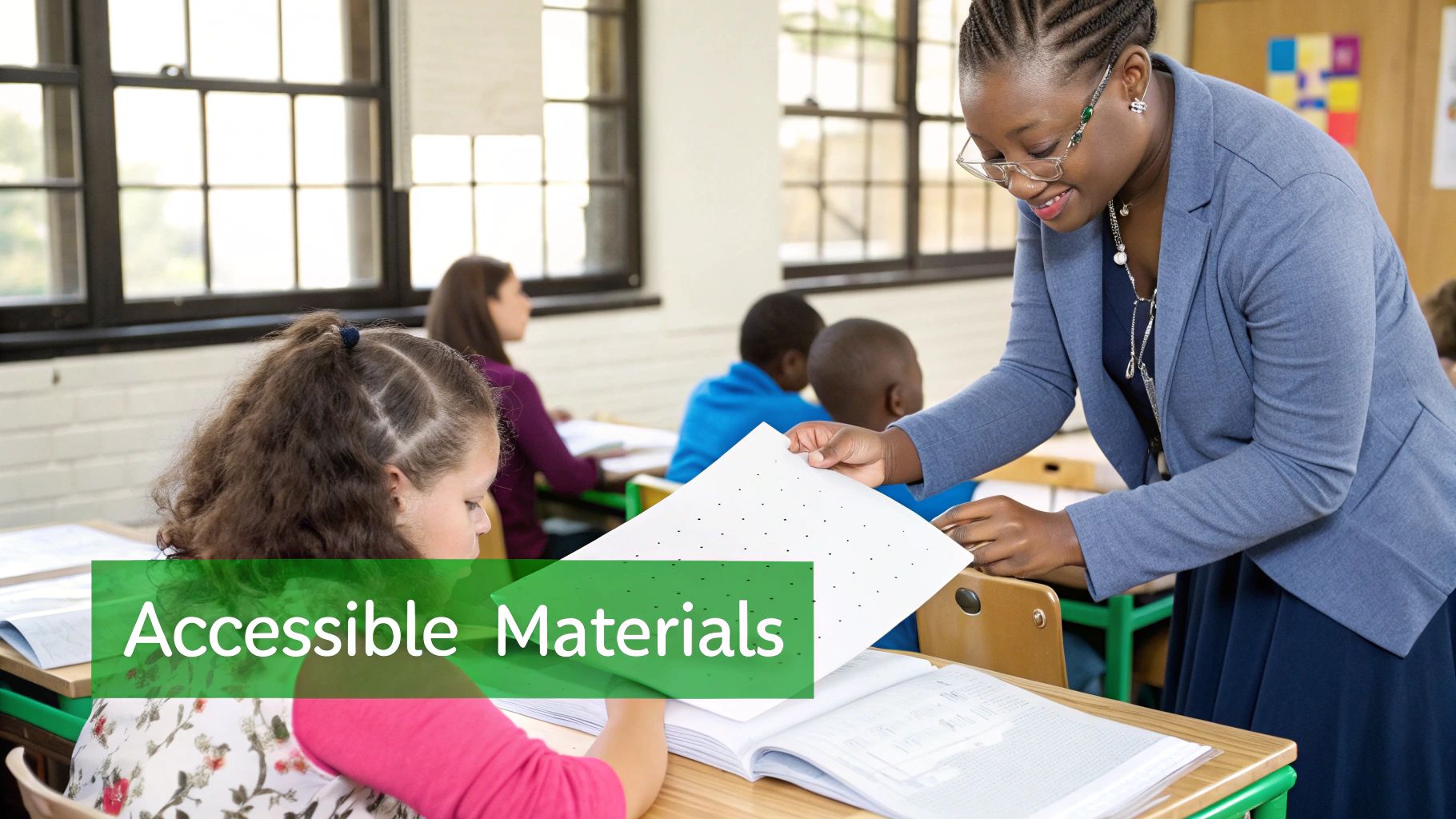
Even the most brilliantly designed lesson can fall flat if the classroom itself creates barriers. Your physical and digital setup is the stage where the learning unfolds. It needs to be just as thoughtfully planned as the content.
The goal here is to create a seamless experience where the environment empowers every single student. This means arranging your physical space to support the dynamic energy of an EarthChasers mission while making sure the digital tools are accessible to everyone.
Arranging Your Physical Classroom
Game-based learning isn't static. One minute, students might be on a solo mission requiring deep focus; the next, they're huddled with a team hashing out a strategy. Your classroom layout needs to make these shifts feel natural and effortless.
Flexible seating is your best friend here. Forget the traditional rows of desks and think about arrangements that can be reconfigured on the fly.
- Collaboration Pods: Small clusters of desks or tables are perfect for encouraging teamwork during group quests.
- Quiet Zones: Designate a corner with comfortable seating like beanbags for students who need a low-stimulation area to concentrate.
- Standing Desks: Offer options for students who think better when they can move around a bit.
An adaptable space is a cornerstone of an inclusive learning environment. As research from frameworks like The World Bank's RIGHT+ framework shows, elements like movable furniture are proven to foster more active and engaging learning.
Your classroom setup sends a powerful message. A flexible, accessible space tells every student, "You belong here, and this room is designed for you to succeed."
This way, the room itself becomes a tool that supports your lesson's goals instead of getting in the way.
Optimizing the Digital Experience
Just like the physical space, your digital tools must be set up to support all learners. Many students rely on specific accessibility features to fully engage with digital content like EarthChasers.
Before you launch into a game, take a few minutes to make sure these features are enabled and, just as importantly, that students know how to use them. This proactive step removes potential frustration and lets them dive right into the learning.
Key Digital Accessibility Features to Enable
| Feature | Who It Helps | Why It Matters |
|---|---|---|
| Text-to-Speech | Students with dyslexia or other reading difficulties. | Lets learners hear instructions and in-game text read aloud, boosting comprehension. |
| High-Contrast Mode | Students with visual impairments. | Makes text far more readable by using distinct color combinations, which reduces eye strain. |
| Customizable Controls | Students with physical disabilities. | Enables learners to remap keys or use other input devices for much easier navigation. |
By taking the time to set up both your physical and digital spaces beforehand, you're building a solid foundation of support. It's a non-negotiable step for creating a classroom where every student has the tools they need to jump in, participate, and truly thrive.
Guiding Gameplay as an Inclusive Facilitator
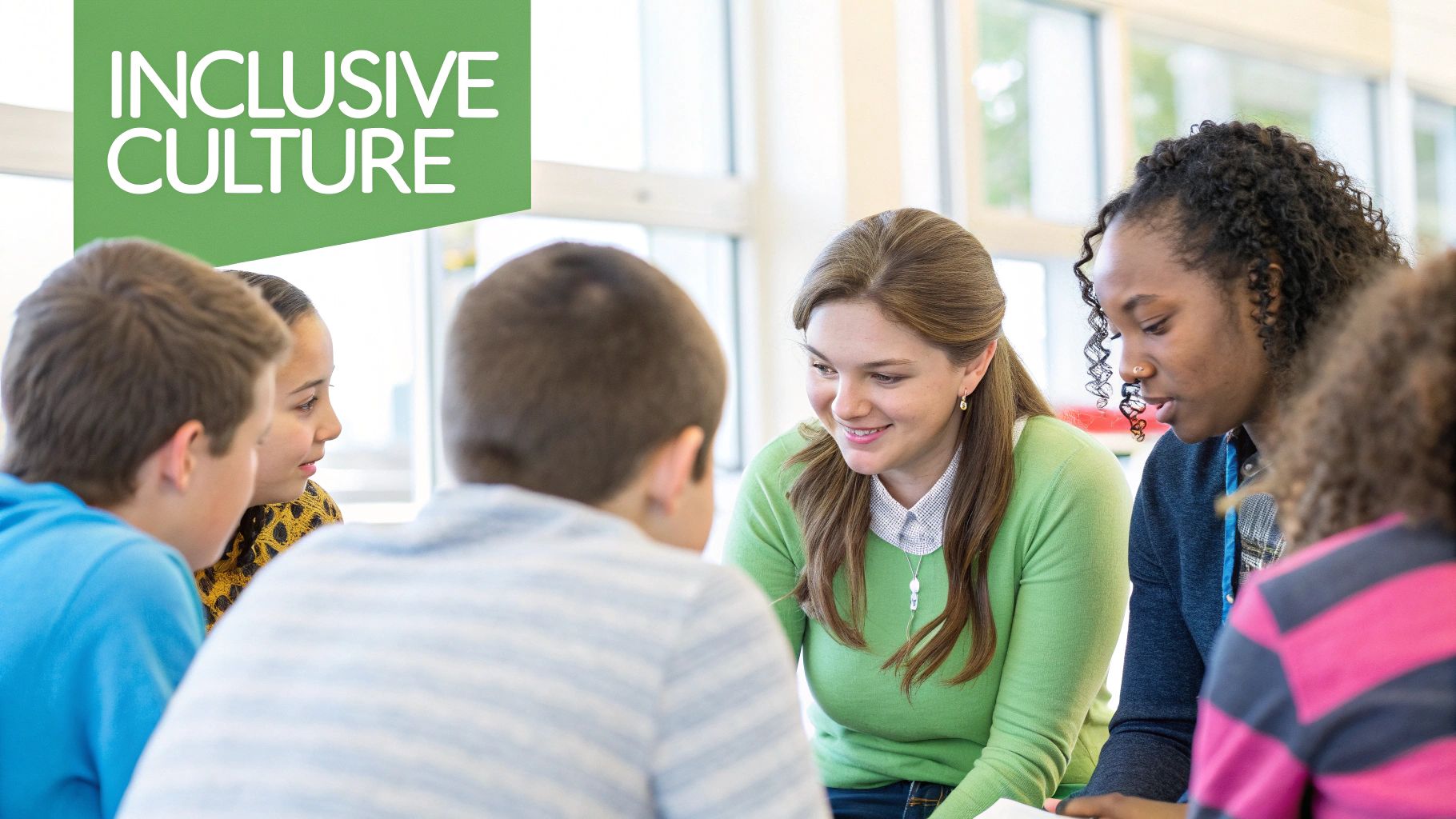
Hitting "start" on the game is just the beginning. The real magic happens when you step back from being the instructor and become a hands-on facilitator. It’s this shift that turns a fun activity into a powerful and inclusive learning moment.
Your job now is to observe, support, and nudge—without taking over. Keep an eye out for the subtle cues that a student is stuck, getting frustrated, or zoning out. A well-timed, thoughtful question from you can transform a moment of struggle into an unforgettable "aha!" breakthrough. This is what active facilitation is all about.
Strategic Grouping for Collective Success
How you group your students can make or break the collaborative vibe of the entire lesson. Don't just let kids pick their usual friends. Instead, think like a coach and build purposeful teams that balance different strengths.
Try pairing a student who's a natural at spatial reasoning and map navigation with one who excels at research and critical thinking. This creates a fantastic dynamic where both learners feel they have a crucial role. One student might be the "pilot," navigating the in-game world, while the other acts as the "navigator," deciphering clues and logging key discoveries.
When you group students this thoughtfully, everyone gets a chance to shine, building both their confidence and their ability to rely on one another. You can dive deeper into these dynamics in our guide on what is interactive learning.
Prompting Without Giving Away the Answer
When a group hits a wall, the temptation to just give them the answer is strong. Resist it. Your goal is to guide them toward their own discovery with strategic questions. This is how you build real problem-solving skills and resilience.
Here are a few go-to prompts I've found incredibly effective:
- "Talk me through what you've tried so far. Let's retrace your steps."
- "Is there anything in the mission briefing you might have missed?"
- "What does your teammate think? Have you brainstormed all the possibilities together?"
Guiding questions are a powerful tool. They tell students, "I trust you to figure this out." You stop being the keeper of answers and become the coach who helps them find their own path.
This coaching mindset creates a classroom culture where students feel safe enough to take risks, make mistakes, and, most importantly, learn from them.
Bridging Gaps in Teacher Preparation
Let’s be honest: facilitating this kind of dynamic, student-led learning isn't something most of us were formally trained to do. And it's not just a local issue; it's a global one. UNESCO reports that around 40% of countries provide no teacher training specifically on inclusion, which directly impacts our ability to support every type of learner.
By consciously practicing facilitation techniques—like smart grouping and guided questioning—you are taking a huge step to bridge that gap in your own classroom. You're not just playing a game; you're actively building the skills needed to make game-based learning a truly effective and equitable tool for every single student in your care.
Rethinking Assessment for Growth and Inclusion
Embedded content
Let’s be honest, traditional assessment can sometimes feel like a final verdict. It's the red pen that only marks what a student got wrong, a single snapshot in time.
But when you're using a dynamic, game-based tool like EarthChasers, assessment needs to be about growth, not just grades. It's a chance to see how each student is thinking and give them feedback that actually helps them take the next step. In an inclusive classroom, we have to move past "Did they get it right?" and start asking, "What does their process tell me?"
Unlocking In-Game Data for Formative Feedback
Instead of waiting for a big test at the end, you can pull rich, formative data right from the gameplay itself. This isn't about watching over their shoulder; it's about thoughtful observation. You’re looking for patterns that reveal each student’s unique learning journey so you can offer support when it matters most.
Think about the clues hidden in their gameplay:
- Mission Completion Times: Is a student blazing through the challenges? They might be ready for something more complex. If they're taking their time, it could signal a specific concept that needs a bit more clarification.
- Choice Pathways: Did a team take the most direct route, or did they meander and explore? This tells you so much about their problem-solving style. Are they methodical and linear, or more creative and curious?
- Help Requests: When a student asks for help on a specific task, it's a direct signal of where they're getting stuck. This is gold for targeted instruction.
With this kind of intel, you can provide immediate, meaningful feedback. A quick comment like, "I saw your team took a really clever route through the Andes—what was your strategy?" is worlds more powerful than a simple percentage score. It makes the learning process visible and validates their effort.
Moving Beyond the Multiple-Choice Test
The end of an EarthChasers mission is the perfect opportunity to ditch the bubble sheets and embrace assessments that let every student shine. This approach truly honors the fact that there's more than one way to be smart.
Assessment in an inclusive classroom isn't a stressful final exam. It's an empowering part of the learning cycle that helps students see their own progress and feel proud of what they've accomplished.
Here are a few ideas to get you started, making assessment feel as engaging as the game itself:
- Create a Travelogue: Ask students to write a journal or film a short video diary from the perspective of an explorer on their virtual journey. They can detail the landmarks they saw, the cultures they learned about, and the challenges they overcame.
- Team Debrief Presentation: Have each group present their findings in a way that suits them. One team might build a slideshow, another might draw a detailed map of their route, and a third could even perform a short skit about their adventure.
- Design a "DLC": For a real creative challenge, ask students to design a "downloadable content" expansion for the game. They can outline new missions, clues, and objectives based on their own research.
These methods turn assessment into an authentic, and even fun, conclusion to the lesson. By offering choice, you transform evaluation into a celebration of learning. For more ideas on this, check out our guide on how to make learning fun for every single student.
Embedding Inclusion into Your Everyday Classroom Culture
An amazing game-based lesson is a fantastic start, but the real magic happens when you weave those inclusive principles into the very fabric of your classroom. True inclusion isn't a one-time event; it's a daily practice.
The goal is to make the supportive, collaborative, and resilient atmosphere of an EarthChasers mission the new normal for your learning community. It’s about building a culture, not just running an activity.
This all starts with listening. After a big game-based session, take a few minutes to gather genuine student feedback. This doesn't have to be a formal survey. A simple "exit ticket" question like, "What was one moment you felt successful today?" or "What part of the mission was most confusing?" can provide incredible insight.
This feedback is gold. It shifts the focus from your perception of the lesson to the students' actual experience. You might discover that a specific instruction was unclear, or that a certain type of challenge was a huge confidence-booster for a quiet student. Use this intel to make your next lesson even better.
From Gameplay to Everyday Routines
The skills students build during an EarthChasers game—like communication, problem-solving, and valuing different perspectives—are too important to leave behind when the game ends. You have to look for simple ways to pull these skills into your daily classroom routines.
For example, if you noticed a team excelled at delegating tasks during a quest, highlight that as a model for upcoming group projects. You could say, "Remember how Sarah's team assigned a 'Navigator' and a 'Researcher'? Let's try that same approach for our history presentations."
This deliberate connection helps students see that collaboration and mutual respect aren't just for games; they are fundamental to how your classroom operates, day in and day out.
The ultimate goal is to create a culture where inclusion is so deeply embedded that it feels effortless. It’s simply "the way we do things here," ensuring the benefits extend far beyond a single activity and shape a more supportive community for the entire school year.
By consistently reinforcing these behaviors, you build a powerful and lasting culture of inclusion. It's a significant shift from more traditional teaching methods.
To help visualize this transformation, here’s a quick comparison of how a game-based approach breathes new life into common classroom scenarios.
Traditional vs Inclusive Game-Based Learning
This table shows how a few common classroom situations look and feel different when viewed through an inclusive, game-based lens.
| Scenario | Traditional Approach | Inclusive Game-Based Approach |
|---|---|---|
| Problem Solving | Teacher provides a single correct pathway to the answer. | Students explore multiple pathways within the game, celebrating creative and diverse solutions. |
| Collaboration | Group work is often unstructured, with some students dominating. | Defined roles within a game (e.g., Navigator, Researcher) ensure everyone contributes their unique strengths. |
| Handling Mistakes | Errors are often penalized with lower grades, creating anxiety. | "Failing" a mission is framed as a learning opportunity to rethink a strategy and try again. |
The difference is clear: one model focuses on compliance and a single correct answer, while the other celebrates exploration, teamwork, and resilience. This is the foundation of a truly inclusive learning environment.
Fielding Questions from Your Fellow Educators
Bringing a new tool into the classroom is exciting, but it almost always comes with a few questions from colleagues and administrators. When it comes to using games like EarthChasers to build an inclusive classroom, a few common concerns tend to pop up.
Let's walk through how to address them with practical, classroom-tested answers.
"What About All the Screen Time?"
This is a big one, and it's a valid concern. The best way to frame it is that the digital game isn't the entire lesson—it's the hook.
Think of an EarthChasers mission as the exciting kickoff that pulls students in before transitioning to rich, hands-on activities. For instance, after a high-energy digital quest through the Amazon rainforest, you can have students break into groups for offline projects.
Maybe they create physical 3D models of the ecosystem, research and present on conservation efforts, or even hold a debate on its economic importance. This blended approach gives you all the engagement of the game while keeping screen time in a healthy balance.
"But What if Some Kids Just Don't Like Video Games?"
It’s a great point. The trick is to shift the focus from the "video game" label to the mission's real purpose: exploration, teamwork, and problem-solving.
Not every student needs to be the one at the controls to be fully engaged. I've found that offering different roles on each team is a fantastic way to appeal to a wider range of personalities and strengths.
A student who isn't keen on active gameplay might thrive in another critical role:
- Team Cartographer: Their job is to map the team's virtual journey on paper.
- Lead Researcher: They're in charge of looking up external info to crack in-game puzzles.
- Scribe: This person is the official note-taker, documenting key discoveries and team strategies.
This way, everyone has a meaningful and essential way to contribute to the mission's success.
"How Can I Possibly Manage This with Only a Few Devices?"
Believe it or not, a device shortage can be your secret weapon for boosting collaboration. Instead of seeing it as a limitation, structure the lesson around small teams sharing a single device.
This setup naturally forces students to communicate, negotiate, and make decisions as a unit. It’s no longer a passive experience.
By assigning clear roles like the ones mentioned above, you make sure no one gets sidelined. What started as a logistical hurdle becomes a powerful lesson in social skills, making the activity inclusive in a whole new way.
Ready to build a more dynamic and inclusive classroom? See how EarthChasers can help you design geography lessons where every student can explore, discover, and succeed. Start your adventure at https://earthchasers.com.