
8 Famous Landmarks in Uruguay to Discover in 2025
Explore the top famous landmarks in Uruguay, from Montevideo's historic streets to Punta del Este's surreal art. Plan your adventure today!
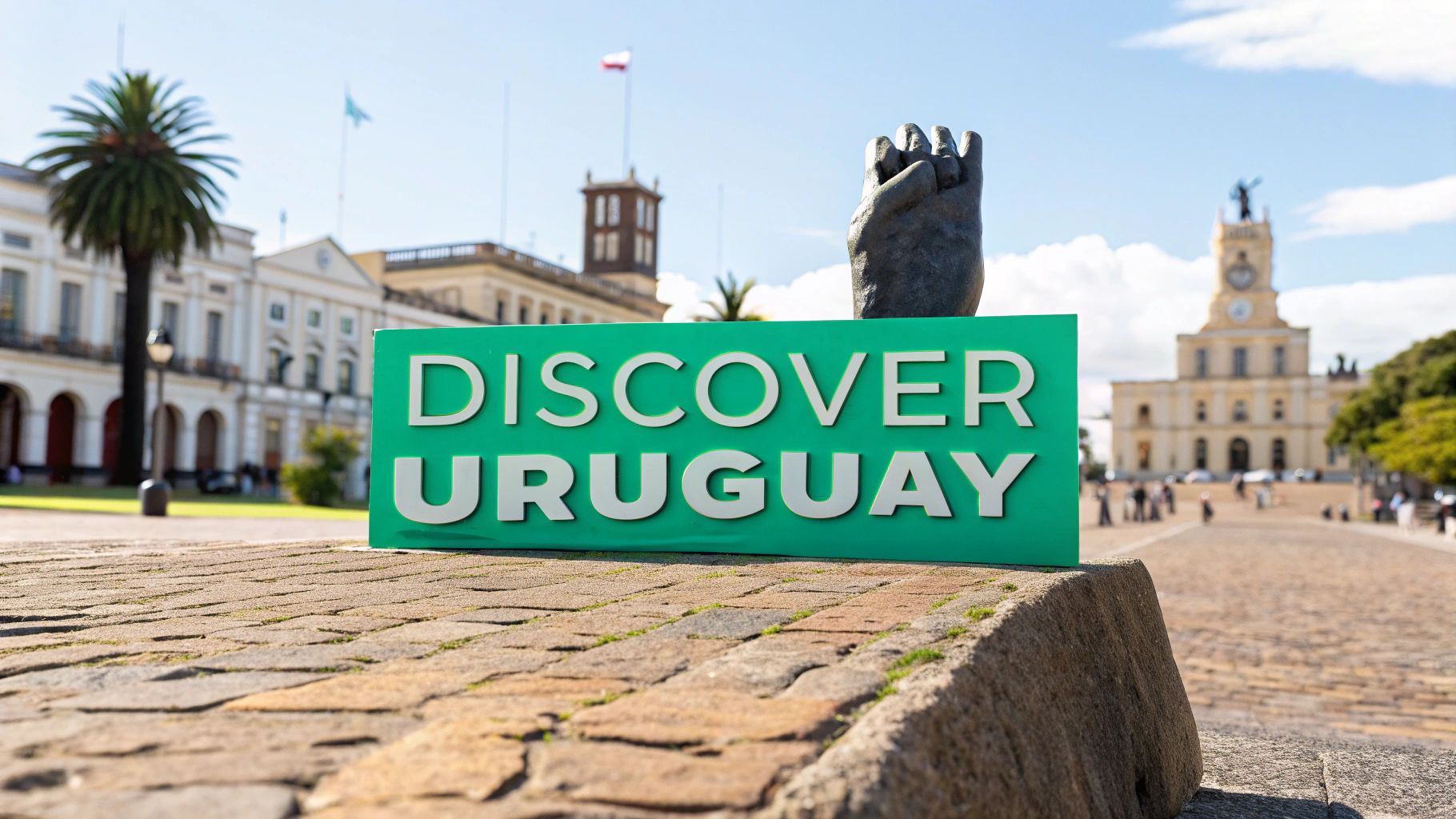
Uruguay, a captivating nation nestled between its larger neighbors Brazil and Argentina, offers a rich tapestry of colonial history, artistic innovation, and breathtaking natural scenery. This guide delves into the 8 most famous landmarks in Uruguay, each a testament to the country's unique cultural and historical identity. We will journey from the historic cobblestone streets of preserved colonial towns to surrealist architectural marvels and iconic sculptures set against sun-drenched coastal backdrops.
These destinations are far more than simple tourist spots; they are gateways to understanding the heart of the Uruguayan spirit. For geography enthusiasts and virtual explorers, especially those engaged in geography-based games, this list provides a vital link between digital discovery and tangible reality. By exploring these sites, you can transform a location on a map into a vivid, story-rich destination. Join us as we uncover the essential landmarks that define this remarkable South American country, providing you with a definitive guide to its most iconic treasures. Prepare to explore sites that are as historically significant as they are visually stunning, offering a comprehensive look into what makes Uruguay truly unforgettable.
1. Ciudad Vieja (Old City) - Montevideo
Ciudad Vieja, or the Old City, is the historic soul of Montevideo and an essential first stop for any visitor. This neighborhood is a living museum, where the city’s colonial past meets its vibrant present. Its cobblestone streets are lined with a mix of architectural styles, from Spanish colonial and Art Deco to neoclassical, creating a unique visual landscape. This area is not just a relic; it is the cultural and administrative heart of the capital, making it one of the most dynamic and famous landmarks in Uruguay.
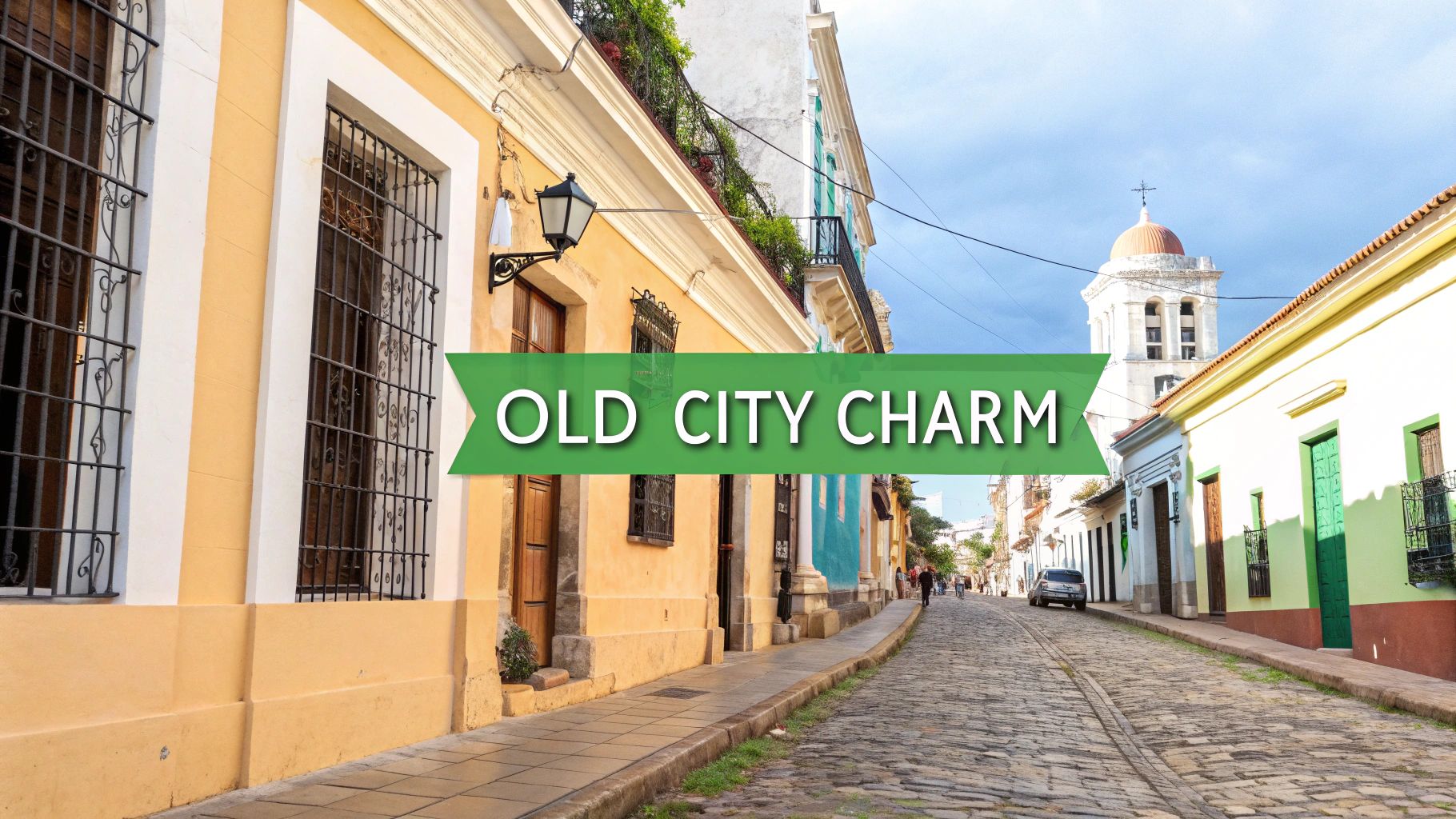
The neighborhood is built on the peninsula that originally constituted the entire city of Montevideo. Walking its streets feels like a journey through time, starting at the Puerta de la Ciudadela, the original gateway to the fortified city. Beyond this gate, you'll discover government palaces, museums, art galleries, and bustling cafes that animate the historic buildings. The blend of past and present offers a profound insight into the nation’s identity, making it a key location for understanding Uruguay's heritage. Explore more about how places shape culture with this deep dive into cultural geography.
Travel and Gaming Insights
For travelers, Ciudad Vieja offers a compact and walkable experience. It's the perfect place to immerse yourself in Uruguayan culture, from savoring a steak at a traditional parrilla in the Mercado del Puerto to catching a performance at the iconic Teatro Solís. For geography gamers, this district is a treasure trove of identifiable features. The distinct silhouette of the Palacio Salvo, the grid-like street pattern, and the prominent Plaza Independencia are all key visual markers that frequently appear in location-based games.
Actionable Tips:
- Start at Plaza Independencia: Use this grand square as your starting point. It connects Ciudad Vieja to the modern downtown and houses landmarks like the Artigas Mausoleum.
- Take a Guided Tour: A walking tour provides invaluable context to the architecture and history you'll encounter, turning a simple stroll into a rich historical lesson.
- Visit During the Day: For the best photography and a safer experience, explore the main streets during daylight hours. The area comes alive with street performers and vendors, especially on weekends.
- Explore Sarandí Pedestrian Street: This is the main artery of the Old City, packed with shops, galleries, and cafes, leading you directly to the waterfront.
2. Casapueblo - Punta Ballena
Casapueblo is a breathtaking "living sculpture" perched on the cliffs of Punta Ballena, overlooking the vast Atlantic Ocean. This stunning white stucco citadel was the creation of Uruguayan artist Carlos Páez Vilaró, who spent 36 years meticulously building it by hand without formal architectural plans. Originally his summer home and studio, it now serves as a museum, art gallery, hotel, and cultural hub, making it one of the most unique and famous landmarks in Uruguay.
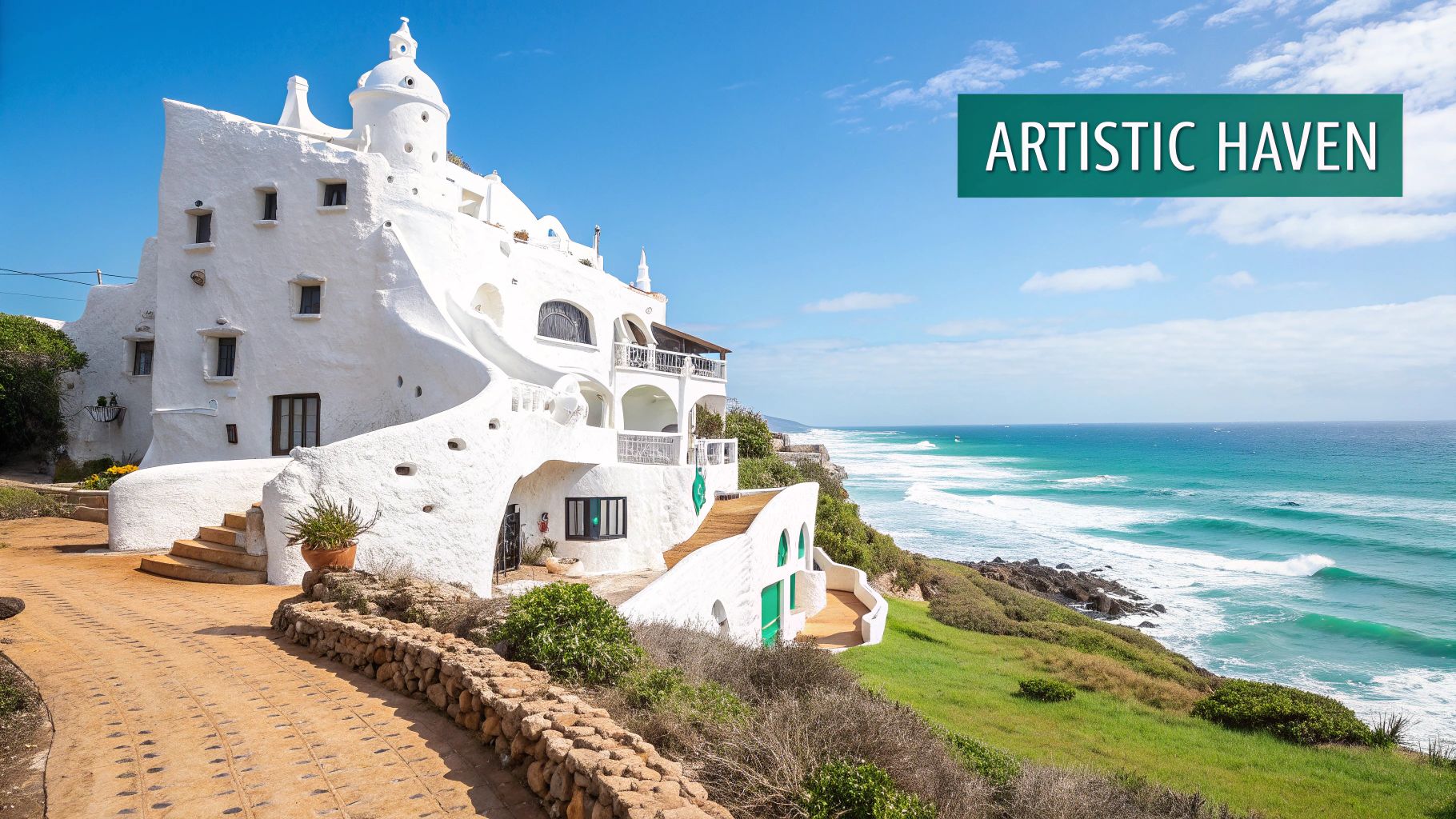
The building's organic, nest-like design evokes the whitewashed villages of the Greek islands, with labyrinthine staircases, cascading terraces, and unconventional domes that blend seamlessly into the coastal landscape. Each corner reveals a new perspective of the ocean and the artist's eclectic work. Casapueblo is not just an architectural marvel; it is a profound artistic statement and a tribute to the sun, a central theme in Vilaró's work. Its fame is also linked to his son, Carlos "Carlitos" Páez Rodríguez, a survivor of the famous 1972 Andes flight disaster.
Embedded content
Travel and Gaming Insights
For travelers, the highlight of a visit to Casapueblo is its famous sunset ceremony. As the sun descends, a recording of the artist's voice plays a moving poem dedicated to the sun, creating an unforgettable experience. For geography gamers, Casapueblo's highly distinctive, stark white structure against the blue ocean and rugged cliffs is an instant giveaway. Its one-of-a-kind silhouette and specific location near Punta del Este make it a memorable and easily identifiable landmark in any geo-quiz.
Actionable Tips:
- Witness the Sunset Ceremony: Plan to arrive at least 30 minutes before sunset to secure a good viewing spot for the famous "Ceremony of the Sun."
- Buy Tickets in Advance: During the high season (December to February), it is wise to purchase tickets online to avoid long queues.
- Explore Before the Crowds: Visit the museum and art gallery sections earlier in the afternoon before the sunset crowds arrive for a more relaxed experience.
- Wear Comfortable Shoes: The structure has numerous stairs and uneven surfaces, so practical footwear is essential for navigating its many levels.
3. Colonia del Sacramento
Stepping into Colonia del Sacramento is like walking onto the set of a historical film. As Uruguay's oldest town, founded by the Portuguese in 1680, this UNESCO World Heritage Site offers a perfectly preserved window into the region's colonial past. Its historic quarter, the Barrio Histórico, is a labyrinth of winding cobblestone streets, colorful colonial houses, and the remnants of ancient fortifications, all nestled on a small peninsula jutting into the Río de la Plata. The town's unique blend of Portuguese and Spanish architectural influences makes it one of the most picturesque and famous landmarks in Uruguay.
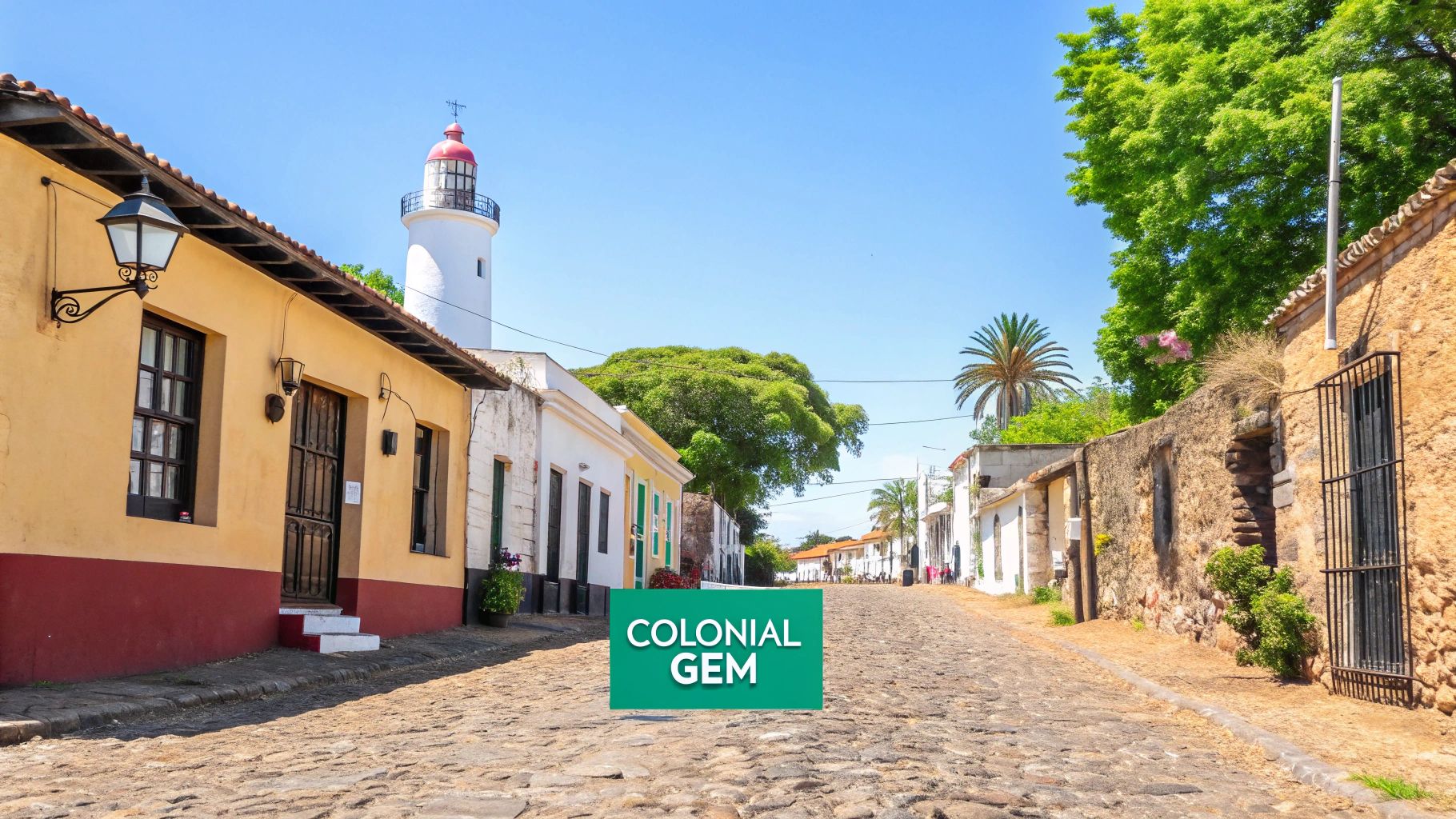
The town’s strategic location directly across the river from Buenos Aires made it a point of contention between the Spanish and Portuguese empires for over a century. This turbulent history is etched into its very foundations, from the thick walls of the old fortress to the iconic lighthouse offering panoramic views. Its exceptional state of preservation earned it a spot on the prestigious list of global treasures. Explore more about why places like this are protected on this complete list of World Heritage Sites.
Travel and Gaming Insights
For travelers, Colonia is an idyllic escape, especially popular as a day trip from Buenos Aires via ferry. The town’s romantic, slow-paced atmosphere invites leisurely exploration. For geography gamers, Colonia's Barrio Histórico is unmistakable. Key identifiers include the iconic Calle de los Suspiros (Street of Sighs) with its distinctive wedge shape, the lighthouse (Faro de Colonia del Sacramento), and the ruins of the Convento de San Francisco. These unique features make it a memorable and frequently seen location in GeoGuessr and other similar games.
Actionable Tips:
- Stay Overnight: To truly appreciate the town's magic, stay after the day-trippers have departed. The quiet, lamp-lit streets in the evening are an entirely different experience.
- Rent a Golf Cart: A fun and efficient way to explore beyond the historic quarter is by renting a golf cart or bicycle, allowing you to see the modern parts of the city and its coastline.
- Climb the Lighthouse: For a small fee, you can ascend the Faro de Colonia del Sacramento for breathtaking 360-degree views of the old town and the Río de la Plata.
- Explore Early: The best light for photography is in the early morning, and you’ll have the charming streets almost entirely to yourself.
4. Palacio Salvo
Dominating the Montevideo skyline at the edge of Plaza Independencia, Palacio Salvo is an architectural masterpiece and an undisputed symbol of the city. This eclectic Art Deco skyscraper, designed by Italian architect Mario Palanti and completed in 1928, was once the tallest building in South America. Its distinctive silhouette, crowned with a lighthouse-like turret, makes it one of the most recognizable and famous landmarks in Uruguay, representing an era of great optimism and prosperity.
Originally commissioned by the Salvo brothers, the building was intended to be a luxury hotel. Legend has it that the site was where Gerardo Matos Rodríguez composed the world-famous tango "La Cumparsita." Today, Palacio Salvo is a mixed-use building with offices and private apartments, but its historical and cultural significance remains immense. Its intricate facade and imposing presence serve as a gateway between Montevideo’s downtown and the historic Ciudad Vieja, making it a pivotal point in the urban landscape.
Travel and Gaming Insights
For travelers, Palacio Salvo is a must-see, offering a glimpse into Montevideo’s glamorous past. Guided tours allow access to its grand interiors and breathtaking panoramic views from the top. For geography gamers, its unique and unmistakable shape is a dead giveaway for Montevideo. The building’s prominent location next to Plaza Independencia and the Artigas Mausoleum provides crucial context clues, making it a key landmark to identify in games that test your knowledge of world cities.
Actionable Tips:
- Book a Guided Tour: Reserve your spot in advance through official channels to explore the building's interior and enjoy stunning city views from its observation deck.
- Best Photo Spot: For the most iconic shot, position yourself across Plaza Independencia to capture the entire building against the sky.
- Visit at Night: The building is beautifully illuminated after dark, offering a completely different and dramatic perspective.
- Learn the Tango Connection: Before you go, read about Gerardo Matos Rodríguez and "La Cumparsita" to fully appreciate the cultural weight of the location. The building houses a Tango Museum dedicated to this heritage.
5. La Mano de Punta del Este (The Hand Sculpture)
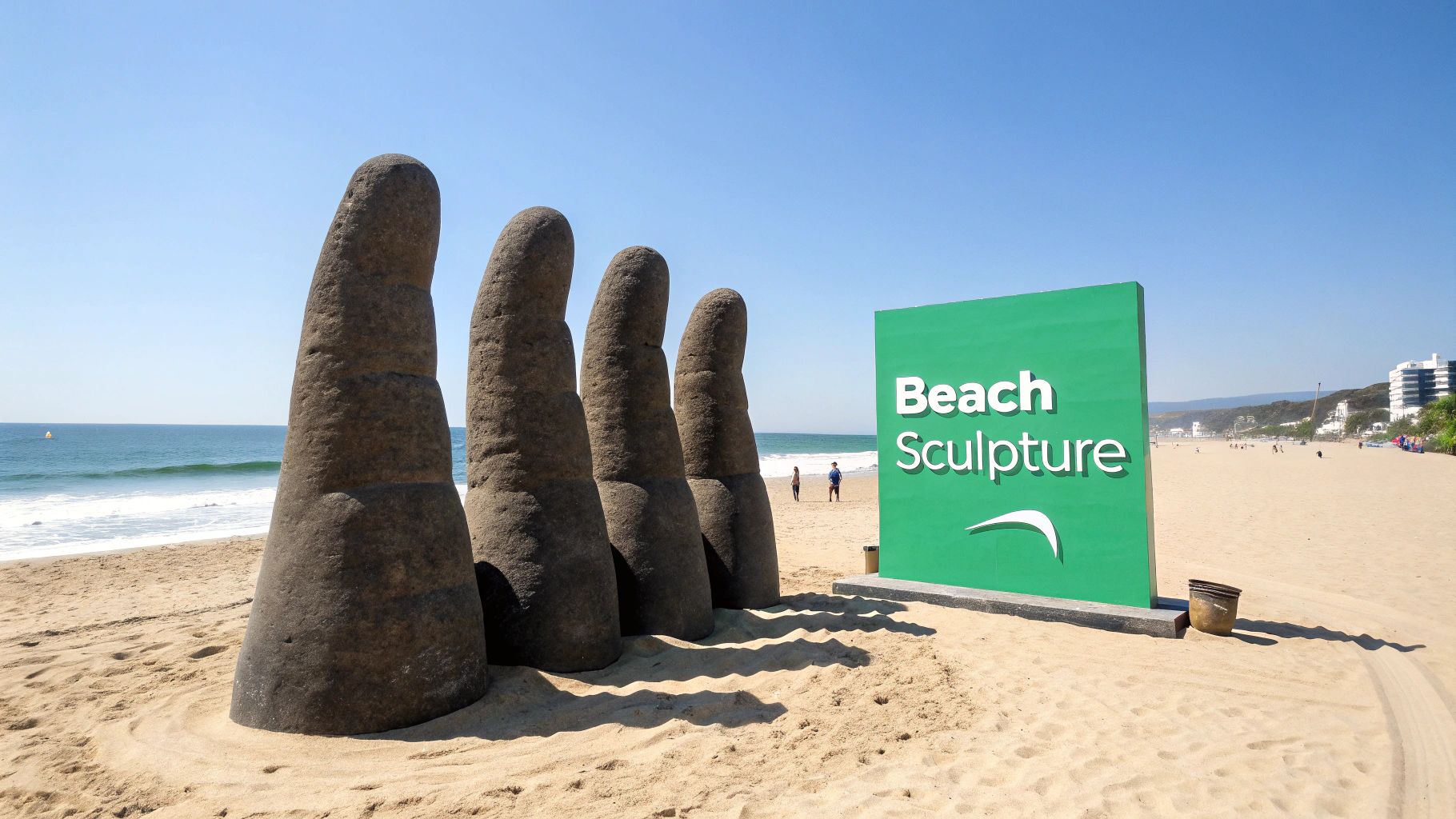
La Mano, also known as 'Los Dedos' (The Fingers), is an iconic work of land art and arguably the most recognizable symbol of the glamorous resort city of Punta del Este. This surrealist sculpture features five massive concrete fingers emerging from the sands of Brava Beach, creating a powerful and unforgettable image. Created by Chilean artist Mario Irarrázabal in 1982 for an international sculpture meeting, it has since become one of the most famous landmarks in Uruguay, drawing visitors from around the globe.
Originally named "Monumento al Ahogado" (Monument to the Drowned), the sculpture serves as a warning to swimmers about the rough waves of Brava Beach. The artist intended the piece to represent a hand drowning, a final gesture reaching for life. This powerful metaphor, combined with its dramatic beachfront setting, has cemented its place in popular culture and turned it into an essential photo opportunity. The sculpture’s instant recognizability and unique form make it a key landmark for understanding modern Uruguayan art and tourism.
Travel and Gaming Insights
For travelers, La Mano is an unmissable stop in Punta del Este, offering a perfect blend of art, nature, and beach culture. Its fame means it is often crowded, but its visual impact is undeniable. For geography gamers, this sculpture is a dead giveaway for its location. Spotting the five fingers against the backdrop of the Atlantic Ocean and the city's skyline instantly places you in Punta del Este, Uruguay. The distinctive shape is rarely confused with anything else, making it a valuable clue in any location-based game.
Actionable Tips:
- Visit Early or Late: To avoid crowds and capture the best photos, arrive before 9 AM or during the golden hour just before sunset. The softer light and fewer people create a more dramatic scene.
- Go During the Off-Season: For a virtually private experience, visit between April and November when the tourist season has ended. You'll have the beach and the sculpture almost to yourself.
- Get Creative with Photos: Don't just take the standard front-facing shot. Walk around the sculpture to find different angles, use creative props, or frame it with the sunrise or sunset for a unique composition.
- Be Patient: During peak hours, you will have to wait for a clear shot without other people in it. Find your spot and patiently wait for a brief window to capture your perfect picture.
6. Teatro Solís
Teatro Solís is the beating heart of Uruguay's performing arts scene and its oldest, most celebrated theater. Located at the edge of Plaza Independencia in Montevideo, this neoclassical masterpiece has been a cultural cornerstone since its inauguration in 1856. Named after the Spanish explorer Juan Díaz de Solís, the theater's grand facade and opulent interior are a testament to the nation's deep appreciation for the arts, making it one of the most revered famous landmarks in Uruguay.
Designed by Italian architect Carlo Zucchi, the theater’s magnificent Italian-style auditorium captivates visitors with its elaborate frescoes, stunning crystal chandeliers, and rich gold-leaf accents. It has hosted countless international opera and ballet companies, as well as being the home of the Uruguay National Symphony Orchestra. A comprehensive restoration completed in 2004 has preserved its historical grandeur while equipping it with modern technology, ensuring its place as a world-class venue for generations to come.
Travel and Gaming Insights
For travelers, attending a performance at Teatro Solís offers an unforgettable cultural experience, providing a window into the soul of Uruguayan artistic expression. Guided tours offer a fascinating look behind the scenes, revealing the theater's history and architectural secrets. For geography gamers, the theater's distinct elliptical shape and prominent location next to Plaza Independencia and the Puerta de la Ciudadela make it an unmistakable landmark. Its grand portico and unique roofline are key visual cues for pinpointing your location in Montevideo.
Actionable Tips:
- Book a Guided Tour: Schedule a tour in advance online, available in both Spanish and English, to explore the stunning main hall, foyers, and stage area.
- Check the Performance Schedule: Plan your visit around the opera and ballet seasons to witness a world-class performance in a historic setting.
- Arrive Early: If you're attending a show, arrive ahead of time to admire the architecture of the foyer and other public spaces.
- Dress Appropriately: While not strictly enforced for all shows, dressing smartly for evening performances is a respected tradition and adds to the experience.
7. Fortaleza de Santa Teresa (Santa Teresa Fortress)
Fortaleza de Santa Teresa is a formidable 18th-century military fortress situated within the stunning Santa Teresa National Park, near Uruguay's border with Brazil. Originally started by the Portuguese in 1762 and later completed by the Spanish, this massive stone structure stands as one of the country's best-preserved colonial military installations. Its imposing ramparts and meticulously restored interior offer a direct window into the region's turbulent past, marked by territorial disputes between European powers.
The fortress is more than just a historical relic; it is the centerpiece of a sprawling national park that protects a diverse ecosystem of forests, dunes, and coastline. This unique combination of military history and natural beauty makes it one of the most compelling famous landmarks in Uruguay. The contrast between the rigid, man-made stone walls and the wild, organic landscape surrounding it provides a powerful experience. It highlights the intersection of human history and the environment, a theme often explored among the natural wonders of the world.
Travel and Gaming Insights
For travelers, the fortress and its park offer a multi-day adventure. You can explore the chapel, powder keg, and command quarters within the fort before heading out to enjoy the park's pristine beaches and extensive trail network. For geography gamers, the fortress's star-shaped design is a highly recognizable feature from an aerial view. Its location on a hill overlooking the Atlantic, combined with its proximity to the Brazilian border, makes it a key landmark for pinpointing your location in Uruguay's Rocha Department.
Actionable Tips:
- Combine with Beach Time: The fortress is just a short drive from the popular beach town of Punta del Diablo. Plan to explore the history in the morning and relax on the sand in the afternoon.
- Rent a Car for Access: Public transport is limited in this rural area. Renting a car provides the flexibility to explore the fortress, the park, and nearby coastal towns at your own pace.
- Wear Comfortable Shoes: Exploring the fortress involves walking on uneven stone surfaces and climbing ramparts. Sturdy, comfortable footwear is essential.
- Plan for a Full Day: To do the site justice, allow at least 2-3 hours for the fortress itself and additional time to explore the park's gardens, greenhouses, and beaches.
8. Rambla de Montevideo
The Rambla de Montevideo is the vibrant artery of the city, an iconic coastal promenade stretching over 22 kilometers (13.7 miles) along the shoreline of the Río de la Plata. It is one of the longest continuous waterfronts in the world and an essential part of daily life for Montevideanos. This expansive public space connects diverse neighborhoods, from the historic heart of Ciudad Vieja to the upscale residential area of Carrasco, offering uninterrupted views and access to the city's beaches and parks. Far more than a simple sidewalk, the Rambla is a democratic social hub and a defining feature of the capital’s identity.
This landmark embodies Montevideo's deep connection to the water, serving as a communal backyard for residents of all backgrounds. People flock here to walk, jog, cycle, fish, or simply relax and share mate with friends while watching the sunset. The Rambla's character changes as it passes through different parts of the city, from the historic Rambla Sur to the popular urban beach at Pocitos, making it one of the most dynamic and famous landmarks in Uruguay. Its constant presence and accessibility offer a unique window into the local culture and the rhythm of life in the capital.
Travel and Gaming Insights
For travelers, the Rambla offers an authentic, ground-level experience of Montevideo. It's a perfect route for exploration, allowing you to seamlessly travel between neighborhoods like Parque Rodó, Punta Carretas, and Pocitos. For geography gamers, the Rambla is a highly recognizable feature. The long, curving coastline, the distinctive "MONTEVIDEO" sign near Pocitos, and the specific architecture of buildings lining the promenade are all key visual clues for pinpointing your location within the city. The contrast between the wide, brown river and the urban landscape is often a dead giveaway.
Actionable Tips:
- Rent a Bike: Covering the entire 22-kilometer stretch on foot is a challenge. Renting a bicycle allows you to experience much more of its diverse scenery in a single trip.
- Experience Sunset at Rambla Sur: The section near Ciudad Vieja and Parque Rodó offers some of the most spectacular sunset views over the water. It’s a perfect spot for photography.
- Join the Locals: To truly blend in, grab a thermos of hot water and your mate gourd. Find a spot on the sea wall and enjoy the quintessential Uruguayan pastime.
- Start at Pocitos: For a lively experience, begin your walk or ride at Pocitos Beach, the most popular and bustling section of the Rambla, known for its iconic city sign.
Top 8 Famous Landmarks Comparison
| Place | Implementation Complexity 🔄 | Resource Requirements ⚡ | Expected Outcomes 📊 | Ideal Use Cases 💡 | Key Advantages ⭐ |
|---|---|---|---|---|---|
| Ciudad Vieja (Old City) - Montevideo | Moderate - ongoing restoration efforts | Low to moderate - mainly cultural preservation | High cultural and historical enrichment | Walking tours, cultural exploration, nightlife | Rich heritage, walkable, vibrant arts & dining |
| Casapueblo | High - unique hand-built architecture without formal plans | High - maintenance of museum, hotel, and events | Strong visual impact and artistic immersion | Art appreciation, sunset viewing, cultural tourism | Architecturally unique, spectacular views |
| Colonia del Sacramento | Moderate - preservation of colonial structures | Moderate - museum and infrastructure upkeep | Authentic historical experience | Day trips, romantic getaways, heritage tourism | UNESCO heritage, well-preserved, scenic walks |
| Palacio Salvo | Moderate - preservation of historic skyscraper | Moderate - restoration and guided tours | Cultural landmark status and architectural beauty | Historical tours, architecture enthusiasts | Iconic skyline symbol, cultural significance |
| La Mano de Punta del Este (The Hand) | Low - large concrete sculpture on beach | Low - minimal upkeep, exposed to natural elements | High photographic and symbolic impact | Photo opportunities, beach visits | Free access, unique landmark, beachfront location |
| Teatro Solís | Moderate to high - restoration and programming complexity | Moderate to high - staging performances and tours | World-class cultural events and education | Opera, ballet, classical music, guided tours | Prestigious venue, stunning architecture |
| Fortaleza de Santa Teresa | High - military fortress preservation and park maintenance | Moderate - park facilities and museum maintenance | Educational historical and natural experience | History buffs, nature lovers, camping | Well-preserved fortress, national park setting |
| Rambla de Montevideo | Low to moderate - ongoing urban maintenance | Low - public promenade with recreational facilities | Social, recreational, and cultural engagement | Walking, cycling, relaxation, local cultural immersion | Free, expansive waterfront, connects neighborhoods |
Start Your Uruguayan Adventure
Uruguay, a nation often described as a hidden gem, reveals its rich history, vibrant culture, and stunning natural beauty through an array of unforgettable landmarks. Our journey has taken us from the cobblestone streets of Montevideo's Ciudad Vieja, echoing with tales of colonial pasts, to the surreal, sculpted walls of Casapueblo, a living work of art clinging to the cliffs of Punta Ballena. Each destination we have explored offers more than just a picturesque backdrop; it provides a tangible connection to the Uruguayan identity.
The landmarks covered in this guide represent a cross-section of the nation's soul. We walked through the UNESCO World Heritage site of Colonia del Sacramento, where Portuguese and Spanish influences collide, and gazed up at the art deco grandeur of Palacio Salvo, a historic sentinel watching over the capital. We felt the sand between our toes near La Mano de Punta del Este, a powerful symbol of human presence, and imagined the dramatic performances within the opulent Teatro Solís. From the strategic might of the Fortaleza de Santa Teresa to the sprawling, sociable coastline of the Rambla de Montevideo, these sites are the cornerstones of Uruguay's narrative.
From Virtual Exploration to Real-World Discovery
For the geography enthusiast and gamer, understanding these famous landmarks in Uruguay is about more than just trivia; it is about pattern recognition and contextual learning. Recognizing the unique architectural blend of Colonia del Sacramento or the distinct silhouette of Palacio Salvo can be the key to pinpointing your location in a geography game. This knowledge transforms gameplay from a random guess into a calculated deduction based on cultural and historical cues.
Consider how you can apply this knowledge:
- Architectural Clues: Differentiating the colonial styles in Ciudad Vieja from the more modern, whimsical design of Casapueblo can instantly narrow down your potential location.
- Geographical Context: Spotting a massive coastal fortress like Santa Teresa places you firmly on Uruguay's Atlantic coast, far from the Rio de la Plata.
- Urban Landscapes: The iconic Rambla, with its unique blend of city and sea, is an unmistakable feature of Montevideo, unlike any other South American capital's coastline.
Your Next Steps: Planning and Playing
The true value of learning about these landmarks lies in bridging the gap between digital exploration and physical travel. Before you book a flight, you can walk these streets virtually, building a mental map that will make your future trip even more rewarding. Use the information in this guide not as a simple checklist, but as a foundation for a deeper appreciation of what makes Uruguay so special.
Whether your immediate goal is to conquer a new level in a geography game or to plan the adventure of a lifetime, these Uruguayan treasures offer a perfect starting point. They are not just static points on a map but dynamic, living parts of a country waiting to be experienced. The stories are etched into their stones, the culture is alive in their halls, and the adventure begins the moment you decide to explore.
Ready to test your newfound knowledge? Sharpen your geographic skills and explore the famous landmarks in Uruguay from a new perspective with EarthChasers. Our immersive geography game turns learning into an adventure, preparing you for your next real-world journey. Start your virtual expedition today at EarthChasers.