
What Is Peer Learning And How Does It Work
Discover what is peer learning and how it transforms education. Our guide breaks down the benefits, core principles, and proven strategies you can use today.
At its core, peer learning is a simple but powerful idea: students learn with and from each other. Instead of just soaking up information from a teacher, they get their hands dirty, collaborating and sharing insights. This turns every student into both a teacher and a pupil.
What Is Peer Learning Really
Imagine trying to learn a new instrument. You could read a manual by yourself, or you could jam with a friend. When your friend shows you a slick trick for a tough chord, it clicks instantly. The cool part? Just by showing you, they’ve reinforced that skill for themselves. That's peer learning in a nutshell.
It’s a structured, collaborative method where students actively help each other understand concepts, solve problems, and pick up new skills.
This completely flips the traditional classroom dynamic on its head. Information no longer flows in just one direction from the instructor. Instead, it creates a vibrant web of shared knowledge where everyone contributes, questions, and builds their understanding together.
The Core Idea Behind Collaboration
The central principle is that teaching is one of the most effective ways to truly learn something. When you have to explain an idea to someone else, you're forced to organize your thoughts, break down complex ideas, and face any blind spots in your own knowledge. This active process leads to much deeper comprehension and better memory for everyone involved.
Peer learning isn't just another term for group work. It's about building an ecosystem where knowledge is co-created and shared. It boosts confidence, sharpens communication skills, and prepares students for the kind of collaborative environments they'll face in the real world.
The data below shows just how widely this strategy is being adopted—and the impact it's having.
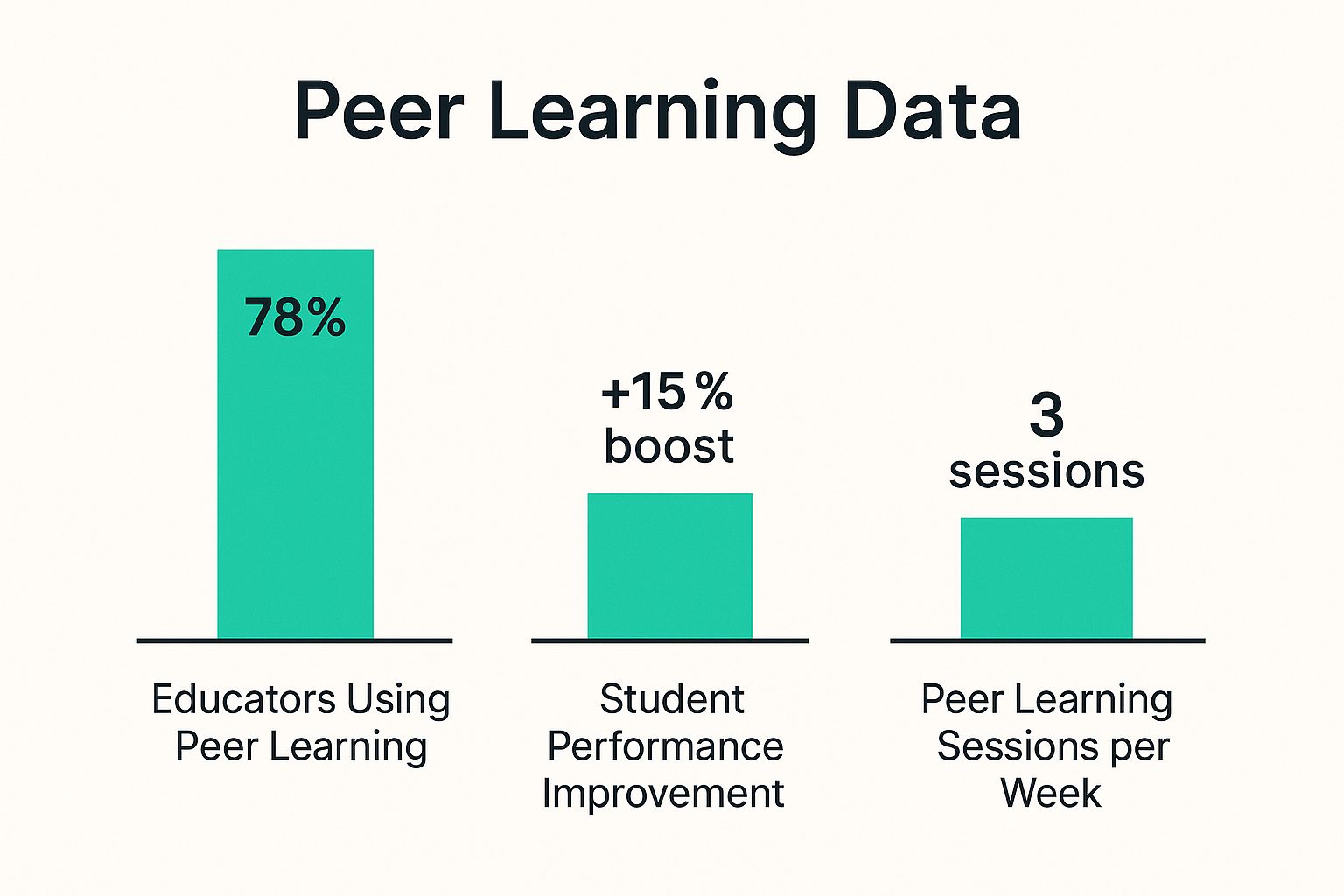
As the numbers show, a huge majority of educators are already using peer learning, and it's leading to real, measurable improvements in student performance.
This approach isn't just a fleeting trend. Research shows that well-structured peer instruction can improve exam scores by 10-15% compared to standard lectures. It boosts both initial understanding and how well students remember the information later on. You can learn more about these research findings to see the data for yourself.
By turning learners into active participants, peer learning makes education a more dynamic, engaging, and ultimately, a more effective experience.
Peer Learning vs Traditional Learning At a Glance
To see the difference clearly, let's break down how peer learning stacks up against the conventional teacher-led model. The table below offers a side-by-side comparison of their core principles.
| Attribute | Traditional Learning | Peer Learning |
|---|---|---|
| Learning Role | Passive receiver of information | Active participant and co-creator |
| Information Flow | One-way: from teacher to student | Multi-directional: among students |
| Source of Knowledge | Primarily the teacher or textbook | The entire group of peers |
| Focus | Memorization and individual performance | Understanding and collaborative problem-solving |
| Key Skills | Listening, note-taking, individual study | Communication, teamwork, critical thinking |
While traditional methods have their place, the shift toward a peer-driven model encourages a more interactive and shared journey of discovery, building skills that last a lifetime.
The Foundational Principles of Peer Learning
So, what’s the secret sauce that turns a simple group study session into a genuine learning powerhouse? It boils down to a few core ideas that give peer learning its structure and drive. Without them, you just have a chaotic chat where nothing gets done.
At its heart, the first principle is reciprocity. Think of it as a two-way street for knowledge. When you have to teach a concept to someone else, you're forced to get your own thoughts straight and really nail down what you know.
The very act of explaining something out loud cements the information in your own brain. This back-and-forth ensures that both the "teacher" and the "learner" in any pair come out ahead, creating a powerful cycle of growth.
Building a Collaborative Framework
Next up is structured collaboration. This is what stops one person from doing all the heavy lifting while everyone else coasts. Real peer learning isn't a free-for-all; it needs a game plan with clear goals, defined roles, and specific things to do. This structure makes sure everyone pulls their weight.
For instance, a group might assign roles like:
- The Facilitator to keep the conversation on point.
- The Scribe to jot down key ideas and decisions.
- The Timekeeper to make sure the group stays on schedule.
This kind of deliberate organization builds a truly cooperative space where everyone contributes and the work is shared. It’s also fantastic practice for the kind of teamwork you see in the real world.
The final pillar is shared responsibility. This is where the group's success depends on every single member showing up and participating. The whole mindset shifts from "my grade" to "our success," which builds an incredible sense of community and support.
This dynamic is a huge part of many modern learning methods. In fact, understanding these principles gives you a better grasp of what is interactive learning and why it works so well. When students feel accountable to their friends, they’re way more motivated to come prepared and do their best, making the experience better for everyone.
Why Peer Learning Is Gaining Momentum
The recent buzz around peer learning isn't just another passing trend in education. It's a fundamental shift, a direct answer to the need for learning methods that are more engaging and, frankly, more effective. It works by transforming learning from a one-way street into a dynamic, hands-on conversation.
Think about it: when you explain a concept to a friend, you’re forced to organize your own thoughts and find the right words. This simple act sharpens your critical thinking and communication skills in a way that just listening to a lecture never could.
That active engagement is the secret sauce. It’s what makes knowledge actually stick. Instead of just cramming facts for an exam only to forget them a week later, peer learning gets students to discuss, question, and truly wrestle with the material. This collaborative tug-of-war is what dramatically boosts long-term understanding.
Fostering a Supportive Learning Culture
Beyond the academic wins, peer learning completely changes the classroom vibe for the better. It helps build a culture where students feel safe enough to ask questions, make mistakes, and take intellectual risks without fearing judgment. This boost in confidence is a game-changer for growth.
Peer learning creates a positive feedback loop. When students feel supported by their peers, their motivation soars, leading to deeper engagement and better academic outcomes for the entire group.
This approach also helps tackle some huge global challenges. The worldwide education market is expected to hit $10 trillion by 2030, a boom that demands roughly 1.5 million new teachers every single year. That puts incredible strain on old-school teaching models, making peer learning a critical and scalable way to support instructors. Discover more insights about the future of global education.
Key Advantages for Learners
The benefits go way beyond just managing class sizes. Students who dive into peer learning often walk away with:
- Improved Communication Skills: There's no better practice for clear communication than trying to articulate a complex idea to someone else.
- Deeper Conceptual Understanding: Teaching a topic is the ultimate test of your own knowledge. It quickly shows you where the gaps are and helps lock in what you know.
- Enhanced Teamwork Abilities: Working together to solve problems is perfect training for the collaborative workplaces that await them.
- Increased Personal Confidence: Successfully helping a classmate finally "get" a tough concept is a massive confidence booster.
Proven Peer Learning Strategies You Can Implement
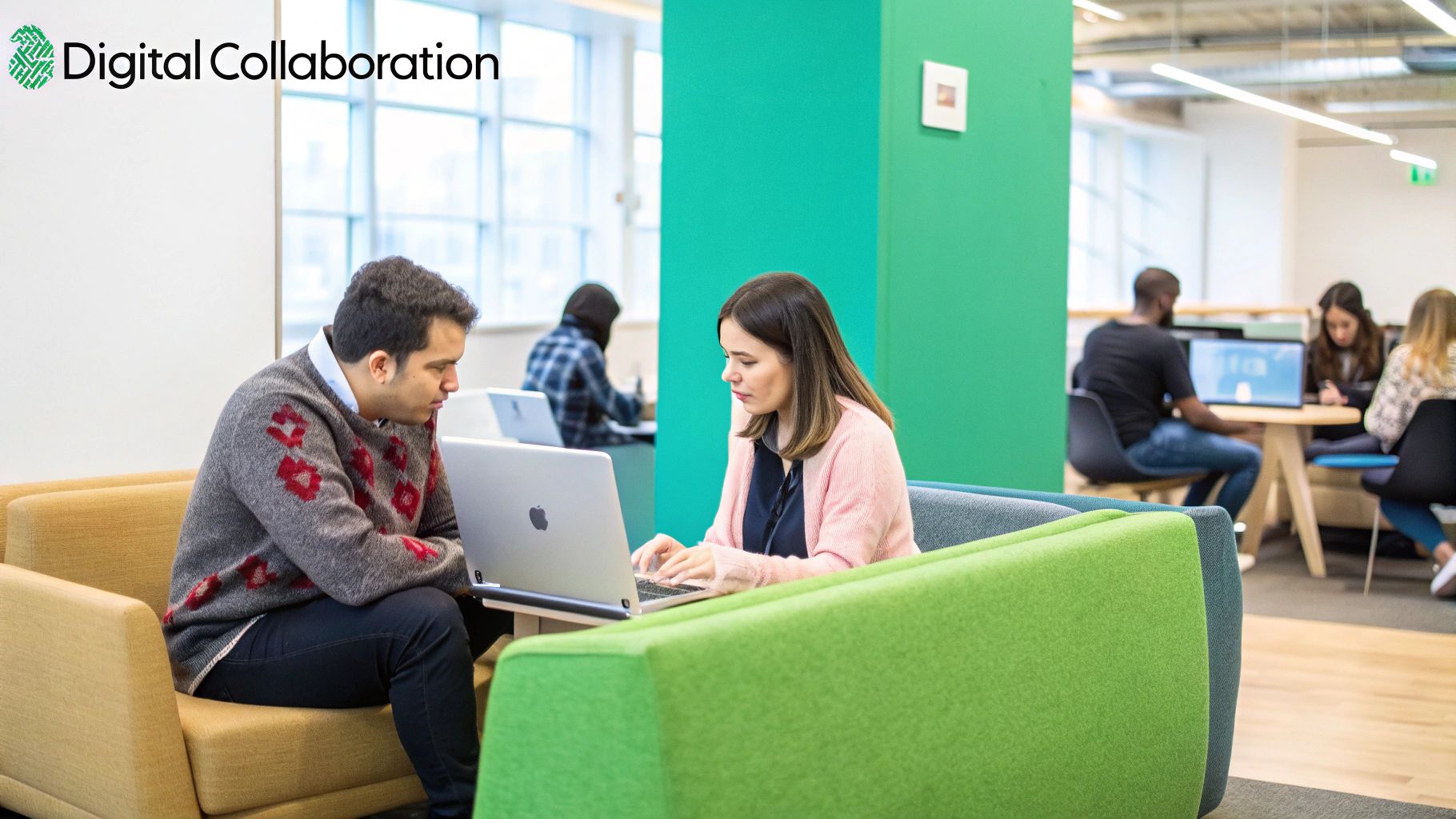
Knowing the theory behind peer learning is a great start, but the real magic happens when you put it into practice. Thankfully, you don't have to start from scratch. There are several road-tested strategies you can adapt for just about any environment, whether it's a third-grade classroom or a corporate training session.
One of the simplest yet most effective methods is Think-Pair-Share. This three-step process is brilliant for getting everyone involved, especially those who might be a bit hesitant to speak up in a large group.
First, the instructor poses a question and gives everyone a moment to simply think and form their own answer. Next, learners pair up to discuss their thoughts, bouncing ideas off each other. Finally, the pairs share their combined insights with the whole group. This simple structure ensures every single person gets to process and contribute.
Creating Interdependent Learning Puzzles
Another fantastic strategy is the Jigsaw method. Think of it like a puzzle where each person holds one essential piece. To see the big picture, everyone has to share what they have.
In this model, you break a large topic into smaller subtopics. Each student or team member becomes an "expert" on one specific piece. They then get back together with their original group to teach what they’ve learned and, in turn, learn from their peers.
This approach creates genuine interdependence—the group’s success relies on every single person's contribution. It’s a powerful way to cover a lot of ground while building a strong sense of shared responsibility.
The real genius of methods like Jigsaw is that they shift learning from a passive activity to an active one. Students aren't just getting information; they are building knowledge together, which is a huge part of how to make learning fun and engaging.
Refining Skills Through Feedback
Last but not least, Peer Review is a structured way to teach critical thinking and constructive communication. In this setup, individuals review each other's work based on a clear set of guidelines.
The goal isn’t just about spotting mistakes. It’s about offering actionable feedback that helps the creator improve their work. This process helps everyone involved:
- The Reviewer gets better at analytical thinking by evaluating work against a set standard.
- The Creator receives different perspectives and fresh ideas to make their project even better.
By putting these strategies into play, you can create a dynamic environment where learning is collaborative, engaging, and way more effective.
How Technology Is Supercharging Peer Learning
Embedded content
Peer learning is no longer stuck inside the four walls of a classroom. Thanks to some incredible digital tools, students can now connect and collaborate from anywhere, at any time. This shift has completely opened up the possibilities for what learning together can look like.
Think about the basics. Simple tools like shared documents, online forums, and video calls have become the new virtual study hall. Students can now co-edit an essay in real-time, hash out a tough problem on a discussion board, or hop on a quick video chat to explain a tricky concept. Physical distance is no longer a barrier to a great learning conversation.
The Power of Gamification in Learning
But it gets even better. Beyond just communication tools, gamification is taking peer learning to a whole new level. By weaving game mechanics into educational activities, we can foster the very teamwork and collaboration that make peer learning so effective. Suddenly, learning isn't a chore—it's a shared adventure.
Take an educational game like EarthChasers, where players team up to solve geography puzzles. In this kind of environment, peer learning just happens. You'll see it unfold organically:
- Players share resources and clues to help their teammates move forward.
- They give instant feedback on each other's ideas and strategies.
- Teams work together to crack challenges that would be too tough for any single player to solve alone.
This isn't some futuristic idea; it's a real-world example of how modern platforms are making learning more interactive and powerful. By turning students into partners on a shared quest, gamification builds deep engagement and hones crucial teamwork skills.
These tools are just the beginning. When you start exploring the different educational technology tools for teachers available today, it's obvious that technology isn't just helping peer learning—it's supercharging it for a new generation.
Of course. Here is the rewritten section, crafted to sound completely human-written and natural, following all the provided instructions and examples.
Got Questions About Peer Learning? Let's Talk.
Even when the benefits are clear, the jump to a new teaching style can feel a little uncertain. It’s only natural to have a few "what if" questions pop up. Let’s walk through some of the most common ones so you can see how this works in a real classroom.
One of the biggest worries I hear is about participation. What do you do when one student takes over the conversation and another one barely says a word?
The secret to getting everyone involved isn't just hoping for the best—it's building a solid structure. When you assign specific roles (like a discussion leader or a note-taker) and use activities that need every person's input, you make every voice essential to the group's success.
This kind of intentional design stops a few students from doing all the work. It also creates a safe space for quieter kids to share their thoughts, which are often incredibly insightful.
What if Students Share the Wrong Information?
This is a totally fair question, and it actually points to the teacher's most important job in this setup: you’re not a bystander, you’re a facilitator. Your role is to move between groups, tune into their discussions, and gently guide them back on track if you hear a misconception starting to form.
Plus, most peer learning activities wrap up with a "share-out" session. This is the perfect time for you to listen to what each group came up with, clear up any confusion, and lock in the right concepts for the whole class.
Can This Really Work for Any Subject?
Absolutely. Peer learning is incredibly flexible and works just as well for a history class as it does for a science lab. It’s all about a group of people working together to make sense of something.
- For younger kids, it might look like a simple "pair-and-share" to solve a math problem.
- For high schoolers, it could be peer-editing essays or working together on a lab report.
- In professional training, it’s a go-to for analyzing tricky case studies or brainstorming solutions to real-world business problems.
The method is powerful across the board because it’s built on collaborative thinking—a skill that’s fundamental to learning just about anything.
Ready to see how collaborative learning comes to life? EarthChasers integrates these principles into a fun, interactive geography game where players team up to explore the world. Discover a new way to learn at https://earthchasers.com