
What Is Student Centered Learning? Key Insights & Strategies
Learn what is student centered learning, its benefits, and practical ways to implement it. Discover how this approach empowers students effectively.
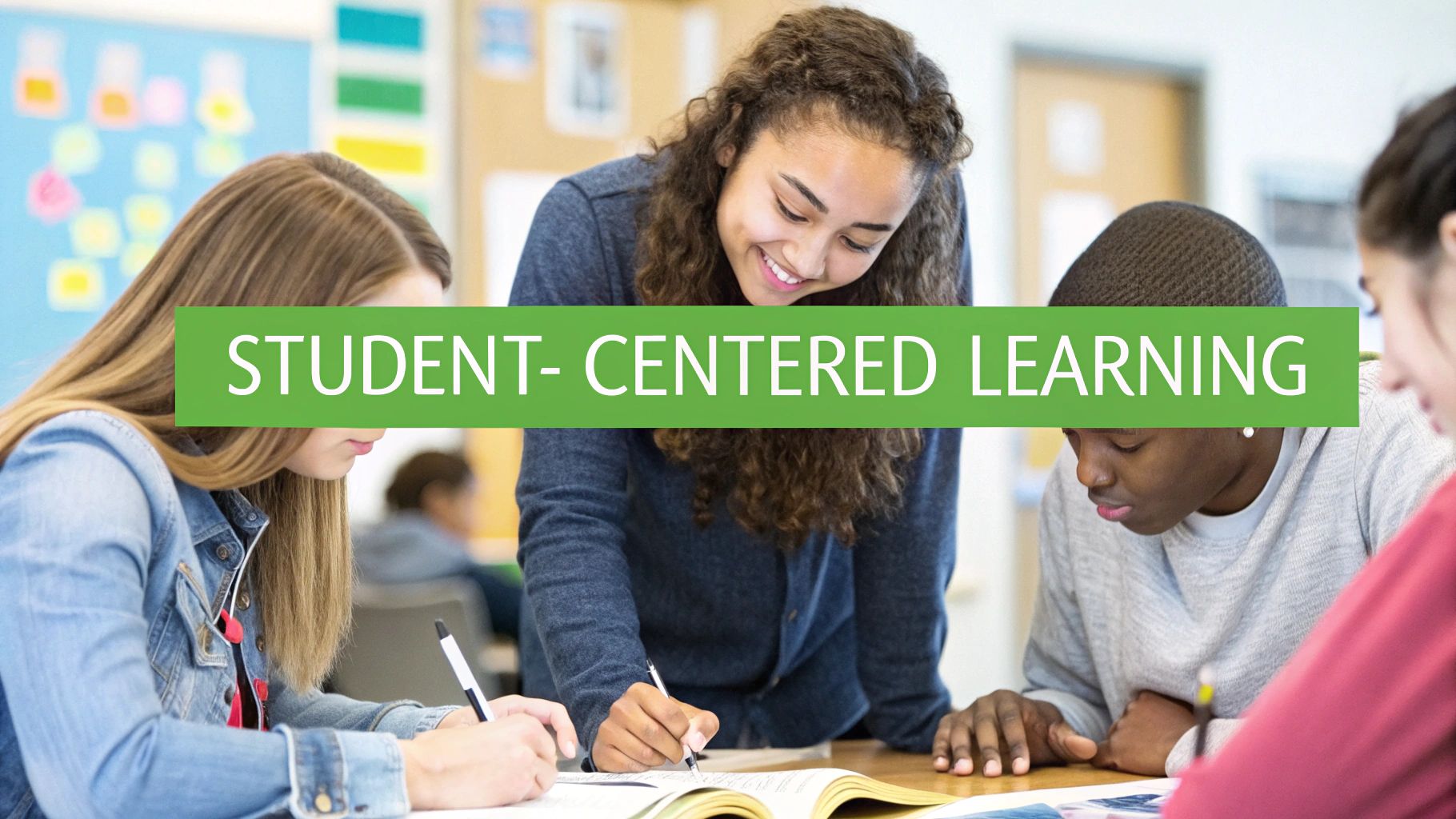
Student-centered learning flips the traditional script. Instead of a teacher just delivering information for students to absorb, it's about students actively building their own knowledge. It’s a partnership. Learners go from passive listening to active doing—questioning, exploring, and working together.
This shift helps build skills that really matter: critical thinking, creative problem-solving, and the ability to steer your own ship.
The Shift From Tour Guide To Travel Planner
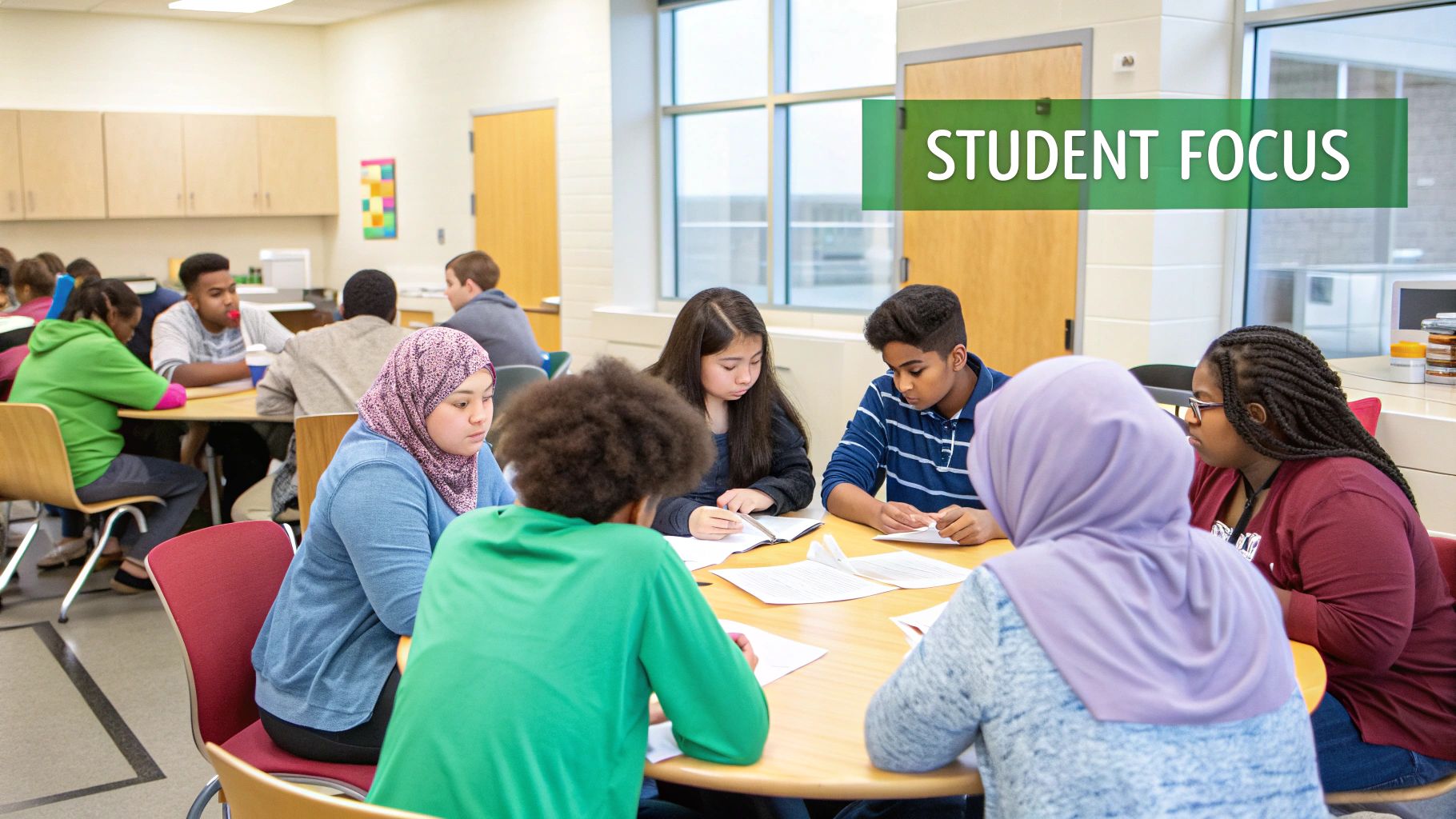
Think of a classic classroom as a guided bus tour. The teacher is the guide, deciding the route, the stops, and exactly what everyone learns at each landmark. Every student gets the exact same pre-packaged experience, no matter what they're personally curious about. It's efficient, sure, but it can leave learners feeling like they're just along for the ride.
Now, imagine the student-centered approach as being more like a collaborative travel agency. The teacher works with students to design the itinerary. The final destination—the learning goal—is the same, but the journey to get there is wide open. Students might choose to explore a historical event by creating a documentary, writing a series of blog posts, or building an interactive timeline.
A New Role For Teachers and Students
This model completely redefines what it means to be a teacher and a learner. The teacher is no longer the "sage on the stage" but becomes the "guide on the side." Their job is to provide resources, ask thought-provoking questions, and facilitate exploration, not dictate every single step. They create a space where curiosity is the main event and mistakes are just part of the process.
Students, in turn, are no longer empty vessels waiting for facts. They become active drivers of their own education. They’re empowered to:
- Take Ownership: They get a real say in what they learn and how they show what they know.
- Build Autonomy: They figure out how to manage their time, set goals, and find the resources they need to succeed.
- Collaborate Effectively: Learning becomes a team sport where students tackle complex problems together, much like they will in the modern workplace.
To get a clearer picture, let's look at how these two models stack up side-by-side.
Teacher-Centered vs Student-Centered Classrooms
This table offers a quick comparison, highlighting the fundamental differences between traditional instruction and the modern student-centered approach.
| Classroom Aspect | Teacher-Centered Approach | Student-Centered Approach |
|---|---|---|
| Focus of Class | Teacher is the expert; lectures dominate | Students are active participants; collaboration is key |
| Learning Pace | All students follow the same pace | Students can progress at their own pace |
| Student Role | Passive receiver of information | Active constructor of knowledge |
| Teacher Role | "Sage on the stage" | "Guide on the side" |
| Assessment | Standardized tests; focus on correct answers | Portfolios, projects; focus on understanding |
| Environment | Quiet, orderly, rows of desks | Collaborative, dynamic, flexible seating |
As you can see, the shift is less about minor tweaks and more about a fundamental change in the classroom's entire dynamic.
Why This Approach Matters Now
The move toward student-centered learning isn't just a trend; it's a direct response to the demands of the modern world. This approach prioritizes active engagement and collaboration over rote memorization. The results speak for themselves. Graduates from these environments are often better prepared for the workforce, with studies showing they are 22% more likely to land a job within six months than their peers from traditional programs. Discover more insights about the global rise of SCL on vitaeready.org.
The core idea of student-centered learning is that learning is most effective when it is an active, constructive, and social process, driven by the learner's own goals and interests.
Ultimately, understanding what student-centered learning is means recognizing this profound shift. It’s not just a new teaching technique; it’s a complete change in philosophy that puts the student right at the heart of their own education, preparing them not just for the next test, but for life.
The Four Core Principles of Student-Centered Learning
To really get what student-centered learning is all about, we have to look past the general idea and dig into its core pillars. This isn't just some vague educational theory; it's a framework built on four distinct, connected principles that work together to flip the classroom from a place of passive listening to one of active creation.
Think of it like a four-legged table. If one leg is weak or missing, the whole thing gets wobbly. But when all four are solid, they create a stable surface where real, meaningful learning can happen.
Let's break them down.
Voice: Giving Students a Real Stake in Their Education
The first pillar is voice. This is about so much more than just letting students ask questions. It's about giving them a genuine say in how their education unfolds. It means their opinions, interests, and bright ideas aren't just acknowledged—they're woven directly into the fabric of the classroom.
When students have a voice, they become co-designers of their own learning. For example, in a history class studying ancient civilizations, a teacher might ditch the standard essay assignment on Rome. Instead, they could ask the class how they want to explore the topic. The students might come back with ideas like creating a podcast series, building a scale model of the Colosseum, or even writing and performing a short play.
This simple shift empowers them to connect with the material on their own terms, turning a required task into a passion project. As this infographic shows, active learning—driven by student voice—is what truly puts the student at the heart of the experience.
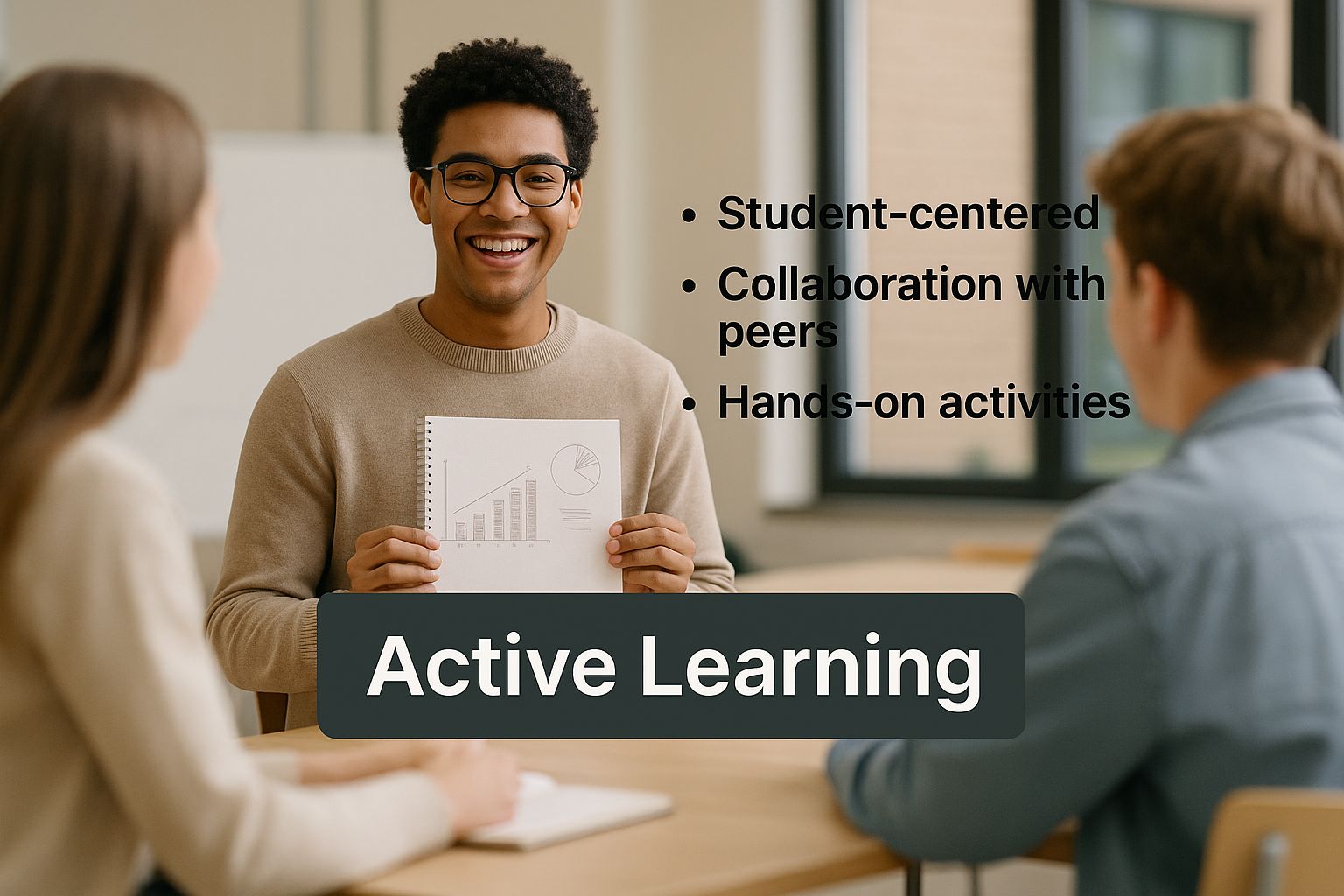
The image drives home a key point: when students are actively involved in presenting their work, they stop being just consumers of information and start becoming creators of knowledge.
Choice: Offering Meaningful Paths to Understanding
Flowing naturally from voice is choice. If voice is about having input, choice is about having real, meaningful options to act on that input. It’s an acknowledgment that there's always more than one way to get to the right answer.
And we're not talking about superficial choices, like picking a red or blue folder. We’re talking about giving students agency over both the learning process and the final product.
- Content Choice: Students might get to pick which novel to read from a curated list for a literature unit.
- Process Choice: They could decide whether to tackle a tough math problem on their own, with a partner, or as part of a small group.
- Product Choice: To show they understand the water cycle, they could create a diagram, produce an animated video, or build a physical model.
By putting these kinds of options on the table, educators tap directly into a student's personal interests and strengths, which is a surefire way to boost motivation and engagement.
In a student-centered classroom, learning isn't a one-size-fits-all uniform. It's a well-stocked wardrobe where students can pick the outfit that fits them and the occasion, letting them show what they know with confidence and style.
Competency-Based Progression: Mastering Skills, Not Marking Time
The third principle, competency-based progression, is a huge break from the old way of doing things. Here, students don't move on just because they've hit a certain age or spent enough hours in a seat. They advance only after they've proven they've truly mastered a skill or concept.
This approach is deeply personal. One student might get the hang of fractions in a week, while another needs three weeks and a completely different set of resources. Both outcomes are perfectly fine because the goal isn't speed—it's deep, lasting understanding.
This isn’t just a classroom technique anymore; it's becoming the blueprint for future education systems. Instead of a rigid curriculum, students will follow personalized learning paths, proving their skills with things like micro-credentials and digital badges that show exactly what they can do. You can learn more about the future of competency-based education at 220leadership.com.
Collaboration: Learning Is a Team Sport
Finally, there’s collaboration. This principle treats learning as a social, interactive activity. It transforms the classroom from a grid of quiet, isolated desks into a dynamic space where students team up to solve problems, debate ideas, and build knowledge together. Honestly, it looks a lot more like how things get done in the real world.
Working together teaches those critical soft skills that everyone needs: communication, negotiation, and empathy. Imagine a group of students working on a science project to design a sustainable community garden. Along the way, they’re not just learning about biology—they’re learning how to delegate tasks, work through disagreements, and mash up their unique talents to hit a shared goal. It ensures students are ready for a world that runs on teamwork.
The Real-World Payoff of Putting Students First
Shifting to a student-centered classroom is so much more than a new teaching philosophy—it delivers powerful, tangible results for everyone involved. When students get a real say in their learning, and the entire process is built around their needs and curiosities, the whole dynamic in the room changes for the better. We see deeper understanding, way more engagement, and kids developing the skills they'll actually need out in the world.
For students, this approach completely flips the script on what school feels like. Education is no longer a passive activity where they just sit and absorb information. It becomes an active, meaningful journey of discovery. They aren’t just memorizing facts for the next test; they’re building knowledge that actually sticks because it connects directly to their own interests and experiences.
Engagement and Understanding Go Through the Roof
When students have a voice in their learning, their motivation skyrockets. It's just human nature. They finally see the why behind what they're studying, which ignites a genuine desire to learn. This isn't about making school "fun" with gimmicks—it's about making it meaningful. Think about it: a student who gets to create a podcast about the Civil War is going to connect with that material on a completely different level than one who is just told to write another essay.
That spike in engagement leads directly to better comprehension. Active learning—whether it’s through hands-on projects, spirited debates, or group problem-solving—forces students to wrestle with complex ideas. They aren't just passively hearing information anymore. They're applying it, questioning it, and making it their own.
A student-centered classroom builds independence and self-reliance, getting students ready not just for the next grade, but for college, careers, and life. It creates learners who know how to set their own goals, tackle problems, and take ownership of their growth.
This active process also helps create a much more positive classroom culture. When students feel like their voice matters and they're respected as individuals, you often see behavioral issues start to fade away. The teacher's focus shifts from managing a classroom to guiding a journey of discovery, and that creates a more collaborative and supportive vibe for everyone.
Building the Skills That Actually Matter in the 21st Century
Beyond better test scores, student-centered learning is an absolute powerhouse for developing critical life skills. The old-school model was great at teaching compliance and memorization. But the modern world demands creativity, collaboration, and the ability to manage yourself.
A student-centered classroom is the perfect training ground for these skills. Here’s a quick look at how:
- Creativity and Innovation: When you give students choices in how they show what they know, you're practically inviting them to think outside the box and come up with original solutions.
- Self-Management: Giving students more control over their learning path teaches them how to manage their time, set priorities, and stay organized—skills that are non-negotiable in any career.
- Problem-Solving: Things like Project-Based Learning push students to identify messy, real-world problems and work together to design and build workable solutions.
These aren't just "soft skills"; they're the exact abilities that employers are begging for. This model prepares students for a future where being adaptable is far more valuable than having a head full of memorized facts.
A New, More Rewarding Role for Teachers
The benefits don't stop with the students. For educators, making the switch from the "sage on the stage" to the "guide on the side" can be one of the most rewarding moves of their career. Instead of spending all their time delivering lectures, teachers get to focus on building real, meaningful connections with their students.
This new role empowers teachers to:
- Truly Know Their Students: By watching students work, collaborate, and struggle, teachers gain incredible insights into their individual strengths, weaknesses, and passions.
- Facilitate "Aha!" Moments: There's nothing more satisfying than guiding a student toward a breakthrough, rather than just handing them the answer.
- Build Stronger Relationships: A collaborative classroom breeds mutual respect and trust, which makes for a much more positive and productive experience for teachers and students alike.
At the end of the day, student-centered learning is a win-win. Students become more engaged, capable, and self-directed, while teachers rediscover their passion for helping them on that journey.
How to Implement Student-Centered Strategies
Moving from theory to practice is where the real magic happens. The good news? Shifting to a student-centered model doesn't mean you have to tear down your classroom walls and start from scratch. It's all about making intentional, gradual changes.
You can start incorporating proven techniques that give learners the keys to the car. These strategies are flexible enough for any grade level, whether you're teaching elementary science or high school literature. Let's dig into a few of the most powerful ones.
Adopt Project-Based Learning
Project-Based Learning (PBL) is a true cornerstone of the student-centered classroom. It yanks learning out of the textbook and plants it firmly in the real world, asking students to tackle tangible challenges.
Instead of just memorizing the parts of a plant, imagine a science class tasked with designing and building a community garden to address local food deserts. Now that's authentic. Students work for an extended period to solve a complex problem, ending with a public product or presentation that showcases their journey.
The PBL process usually follows a natural flow:
- Launch with a Driving Question: Kick things off with a big, open-ended question that gets the gears turning. Something like, "How can we design a park that meets the needs of our entire community?"
- Facilitate Inquiry: The teacher's role shifts from lecturer to facilitator. You provide resources and guidance while students ask their own questions, do the research, and hunt for information.
- Encourage Collaboration: Just like in the real world, students work in teams to brainstorm ideas, solve problems as they arise, and delegate tasks.
- Create and Revise: Teams develop their solution or product, getting feedback from you and their peers to make it better and better.
- Present a Public Product: The project culminates in students sharing their final work with an authentic audience—community members, local experts, or other classes.
In PBL, the project isn't the dessert you get after eating your vegetables. It's the whole meal. The learning happens through the work, not before it.
Embrace Inquiry-Based Learning
Curiosity is the engine of Inquiry-Based Learning. It all starts with a question, a puzzle, or an observation, and the entire learning process is driven by the students' own quest to find the answers.
This approach completely flips the script on the old model of teachers delivering facts for students to consume. Here, your job is to spark curiosity and then guide the investigation.
For example, instead of a lecture on gravity, you might just ask, "Why do different objects fall at different speeds?" From that simple question, students can design their own experiments, test their theories, and discover the principles for themselves. This builds critical thinking and research skills that will last a lifetime.
Create Personalized Learning Paths
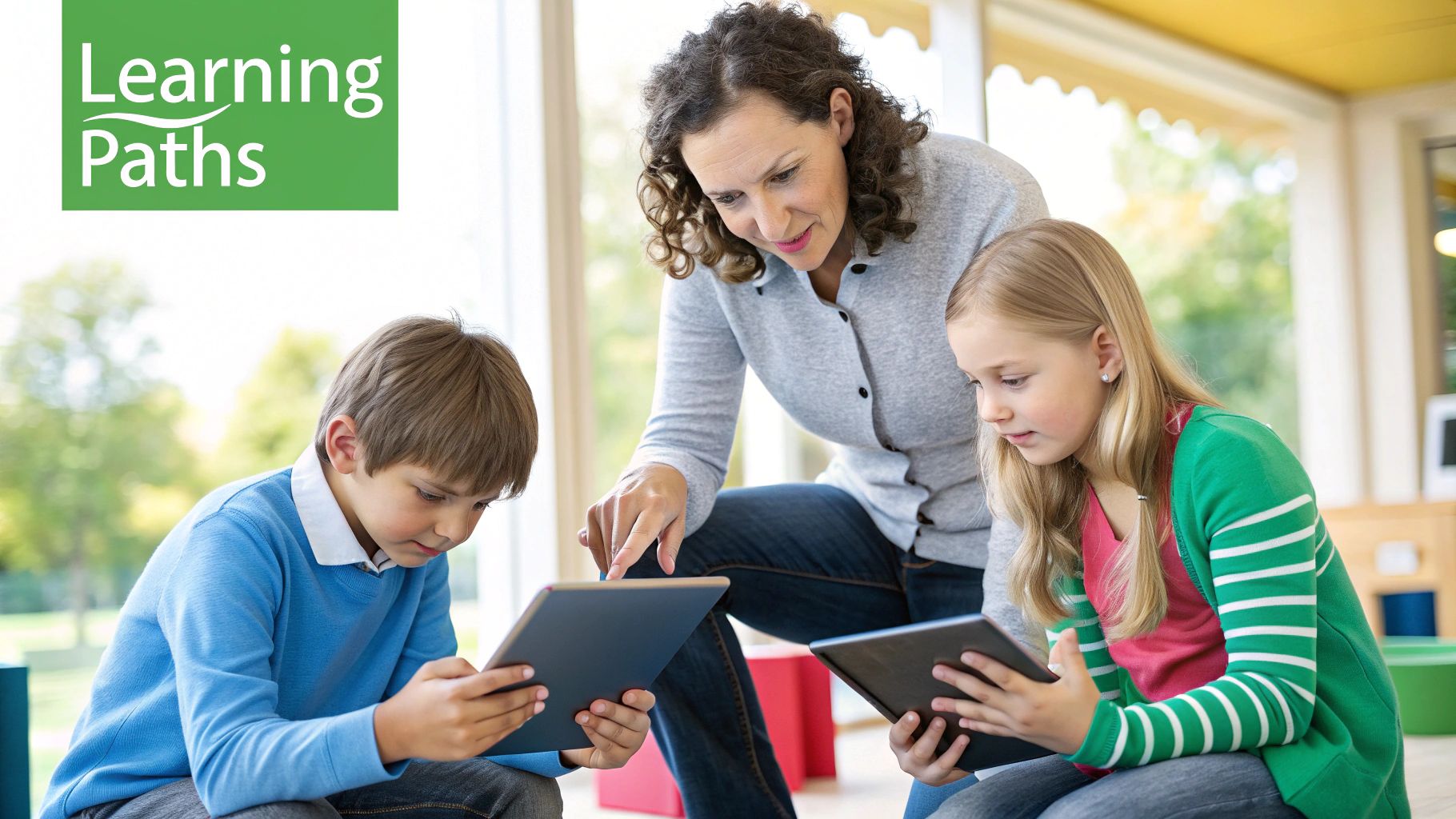
Let's be honest: every student learns differently. Personalized Learning Paths honor that reality by giving students choices in how they learn and how they show what they know. Technology has made this more achievable than ever, even with a classroom full of students.
Here are a few ways to get started:
- Use Choice Boards: Create a simple grid of activities. Students might have to complete three in a row or one from each column, giving them control over their tasks.
- Offer Multiple Formats: Let students demonstrate mastery in a way that plays to their strengths. They could write a report, create a video, record a podcast, or design an infographic.
- Leverage Technology: Adaptive learning platforms are great tools for this, as they can adjust the difficulty of content in real-time based on how a student is performing.
This push for customization is a huge reason the educational technology market is exploding. The global shift toward online and hybrid formats, which lean heavily on student-centered ideas, is only accelerating this trend. In the United States alone, the online learning market was valued at $100 billion and is projected to skyrocket to nearly $687 billion by 2030. This incredible growth, which you can read more about in the 2025 global education outlook on holoniq.com, underscores just how much education is changing.
Actionable Strategies for Your Classroom
Ready to try some of these ideas out? This table breaks down the core focus of each strategy with a simple activity you can adapt for your own classroom.
| Strategy | Core Focus | Example Activity |
|---|---|---|
| Project-Based Learning | Solving authentic problems | Students design a solution to a real school or community issue (e.g., reducing waste, improving a local park). |
| Inquiry-Based Learning | Student-led investigation | Start with a "wonder wall" where students post questions. Let them choose one to research and present their findings. |
| Personalized Paths | Choice and flexibility | Create a "tic-tac-toe" choice board for a unit where students must complete three activities in a row to show mastery. |
| Collaborative Learning | Teamwork and communication | Use the "Jigsaw" method: each student becomes an expert on one piece of a topic and then teaches it to their home group. |
By weaving these strategies into your teaching, you build a classroom where students aren't just passive listeners but active architects of their own education. This shift does more than just boost engagement—it equips them with the autonomy and problem-solving skills they'll need to navigate a complex future.
Of course. Here is the rewritten section, crafted to sound completely human-written and natural, following your specific guidelines and examples.
Navigating the Bumps in the Road
Let's be honest: shifting to a student-centered model is an incredible journey, but it’s rarely a perfectly straight path. Moving away from the traditional, teacher-led script means hitting a few common—and totally manageable—bumps along the way. Knowing what these hurdles are from the start is the first step to building a classroom that’s both resilient and successful.
Interestingly, the biggest obstacles usually aren't about the curriculum itself. They’re about people. You might see some resistance from educators who are masters of their current methods, students who feel a little lost with their newfound freedom, and even parents who are comfortable with the familiar world of lectures and letter grades.
Getting everyone on board takes a bit of empathy, a lot of clear communication, and a solid game plan.
Overcoming Resistance to Change
One of the toughest hurdles is just plain old human nature. We get comfortable with what we know. For many teachers and students, the "sage on the stage" model is familiar territory. Teachers might worry about losing control, while students can feel anxious when they're suddenly asked to take the wheel after years of being passengers.
To make this shift feel less like a jolt, a phased rollout works wonders. Instead of flipping a switch overnight, try introducing small, digestible changes:
- Start with one new strategy. Maybe it’s a single Project-Based Learning unit or offering a choice board for one assignment.
- Provide crystal-clear examples and rubrics. This helps students see exactly what success looks like in this new setup.
- Celebrate the small wins. Showcasing great student work that came from this new approach builds momentum and proves the concept to everyone.
This gradual approach lets both teachers and students build confidence. They get to see the positive results for themselves, which is the fastest way to turn a skeptic into a supporter.
Rethinking How We Grade
Another big question that always comes up is assessment. How can you grade fairly when every student is tackling a different task or moving at their own pace? The classic A-F, multiple-choice test just doesn't quite fit a model that's all about the learning process, creativity, and working together.
The answer lies in embracing authentic assessment—methods that measure real-world skills and true understanding, not just memorization.
In a student-centered classroom, assessment stops being a final judgment and becomes an ongoing conversation. The focus is on growth over time, using tools that actually reflect the messy, wonderful process of learning.
This means shifting toward methods like:
- Project-Based Rubrics that look at critical thinking, collaboration, and creative problem-solving right alongside the core content.
- Student Portfolios that gather a collection of work, showing a student's journey, progress, and reflections over a semester.
- Peer and Self-Assessments that give students the power to critique their own work and learn from their classmates.
These methods paint a much richer, more accurate picture of what a student can do than a single test score ever could.
Managing Time and Resources
Finally, there’s the very real concern about time and resources. Crafting unique learning paths and juggling multiple student projects can feel like a huge lift, especially with a big class and a small budget.
But a lack of resources doesn’t have to be a dealbreaker. Often, the solution is just getting creative and using the assets you already have—including your students. Empowering students to be peer tutors or group leaders can free you up to focus on those who need more direct support. Simple, low-tech tools like whiteboards for brainstorming or shared Google Docs for collaboration can foster student agency without any fancy software.
By anticipating these common challenges—resistance, assessment, and resources—and meeting them with practical, thoughtful strategies, you can build a classroom that truly puts students right where they belong: at the heart of their own education.
Why the Future of Education Is Student Centered
Embedded content
Let's be honest: student-centered learning isn't just another buzzword making the rounds at education conferences. It's a fundamental shift in how we think about preparing kids for a world that simply doesn't play by the old rules.
The future isn’t about who can memorize the most facts. That's what Google is for. It’s about who knows how to learn, adapt, and figure things out on the fly. The traditional, one-size-fits-all model was never built for that.
This approach completely changes the game. The goal is no longer to just download information from a teacher's brain into a student's. Instead, we’re trying to build capable, confident people who can handle ambiguity, solve messy problems, and take real ownership of their growth.
When a student learns to manage their own project or chase down an answer to a question they asked, they're not just studying for a test. They're building the muscles for a successful life.
Cultivating Adaptable Lifelong Learners
The modern world rewards innovators and critical thinkers, not human encyclopedias. By putting students in the driver's seat of their own education, we give them the tools to thrive out there.
Think of a student-centered classroom as a real-world training ground. It’s a safe place to practice:
- Embracing Curiosity: Inquiry-based projects teach them how to ask good questions and hunt for their own answers.
- Collaborating Effectively: Group work builds the communication and teamwork skills that every single career path demands.
- Managing Themselves: Personalized learning paths show them what it means to be autonomous, manage their time, and be accountable.
These aren't "soft skills." They're essential skills that define resilient, resourceful, and successful adults.
Investing in student agency is a direct investment in our collective future. We are not just creating better students; we are cultivating the next generation of innovators, leaders, and problem-solvers who will shape a better world.
A Call for Empowered Classrooms
Making this happen takes a real commitment from everyone involved—educators, administrators, and the community. It means we have to trust students with more responsibility and create spaces where their voices and choices actually matter.
The vision is simple but incredibly powerful: a classroom where every single student feels seen, heard, and empowered to steer their own ship.
By embracing the core ideas of student-centered learning, we’re doing more than just improving test scores. We're building a more capable, curious, and resilient society, ready to tackle whatever tomorrow throws at us. The future of education is here, and it’s all about the student.
Frequently Asked Questions
Even when the big ideas make sense, the practical, day-to-day questions are what really matter. How does this actually work in a real classroom?
Let's dig into some of the most common questions we hear.
How Is This Different From Differentiated Instruction?
This is a great question because they feel so similar. The two concepts are definitely related, but the key difference boils down to one word: agency.
Think of it this way:
Differentiated Instruction is something a teacher does for students. The teacher sees different needs in the room and tweaks the content, process, or final product so everyone can hit the same target. They might offer three different articles on the same topic—easy, medium, and hard. The teacher is driving.
Student-Centered Learning hands the keys over to the student. The teacher still defines the destination (the learning goals), but the students get a real say in the route they take to get there. They have a voice in the process and a choice in how they show what they know.
So, while differentiation is about the teacher personalizing the path for the student, student-centered learning is about empowering the student to help design that path themselves.
Can This Model Work in a Large Class?
Absolutely. But you have to be strategic. The thought of creating unique learning paths for 30+ students at once can be overwhelming, but it’s totally achievable if you stop thinking in terms of whole-group lessons.
Instead of trying to juggle dozens of individual projects simultaneously, you can lean on flexible structures:
- Learning Stations: Set up different zones around the classroom. Students can rotate in small groups through various activities—maybe one station is for collaborative problem-solving, another is for independent work on a digital tool, and a third is for a quick check-in with you.
- Group Work: Don't underestimate the power of collaboration. Give small groups complex, project-based tasks. This allows students to lean on and learn from each other while you shift into the role of a facilitator, moving between groups to guide and support them.
These simple shifts make a large class feel much smaller, carving out the space needed for personalized learning to take hold.
The key to grading in a student-centered environment is to shift the focus from a single, high-stakes test to a broader collection of evidence that shows a student's growth and mastery over time.
How Do You Grade Students Fairly?
This is often the biggest hurdle for teachers making the switch. When every student’s path looks a little different, the old-school grade book just doesn't work anymore. The solution is to use assessments that measure genuine understanding, not just whether a task was completed.
Here are a few powerful alternatives:
- Competency-Based Grading: Instead of averaging points, you assess students on their mastery of specific skills. They only move forward once they've demonstrated they truly get it, and their grade reflects that level of mastery.
- Project Rubrics: Before a project even starts, give students a clear, detailed rubric. It should spell out exactly what success looks like, covering everything from content knowledge and critical thinking to collaboration and creativity. No more mystery.
- Self-Assessment and Reflection: Turn students into active partners in their own assessment. When you ask them to reflect on their work, point out their own strengths, and set goals for what’s next, they take true ownership of their progress. Plus, you get incredible insight into their thinking.
At EarthChasers, we believe learning should be an adventure driven by curiosity. Our 3D geography game embodies the spirit of student-centered learning by empowering players to explore the world on their own terms, follow their interests, and build knowledge through active discovery. Start your global adventure today at https://earthchasers.com.
Article created using Outrank