
A Guide to 10 Unforgettable Africa Famous Landmarks for 2025
Explore our curated guide to 10 africa famous landmarks. Discover the history, travel tips, and cultural significance of these iconic destinations.
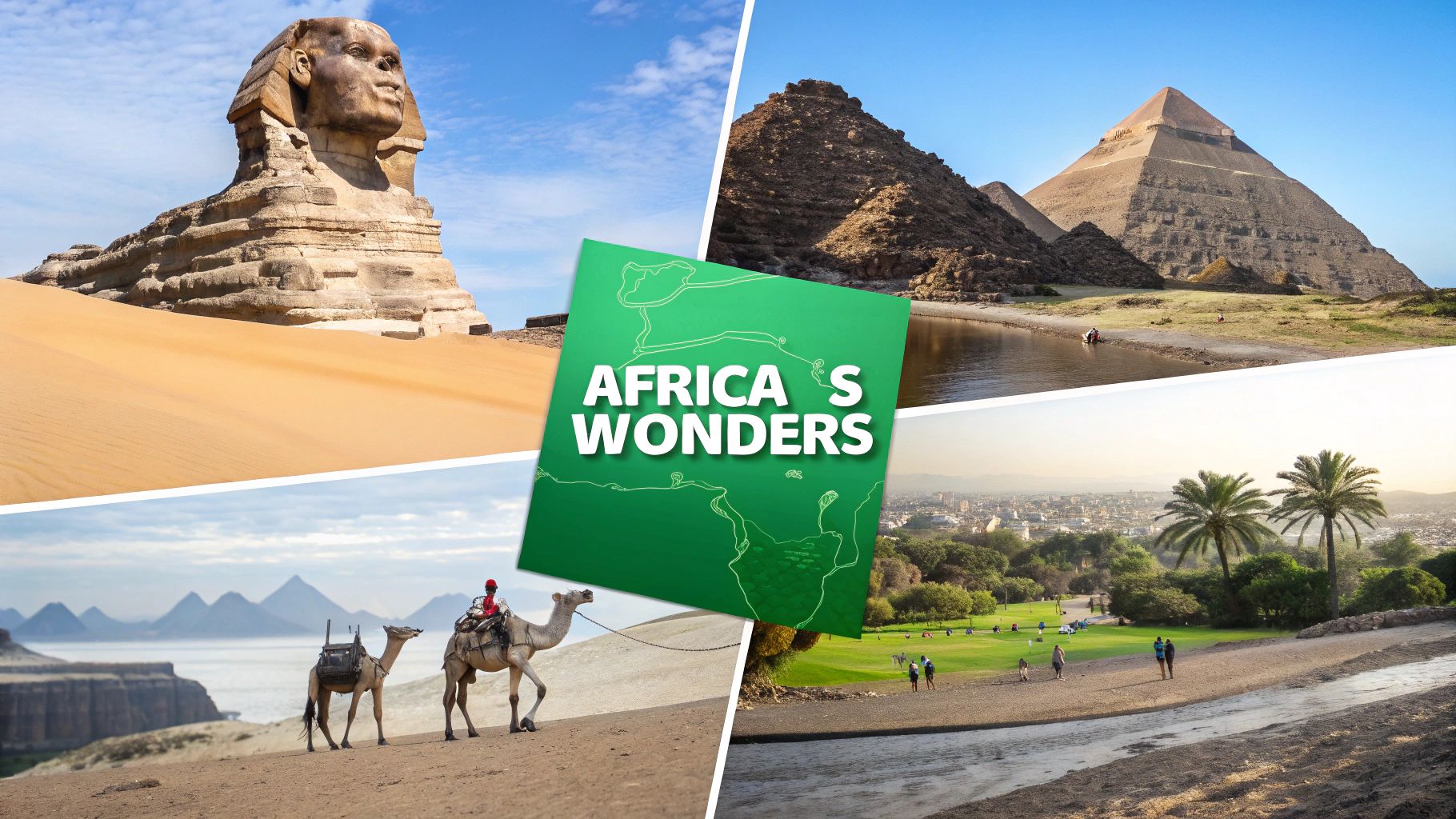
Africa, a continent of breathtaking diversity, is home to some of the world's most profound natural and man-made wonders. From the ancient mysteries of the Giza Plateau to the thundering power of Victoria Falls, each landmark tells a story of geological grandeur, human ingenuity, and deep cultural heritage. This guide is your map to exploring 10 of the most iconic Africa famous landmarks, designed for geography enthusiasts, trivia lovers, and adventurous gamers alike. We move beyond simple descriptions to offer a comprehensive toolkit for exploration.
For each destination, we'll uncover its rich history, explaining its global significance and cultural impact. You'll find practical, actionable tips for planning your visit, covering everything from the best time to go to essential items to pack. We'll also suggest a unique challenge for our fellow EarthChasers, turning your virtual or real-world exploration into an unforgettable adventure. Prepare to journey through millennia of history and across vast, awe-inspiring landscapes as we unveil the treasures of this magnificent continent.
Whether you're planning a future trip or simply fueling your curiosity from home, this curated list provides a structured look at marvels like Mount Kilimanjaro, the Sahara Desert, and the rock-hewn churches of Lalibela. Before embarking on such a grand adventure, it's wise to familiarize yourself with essential international travel safety tips to ensure a smooth and secure journey. Get ready to discover the stories, secrets, and sheer beauty behind Africa’s most celebrated sites, complete with quick-fire trivia to test your knowledge along the way. Your epic journey begins now.
1. Great Pyramid of Giza
The Great Pyramid of Giza, also known as the Pyramid of Khufu, is an enduring symbol of ancient ingenuity and one of the most iconic of Africa's famous landmarks. Located on the Giza Plateau just outside Cairo, it is the oldest and largest of the three main pyramids and, remarkably, the only one of the Seven Wonders of the Ancient World still standing. Constructed around 2560 BCE as a magnificent tomb for the Fourth Dynasty Egyptian pharaoh Khufu, its creation was a marvel of engineering that has puzzled historians for millennia.
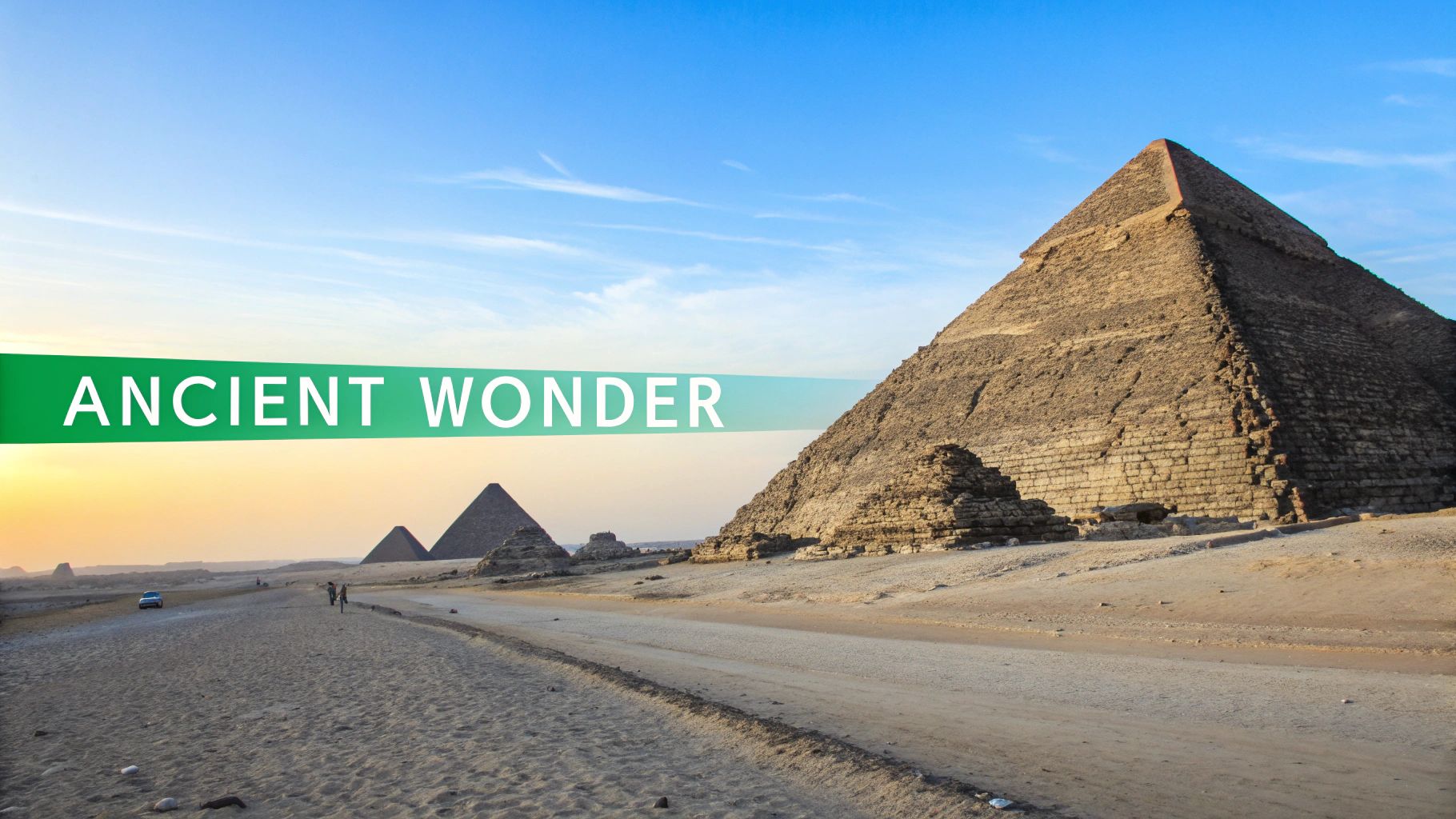
This colossal structure was the tallest man-made building in the world for over 3,800 years, originally soaring to a height of 481 feet (146.5 meters). Its construction involved quarrying, transporting, and meticulously placing approximately 2.3 million massive stone blocks, some weighing as much as 80 tons. The pyramid’s precision is astounding; its base is almost a perfect square, and its four sides are aligned with incredible accuracy to the cardinal points of the compass.
Key Insights & Visiting Tips
To make the most of your visit to this monumental landmark, planning is essential. The Giza Plateau can be overwhelmingly hot and crowded, especially during midday.
- Best Time to Visit: The cooler months from October to April offer the most pleasant weather. Aim to arrive right at opening time (usually 8 AM) or later in the afternoon to avoid the peak tourist rush and the harshest sun.
- Guided Tours: Hiring a licensed Egyptologist guide is highly recommended. They provide invaluable historical context that brings the silent stones to life and can help navigate the sprawling site efficiently.
- Going Inside: A limited number of tickets are sold each day to enter the Great Pyramid's inner chambers. Book these in advance online or through a tour operator, as they sell out quickly. Note that the passages are narrow and steep, which may be challenging for some visitors.
- Practical Needs: Wear comfortable shoes, a hat, and sunglasses. Sunscreen is non-negotiable, and carrying plenty of water is crucial to stay hydrated in the desert climate.
2. Victoria Falls
Known locally as "Mosi-oa-Tunya" or "The Smoke that Thunders," Victoria Falls is a breathtaking testament to the raw power of nature and one of the most awe-inspiring of Africa's famous landmarks. Situated on the Zambezi River at the border between Zambia and Zimbabwe, it is neither the highest nor the widest waterfall in the world, but its combined height of 355 feet (108 meters) and width of 5,604 feet (1,708 meters) create the largest single sheet of falling water on the planet. The resulting spray can be seen from miles away, sustaining a unique rainforest ecosystem on its cliffs.
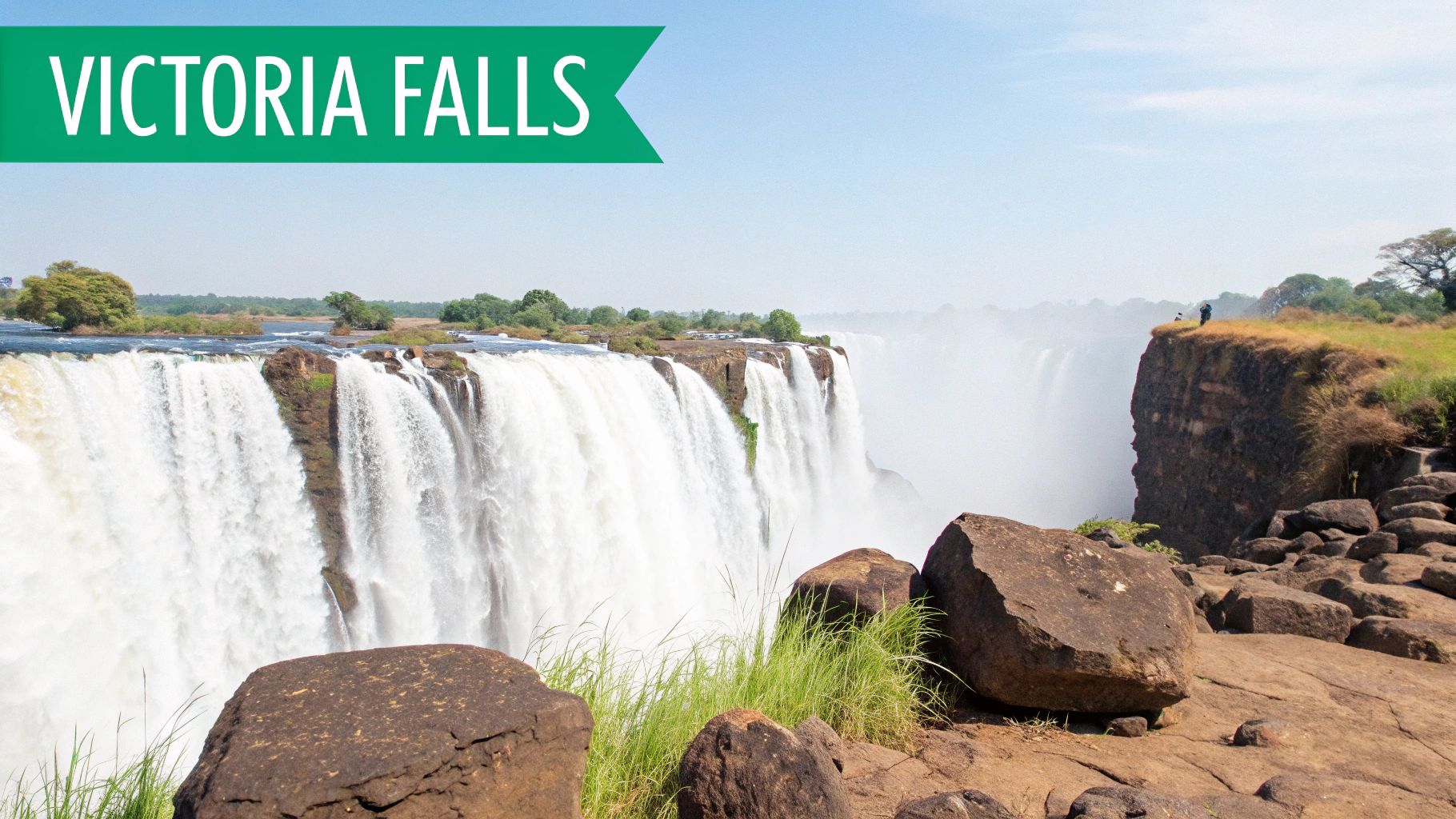
This colossal curtain of water plunges into a deep, narrow chasm, creating a dramatic and thunderous spectacle that captivates every visitor. Its sheer scale and sensory overload make it a truly unforgettable experience, and its importance as a UNESCO World Heritage Site highlights its global significance. From adrenaline-pumping activities like bungee jumping and white-water rafting to serene sunset cruises, the falls offer a diverse range of adventures. This iconic site is truly one of the great natural wonders of the world.
Embedded content
Key Insights & Visiting Tips
To fully experience the grandeur of Victoria Falls, timing and preparation are key. The experience can vary dramatically depending on the season and which side of the river you visit.
- Best Time to Visit: The rainy season (November to April) offers the most powerful views with maximum water volume. For better visibility and access to activities like Devil's Pool, visit during the dry season (May to October).
- Which Side to Choose: The Zimbabwean side offers panoramic views of about 75% of the falls, making it ideal for classic photos. The Zambian side provides closer, more intimate vantage points and access to the Boiling Pot trail.
- Get an Aerial View: For a true sense of scale, consider a helicopter or microlight flight. These "Flights of Angels" provide unparalleled perspectives of the falls and the winding Zambezi River gorge.
- Practical Needs: Waterproof clothing or a poncho is a must, as the spray is intense. Wear shoes with good grip, as pathways can be slippery. Start your visit early to avoid the afternoon heat and large crowds.
3. Mount Kilimanjaro
Soaring dramatically above the plains of northeastern Tanzania, Mount Kilimanjaro is not only Africa's highest peak but also the world's tallest free-standing mountain. This dormant volcano, rising to an awe-inspiring 5,895 meters (19,341 feet), is a globally recognized symbol of the continent's majestic natural beauty and one of the most sought-after of Africa's famous landmarks. Its snow-capped summit, a breathtaking anomaly so close to the equator, has captivated adventurers and scientists for generations.
Kilimanjaro is unique for its three distinct volcanic cones: Kibo (the highest and central cone), Mawenzi, and Shira. Climbing this giant takes trekkers through a stunning array of ecosystems, from lush rainforests and heathlands to alpine deserts and, finally, an arctic summit zone. Unlike many of the world's great peaks, reaching the summit requires no technical mountaineering skills, making it an accessible challenge for determined hikers, often referred to as the "Everyman's Everest."
Key Insights & Visiting Tips
Successfully summiting Kilimanjaro is a serious undertaking that demands careful preparation. The biggest challenge is not the physical exertion but the high altitude, which can cause severe mountain sickness if not managed properly.
- Choose the Right Route: Several routes lead to the summit, each varying in length, scenery, and difficulty. The Marangu Route is the most established, while the Machame and Lemosho routes are more scenic and offer better acclimatization profiles.
- Acclimatization is Key: The golden rule is "climb high, sleep low." Allocate at least 7-8 days for your trek to allow your body to adjust to the altitude gradually. Rushing the ascent is the most common reason for failure.
- Best Time to Climb: The dry seasons from January to March and from June to October offer the best weather conditions, with clearer skies and less precipitation.
- Prepare Physically: While you don't need to be a professional athlete, a good level of cardiovascular fitness is essential. Start training 3-4 months in advance with long hikes, running, or cycling. Remember, it's a marathon, not a sprint.
4. Serengeti National Park
The Serengeti National Park in Tanzania is the quintessential African safari destination and one of the most vital of Africa's famous landmarks for wildlife. This sprawling ecosystem, covering over 5,700 square miles (14,750 square kilometers), is a theater for one of the planet's most awe-inspiring natural spectacles: the Great Migration. Every year, more than two million wildebeest, zebras, and gazelles embark on a cyclical journey across its vast, grassy plains in a relentless search for fresh water and grazing.
The name "Serengeti" is derived from the Maasai word "siringet," meaning "the place where the land runs on forever," which perfectly captures its seemingly endless horizons dotted with acacia trees. Beyond the migration, the park offers an unparalleled density of predators, including large prides of lions, elusive leopards, and swift cheetahs. It is also home to the "Big Five" (lion, leopard, elephant, rhino, and buffalo), making it a crucial sanctuary for biodiversity and a bucket-list destination for nature lovers.
Key Insights & Visiting Tips
To truly experience the magic of the Serengeti, timing and expert guidance are everything. The park's sheer size and the movement of its wildlife herds require careful planning.
- Best Time to Visit: To witness the dramatic river crossings of the Great Migration, plan your trip for June and July. For calving season, when thousands of wildebeest are born, visit between late January and February.
- Expert Guides: A safari is only as good as its guide. Use an experienced, local wildlife guide who knows the terrain, animal behaviors, and where to find the best sightings away from the crowds.
- Booking in Advance: Accommodations, from luxury lodges to tented camps, fill up months or even a year in advance, especially during peak migration seasons. Book everything as early as possible.
- Game Drives: The best wildlife viewing happens during the golden hours of early morning and late afternoon when animals are most active. Be prepared for early starts to maximize your experience.
- Photography & Safety: A telephoto lens is essential for capturing stunning wildlife photos from a safe distance. Always follow your guide’s instructions and respect park regulations by never getting out of the vehicle or disturbing the animals.
5. Egyptian Museum and Antiquities
While many of Africa's famous landmarks are ancient sites, the Egyptian Museum in Cairo is an essential cultural institution that serves as the treasure chest for the continent's Pharaonic history. Located in the historic Tahrir Square, this museum houses the world's most extensive and important collection of ancient Egyptian antiquities, with over 120,000 artifacts spanning more than 5,000 years. It provides the narrative context for nearly every other ancient site in the country.
Established in 1902, the museum is most famous for holding the spectacular treasures recovered from the tomb of Tutankhamun, including his iconic solid gold death mask. Beyond King Tut's collection, visitors can gaze upon the Royal Mummies Room, which contains the preserved remains of legendary pharaohs like Ramses II. The sheer volume of statues, papyri, jewelry, and sarcophagi offers an unparalleled journey into the daily life, religion, and governance of one of humanity's greatest civilizations.
Key Insights & Visiting Tips
Navigating the vast and often crowded halls of the museum requires a strategy. While the new Grand Egyptian Museum (GEM) is set to become the primary home for these treasures, the original Tahrir Square location remains a must-see.
- Best Time to Visit: Arrive right at opening (usually 9 AM) on a weekday to experience the exhibits with fewer people. Afternoons can become extremely congested, making it difficult to appreciate the displays.
- Prioritize Exhibits: The museum is enormous and can be overwhelming. To avoid fatigue, focus on key areas like the Tutankhamun galleries on the upper floor and the Royal Mummies Room. A plan prevents aimless wandering.
- Hire an Egyptologist: Engaging a certified guide is the best way to understand the significance of the artifacts. They can craft a tour based on your interests and bring the history behind the objects to life.
- Photography Rules: Policies on photography can change. Check the current regulations upon entry. In the past, a separate ticket was required for photography, and flash has always been strictly prohibited to protect the ancient artifacts.
- Time Allocation: Dedicate a minimum of 3-4 hours for a meaningful visit. This allows enough time to see the main highlights without feeling rushed.
6. Timbuktu (Ancient City)
Once a name synonymous with the most remote place on Earth, Timbuktu is a legendary city in Mali that stands as a testament to Africa's golden age of scholarship and commerce. Situated at a crucial crossroads of Saharan trade routes, it flourished from the 12th to the 16th centuries as a world-renowned center of Islamic learning. This historic city, one of Africa's most profound landmarks, became home to prestigious universities and libraries housing hundreds of thousands of priceless manuscripts.
The wealth of Timbuktu was not just in gold and salt but in knowledge. Its libraries contained texts covering a vast range of subjects, from astronomy and mathematics to law and literature, drawing scholars from across the Islamic world. The city's unique earthen architecture, exemplified by the Djinguereber, Sankore, and Sidi Yahia mosques, reflects a distinct Sudano-Sahelian style that has been preserved for centuries. Today, Timbuktu remains a powerful symbol of Africa’s rich intellectual heritage. For those looking to place this historic city on the continent, you can learn more about the countries of Africa and their incredible landmarks.
Key Insights & Visiting Tips
Visiting Timbuktu requires careful planning due to its remote location and the current security climate in the region. It is a journey for the determined traveler, rewarded with a deep connection to history.
- Check Advisories: Safety is paramount. Before planning any travel, thoroughly check the latest government travel advisories for Mali and the Timbuktu region. The security situation can be volatile.
- Hire Local Experts: Engaging a reputable local guide who is intimately familiar with the city and its current conditions is essential for both safety and gaining a meaningful understanding of the historical sites.
- Explore Early: The Saharan heat is intense. Plan your explorations for the early morning or late afternoon to avoid the punishing midday sun.
- Cultural Respect: Timbuktu is a deeply religious and culturally conservative city. Dress modestly, be mindful of local customs, and show respect, especially around mosques and during prayer times.
- Manuscript Libraries: A visit to the Ahmed Baba Institute or other manuscript libraries is a must. These institutions are working to preserve thousands of ancient texts, offering a direct link to the city's scholarly past.
7. Stone Town of Zanzibar
The Stone Town of Zanzibar is the historic heart of Zanzibar City, a captivating maze of narrow, winding alleyways that whisper tales of sultans, spices, and a complex history. This UNESCO World Heritage site stands as a living monument to Swahili culture, showcasing a rich architectural fusion of African, Arab, Persian, Indian, and European influences. As a key trading hub for centuries, particularly for spices and tragically, for slaves, its buildings and culture reflect this diverse and layered past.
Exploring Stone Town feels like stepping back in time. Its character is defined by towering stone houses, bustling bazaars, and intricately carved wooden doors, known as milango, which traditionally signified the wealth and status of the household. Key landmarks like the House of Wonders, the Old Fort, and the former Slave Market tell profound stories of its opulent and painful history. The entire district is a sensory experience, from the call to prayer echoing from minarets to the fragrant aroma of cloves and cardamom drifting from market stalls.
Key Insights & Visiting Tips
To truly appreciate the cultural depth of this African famous landmark, it helps to navigate its streets with awareness and respect. Its charm lies in getting lost, but a little planning goes a long way.
- Best Time to Visit: The cooler, dry seasons from June to October and December to February are ideal for exploring on foot. Wander through the alleys in the early morning to experience the town as it wakes up, with fewer crowds and softer light for photography.
- Local Guides: The labyrinthine streets can be disorienting. Hiring a licensed local guide is invaluable for navigating and understanding the historical significance of the sites you pass, from hidden courtyards to historic buildings.
- Cultural Respect: Stone Town is a predominantly Muslim community. Dress modestly by covering your shoulders and knees to show respect for the local culture. Be mindful of prayer times, when some shops may briefly close. Always ask for permission before taking photos of people.
- Authentic Experiences: Visit the Forodhani Gardens in the evening for a vibrant open-air food market. For authentic spices, seek out small, family-run shops away from the main tourist thoroughfares.
8. Sahara Desert
The Sahara Desert is not just a landmark but an entire world unto itself, a colossal expanse that defines the geography of North Africa. As the largest hot desert on Earth, it spans over 9 million square kilometers, covering vast portions of a dozen countries. Far from being a monotonous sea of sand, its landscape is a dramatic tapestry of towering ergs (sand seas), stark hamadas (rocky plateaus), and expansive gravel plains, making it one of the most awe-inspiring of Africa's famous landmarks.
This immense wilderness is a place of extreme beauty and survival, where life has adapted to dramatic temperature swings and minimal rainfall. For millennia, it has been a crossroads for trade and culture, navigated by nomadic peoples like the Tuareg and Berbers. Experiencing the Sahara offers a profound sense of scale, solitude, and connection to an ancient, untamed environment, from the golden dunes of Erg Chebbi in Morocco to the ancient rock art of Tassili n'Ajjer in Algeria.
Key Insights & Visiting Tips
Venturing into the Sahara requires careful planning and respect for its powerful environment. An organized tour is the safest and most practical way to explore its depths.
- Best Time to Visit: The cooler, more temperate months from October to April are ideal. Summer brings extreme and dangerous heat, making extensive travel unbearable.
- Expert Guidance: Never attempt to explore alone. Book a multi-day expedition with a reputable and experienced desert tour operator. Local guides possess indispensable knowledge of routes, water sources, and weather patterns.
- Essential Gear: Sun protection is paramount; bring high-SPF sunscreen, a wide-brimmed hat, and sunglasses. Pack layers of clothing for the cold desert nights. Carrying at least three liters of water per person per day is a minimum requirement.
- Cultural Immersion: The Sahara is a cultural landscape, not just a natural one. Engage respectfully with local communities, learn about their traditions, and support their economies by purchasing local crafts or hiring local services.
9. Lalibela Rock-Hewn Churches
Nestled in the highlands of northern Ethiopia, the Lalibela Rock-Hewn Churches represent an astonishing feat of faith and architecture. This complex consists of 11 medieval monolithic churches carved directly out of solid volcanic rock in the 12th and 13th centuries. According to Ethiopian tradition, King Lalibela commissioned their construction to create a "New Jerusalem" for Christians who could not make the pilgrimage to the Holy Land, making it one of the most revered of Africa's famous landmarks.
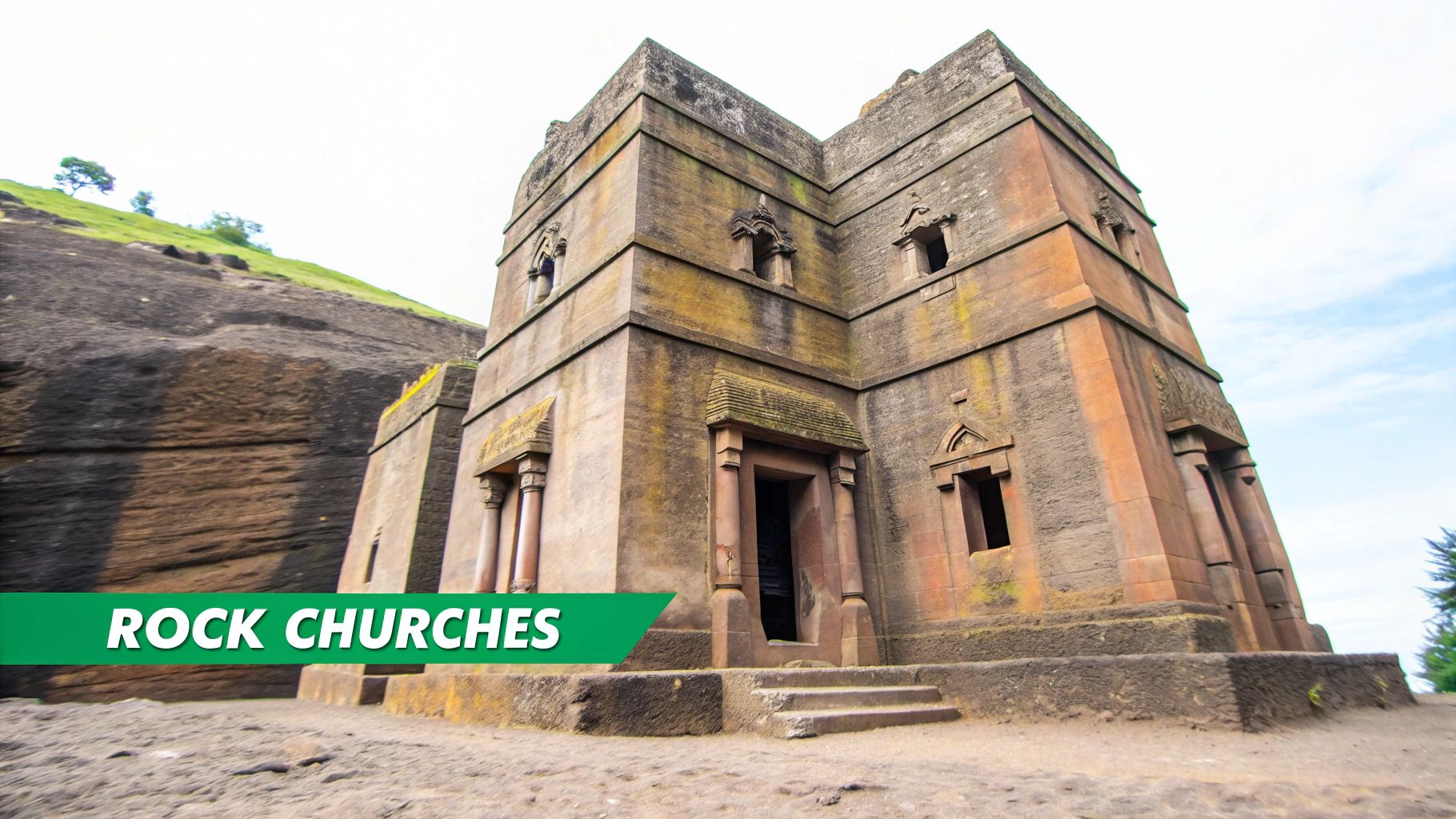
Unlike buildings constructed from the ground up, these sacred structures were chiseled from the top down, a subterranean marvel connected by a labyrinth of tunnels and passages. The most famous among them is the cross-shaped Bete Giyorgis (Church of St. George). This site is not merely an archaeological relic; it remains a vibrant center of pilgrimage and worship for Ethiopian Orthodox Christians, bringing ancient history to life. This incredible site is just one of many protected locations you can explore; learn more about other amazing UNESCO World Heritage Sites around the globe.
Key Insights & Visiting Tips
A visit to Lalibela is a deeply spiritual and historical journey. To fully appreciate its sacred atmosphere and architectural genius, thoughtful planning is essential.
- Best Time to Visit: The dry season, from October to May, is ideal for navigating the site's uneven terrain and passages. Major religious festivals like Timkat (Ethiopian Epiphany) in January offer a spectacular, though crowded, cultural experience.
- Guided Tours: Hiring a local, official guide, preferably an Orthodox Christian, provides profound insights into the symbolism and history that you would otherwise miss. They can expertly navigate the complex system of tunnels connecting the churches.
- Cultural Respect: As this is an active place of worship, dress modestly by covering your shoulders and knees. You will be required to remove your shoes before entering each church, so bring socks to walk on the cool stone floors.
- Timing Your Visit: Arrive early in the morning to experience the churches with fewer crowds and witness the serene atmosphere of morning prayers and chanting, which adds an unforgettable dimension to your visit. Always ask for permission before taking photos, especially of priests or worshippers.
10. Cape of Good Hope
The Cape of Good Hope is a spectacularly scenic and rugged headland at the tip of the Cape Peninsula in South Africa. Often mistakenly thought to be the southernmost point of Africa, it is instead the continent's most south-westerly point. Historically, it was a critical milestone for sailors navigating the treacherous "Cape Route" between Europe and Asia, marking the point where they began to travel more east than south. Its dramatic cliffs and wild, windswept landscapes make it one of Africa's most famous landmarks.
This iconic landmark is situated within the Table Mountain National Park, a region celebrated for its rich and unique biodiversity. The area is part of the Cape Floral Kingdom, the smallest but most diverse of the world's six floral kingdoms, boasting thousands of plant species found nowhere else on earth. Visitors can spot diverse wildlife, including Chacma baboons, elands, ostriches, and a variety of bird species, while the surrounding ocean is a prime spot for whale watching from June to November.
Key Insights & Visiting Tips
To fully appreciate the raw beauty of the Cape of Good Hope and the surrounding Cape Point, careful planning is essential. The weather is famously unpredictable and can change in an instant, so preparation is key.
- Best Time to Visit: Arrive early in the morning (gates open around 6 or 7 AM depending on the season) to avoid the large tour bus crowds and the notoriously strong afternoon winds. The golden light of the morning also offers the best photographic opportunities.
- Layer Your Clothing: The weather can shift from calm and sunny to cold and blustery very quickly. Bring wind-resistant clothing, a hat, and sunglasses, regardless of the initial forecast. Sunscreen is essential even on cloudy days.
- Explore Beyond the Sign: While the famous signpost is a must-have photo, take time to explore the area's hiking trails, such as the path to the Cape Point Lighthouse for panoramic views or the Olifantsbos trail for shipwrecks and wildlife.
- Practical Needs: Wear sturdy, comfortable walking shoes to navigate the rocky paths and trails. Pack water and snacks, as facilities are limited once you move away from the main visitor center. Allow at least three to four hours for a comprehensive visit.
Comparison of 10 Iconic African Landmarks
| Site | Complexity 🔄 (construction/management) | Resources ⚡ (infrastructure & upkeep) | Expected outcomes 📊 (impact & visitation) | Ideal use cases 💡 | Key advantages ⭐ |
|---|---|---|---|---|---|
| Great Pyramid of Giza | Ancient monumental build; high preservation complexity | Extensive conservation, controlled access, guide services | Major cultural tourism; high revenue and research value | Heritage tours, archaeology, education | Iconic ancient engineering; unparalleled historical significance |
| Victoria Falls | Natural hydrology with strong seasonal variability; cross-border management | Viewpoints, safety infrastructure, cross-border coordination | High-impact scenic & adventure tourism; variable visitor experience by season | Scenic photography, rafting, helicopter tours | Spectacular scale and mist curtain; rich biodiversity and adventure options |
| Mount Kilimanjaro | Multi-climate-zone ascent; altitude and acclimatization challenges | Guided expeditions, permits, porters, medical/rescue support | Adventure tourism with economic benefits; conservation pressures | Non-technical summit trekking, mountaineering practice | Africa's highest peak; accessible non-technical routes and panoramic views |
| Serengeti National Park | Dynamic ecosystem management (migration-driven); anti-poaching complexity | Patrols, guides, safari logistics, habitat protection programs | Strong wildlife-viewing value; scientific research and seasonal peaks | Safaris, migration viewing, wildlife research | World-class migration and biodiversity; exceptional predator and ungulate densities |
| Egyptian Museum & Antiquities | Large curated collections; climate-control and security challenges | Curatorial staff, conservation labs, storage, visitor facilities | High educational and research value; millions of annual visitors | Artifact study, museum education, cultural tourism | Largest assemblage of Egyptian artifacts; iconic objects (Tutankhamun) |
| Timbuktu (Ancient City) | Fragile manuscript preservation; security and urban conservation issues | Specialized conservation, security, limited tourism infrastructure | High scholarly/cultural significance; constrained visitor growth | Manuscript research, cultural heritage study (with security caution) | Unique repository of Islamic manuscripts and medieval scholarship |
| Stone Town of Zanzibar | Dense historic urban fabric; mixed-style architectural conservation | Local conservation funding, visitor services, infrastructure upgrades | Cultural tourism focus; economic benefits for local communities | Heritage walks, spice market visits, cultural immersion | Rich multi-cultural architecture and living Swahili heritage |
| Sahara Desert | Vast, harsh environment; logistical and safety complexity | Expedition support, water logistics, vehicles, experienced guides | Low-density but high-value adventure/scientific visits; seasonal peaks | Desert trekking, stargazing, cultural encounters with nomads | Immense scale, dramatic dunes and rock formations; pristine night skies |
| Lalibela Rock-Hewn Churches | Monolithic rock engineering; high conservation sensitivity | Specialist restoration, pilgrimage management, limited access | Religious pilgrimage and cultural tourism; strong scholarly interest | Pilgrimage, religious architecture study, cultural heritage tours | Unique monolithic churches still in liturgical use; exceptional medieval craftsmanship |
| Cape of Good Hope | Coastal headland with volatile weather; trail and visitor-safety management | Park management, trails, parking, conservation of fynbos habitat | Scenic outdoor tourism; education on coastal ecology; moderate-visitation | Hiking, coastal photography, marine wildlife watching | Dramatic seaside cliffs, endemic fynbos biodiversity, accessible from Cape Town |
Continue Your African Adventure with EarthChasers
Our journey across the continent has taken us from the sun-scorched dunes of the Sahara Desert to the misty spray of Victoria Falls, from the ancient mysteries of the Great Pyramid of Giza to the vibrant, living ecosystems of the Serengeti. We've scaled the virtual heights of Mount Kilimanjaro and delved into the sacred, stone-carved churches of Lalibela. Each of these Africa famous landmarks is more than just a pin on a map; they are profound testaments to human ingenuity, natural grandeur, and the deep, intricate history of our world.
This exploration has revealed a continent of incredible diversity. In Egypt, we saw how human ambition could create wonders that defy millennia. In Tanzania and Zambia, we witnessed the raw, untamable power of nature shaping landscapes on a colossal scale. From the scholarly legacy of Timbuktu to the unique cultural fusion in Stone Town, Zanzibar, the narrative of Africa is one of resilience, innovation, and breathtaking beauty. The common thread connecting these disparate sites is their ability to inspire awe and curiosity, urging us to look closer and understand the stories etched into their very foundations.
Key Takeaways from Our Landmark Tour
Reflecting on these ten incredible sites, several key themes emerge that underscore their global importance. Mastering these insights not only deepens your geographical knowledge but also enriches your appreciation for our shared global heritage.
- Human Ingenuity and Endurance: Landmarks like the Pyramids, the Rock-Hewn Churches of Lalibela, and the historical manuscripts of Timbuktu showcase humanity's capacity to achieve the extraordinary. These sites are monuments to faith, power, and the timeless pursuit of knowledge, proving that human creativity can leave a legacy that lasts for thousands of years.
- The Power of Natural Forces: The sheer scale of Victoria Falls, the ecological richness of the Serengeti, and the imposing peak of Kilimanjaro are reminders of nature's role as the ultimate architect. These landmarks are not static attractions; they are dynamic environments that support countless species and shape the climate and culture around them.
- Intersections of Culture and Commerce: The Cape of Good Hope and Stone Town are powerful examples of how geography drives history. These locations became critical nexuses for trade, exploration, and cultural exchange, forever altering the course of global events. Their stories are complex, layered with triumph and tragedy, making them vital for understanding our interconnected world.
Your Next Steps: From Virtual Tourist to Global Explorer
The journey doesn't have to end with the final word of this article. The true value of learning about these Africa famous landmarks lies in applying that knowledge and letting it fuel your curiosity. Whether you are a dedicated geography enthusiast, a trivia master, or a gamer seeking your next challenge, here are actionable ways to continue your adventure.
- Revisit the Details: Go back through the list and pick one landmark that particularly fascinated you. Use the travel tips and historical context provided as a launchpad for a deeper dive. Research the specific dynasties that built the pyramids or the unique flora and fauna found only on Mount Kilimanjaro.
- Test Your Knowledge: Put your memory to the test with the trivia prompts for each location. Challenge friends or family to a quiz. Understanding the "why" behind each landmark, not just the "what," is the key to truly mastering the subject.
- Plan a Digital Expedition: Use tools like Google Earth or, even better, EarthChasers to virtually visit these sites. Trace the path of the Nile River to the Giza Plateau or explore the winding alleys of Stone Town from your screen. This digital exploration can build a stronger mental map and bring these places to life.
By engaging with these iconic locations on a deeper level, you transform passive reading into an active pursuit of knowledge. This process makes the information more memorable and its impact more profound, connecting you to the broader story of our planet. This is more than just trivia; it is a gateway to understanding different cultures, ecosystems, and the immense timeline of Earth's history. Embracing this journey is an investment in becoming a more informed, curious, and engaged global citizen.
Ready to turn your knowledge into action? Explore these Africa famous landmarks and hundreds more in stunning 3D on EarthChasers. Test your geography skills in our Daily Hunt, create custom challenges, and compete with a global community of explorers. Start your adventure on EarthChasers today!