
Ace the Latin American Countries Quiz: Top Tips for 2025
Succeed in your Latin American Countries Quiz with our expert tips. Prepare effectively and boost your confidence for 2025!
Beyond the headlines and holiday destinations lies a region rich with history, diverse cultures, and stunning geographical wonders. A comprehensive Latin American countries quiz is more than just a test of memory; it's an invitation to explore the vibrant tapestry of nations from the Rio Grande down to Tierra del Fuego. This guide offers ten distinct quiz categories designed to challenge your existing knowledge, deepen your understanding, and perhaps even inspire your next real-world adventure.
Whether you are a geography enthusiast, a student looking to expand your horizons, or a traveler preparing for a trip, these questions provide a structured way to engage with the continent's complexity. Covering everything from capital cities and famous landmarks to political systems and linguistic diversity, this curated list will transport you across one of the world's most fascinating regions. Let's begin the challenge and see how well you truly know Latin America.
1. Capital Cities Challenge: Latin American Quiz
A foundational step in mastering regional geography is the Capital Cities Challenge, a classic format for any Latin American countries quiz. This quiz tests your ability to match each of the 20 Latin American countries (plus others like Guyana and Suriname) with its correct capital. The format can range from simple multiple-choice questions to fill-in-the-blank challenges, making it highly adaptable for various skill levels.
This type of quiz is a staple in educational settings, from AP Human Geography courses to the National Geographic Bee, because it builds an essential knowledge base. Popular online platforms like Sporcle have versions played millions of times, proving its engaging and competitive nature.
How to Excel in a Capitals Quiz
To improve your score, try these specific strategies:
- Regional Grouping: Don't memorize the list alphabetically. Instead, group countries by region: Central America, the Caribbean, and South America. This contextualizes each capital geographically.
- Mnemonic Devices: Create memorable phrases. For example, "Sucre is the sweet (sucre) constitutional capital of Bolivia."
- Visual Association: Use maps to visually connect a country's shape and location with its capital. This is especially helpful for trickier ones like Tegucigalpa (Honduras). For more practice with visual learning, check out this comprehensive South America map quiz to reinforce your knowledge.
2. Flag Identification and Symbolism Quiz
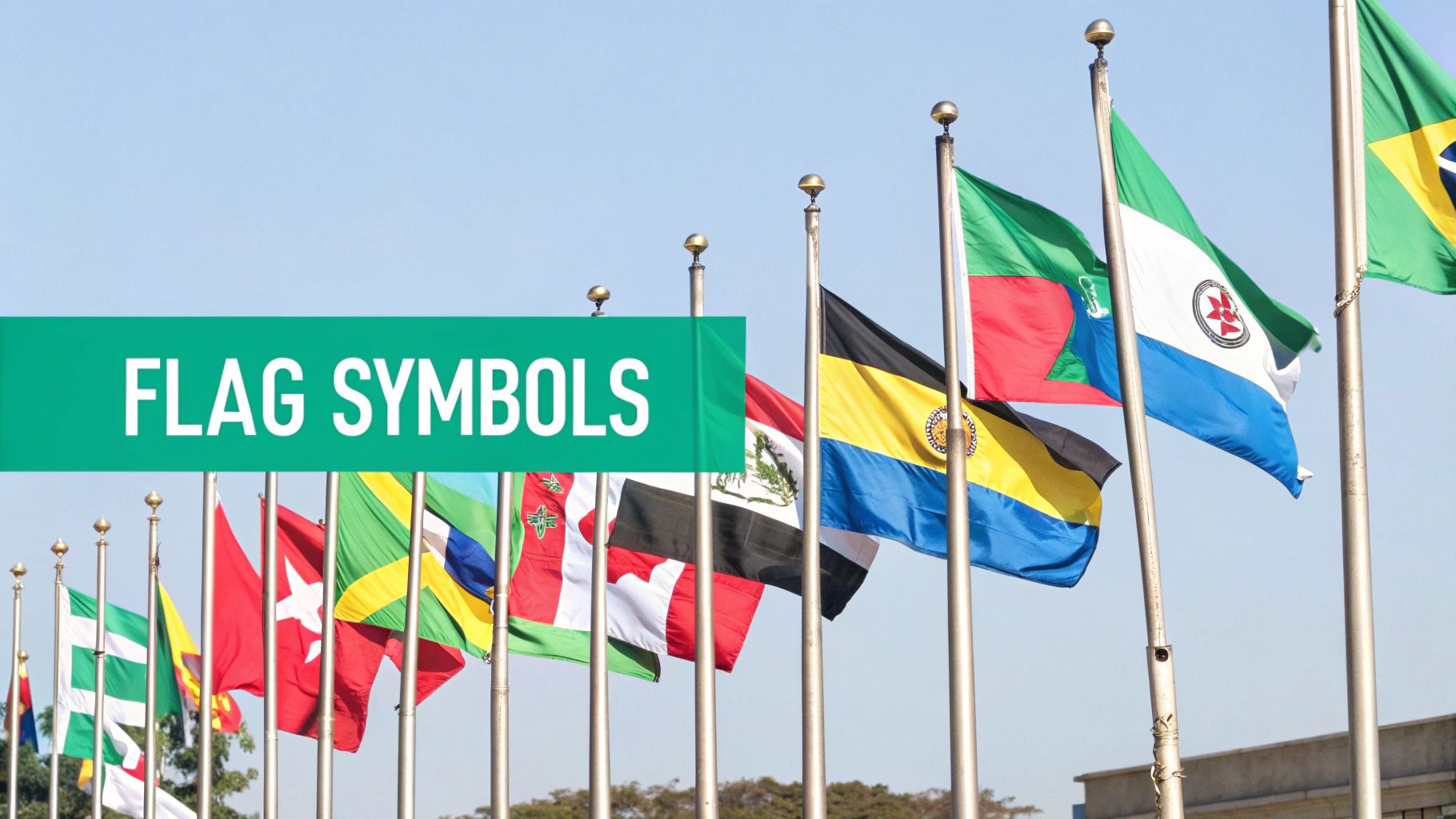
Beyond just names and places, a Flag Identification and Symbolism Quiz offers a visual and cultural deep dive into the region. This type of Latin American countries quiz challenges you to not only recognize a country's flag but also understand the stories behind its colors, emblems, and designs. It moves beyond simple memorization to explore national identity and history, making it a more engaging and meaningful test of knowledge.
This format is frequently used by vexillological associations and educational apps like Seterra to make learning interactive. It’s also common in international events like the Olympics or FIFA World Cup, where viewers are visually immersed in global flags, making it a highly relevant and popular quiz style.
How to Excel in a Flag Quiz
To master flag identification, try these focused techniques:
- Focus on Unique Elements: Start by identifying the most distinct feature on a flag. For example, lock in on Uruguay's "Sun of May" or Brazil's unique celestial globe on a yellow rhombus.
- Group and Contrast: Study similar-looking flags together, such as the tricolor flags of Colombia, Ecuador, and Venezuela. This forces you to notice the subtle but critical differences in stripe proportions and coats of arms.
- Use Storytelling: Connect the symbols to their historical meanings. Remembering that the red in Mexico's flag represents the blood of national heroes makes the design more memorable than just a color pattern.
3. Colonial History and Independence Timeline Quiz
Moving beyond geography, a Colonial History and Independence Timeline Quiz offers a deeper examination of the region's formation. This challenging format tests your knowledge of Latin America's colonial periods, pivotal independence movements, and the key figures who shaped them. The quiz covers the timeline from initial European contact through the widespread independence wars of the 19th century.
This type of quiz is common in academic settings like AP World History and university courses, as it requires a nuanced understanding of cause and effect. It moves beyond simple date memorization to connect events, ideologies, and leaders, making it a comprehensive test of historical literacy for any serious student of the region.
How to Excel in a History Quiz
To master this complex timeline, focus on a narrative approach:
- Create Visual Timelines: Map out key events chronologically. Compare parallel movements, such as the near-simultaneous declarations of independence in several South American countries in the 1810s.
- Focus on Key Leaders: Build the story around central figures like Simón Bolívar, José de San Martín, and Toussaint Louverture. Understanding their goals and campaigns provides a strong narrative framework.
- Connect Cause and Effect: Don't just learn when a revolution happened; learn why. Link events like the Napoleonic Wars in Europe to the weakening of Spanish colonial control.
The infographic below outlines the major eras covered in this type of Latin American countries quiz.
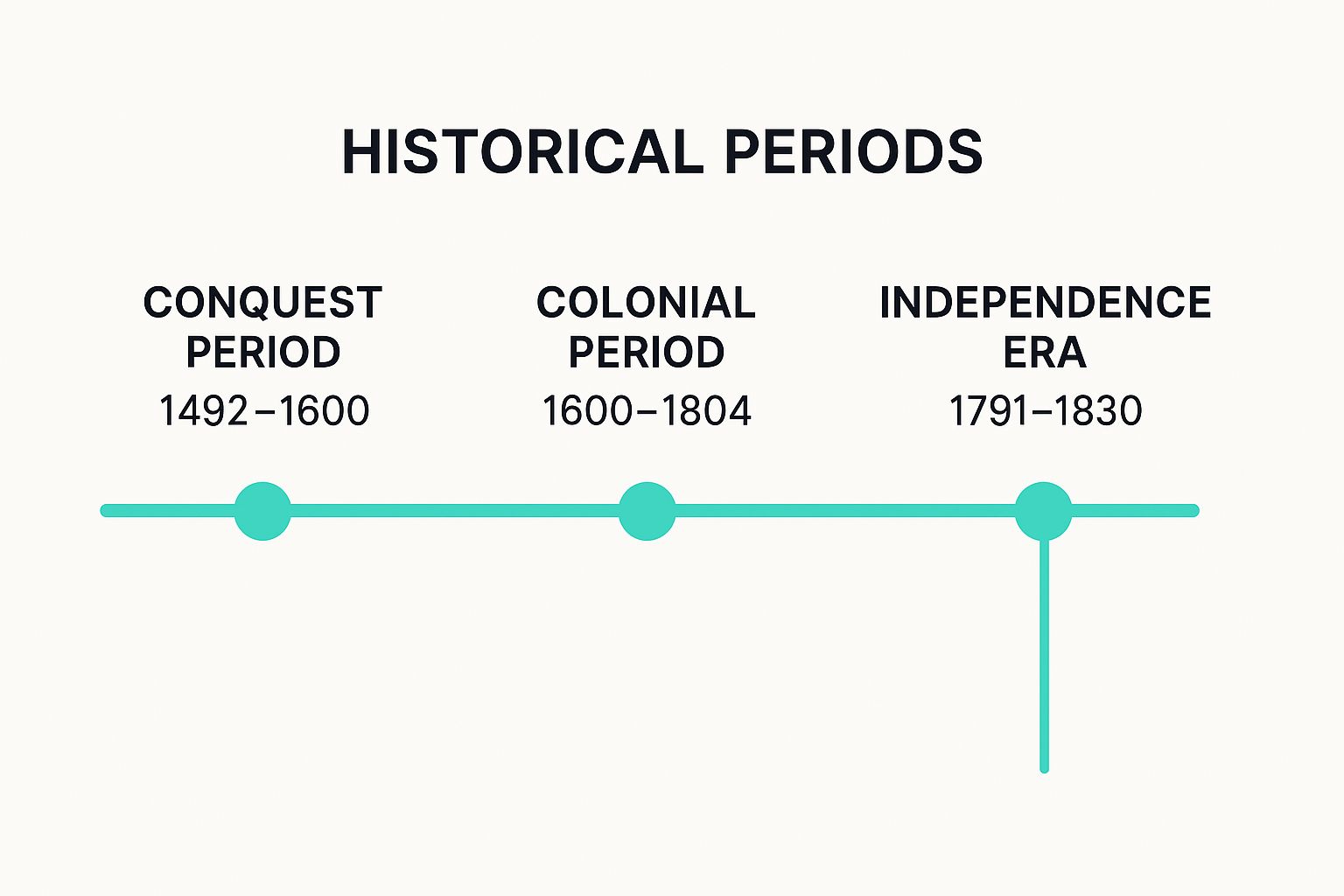
This timeline highlights the rapid and transformative shift from centuries of colonial rule to an intense, decades-long fight for sovereignty across the continent.
4. Geographic Features and Natural Landmarks Quiz
Beyond political borders, a Geographic Features and Natural Landmarks Quiz tests a deeper understanding of Latin America's physical landscape. This quiz challenges you to identify and locate iconic features like the Andes Mountains, the Amazon River, the Atacama Desert, and the Patagonia region. It moves beyond simple recall, often requiring you to connect these landmarks to the countries they span.
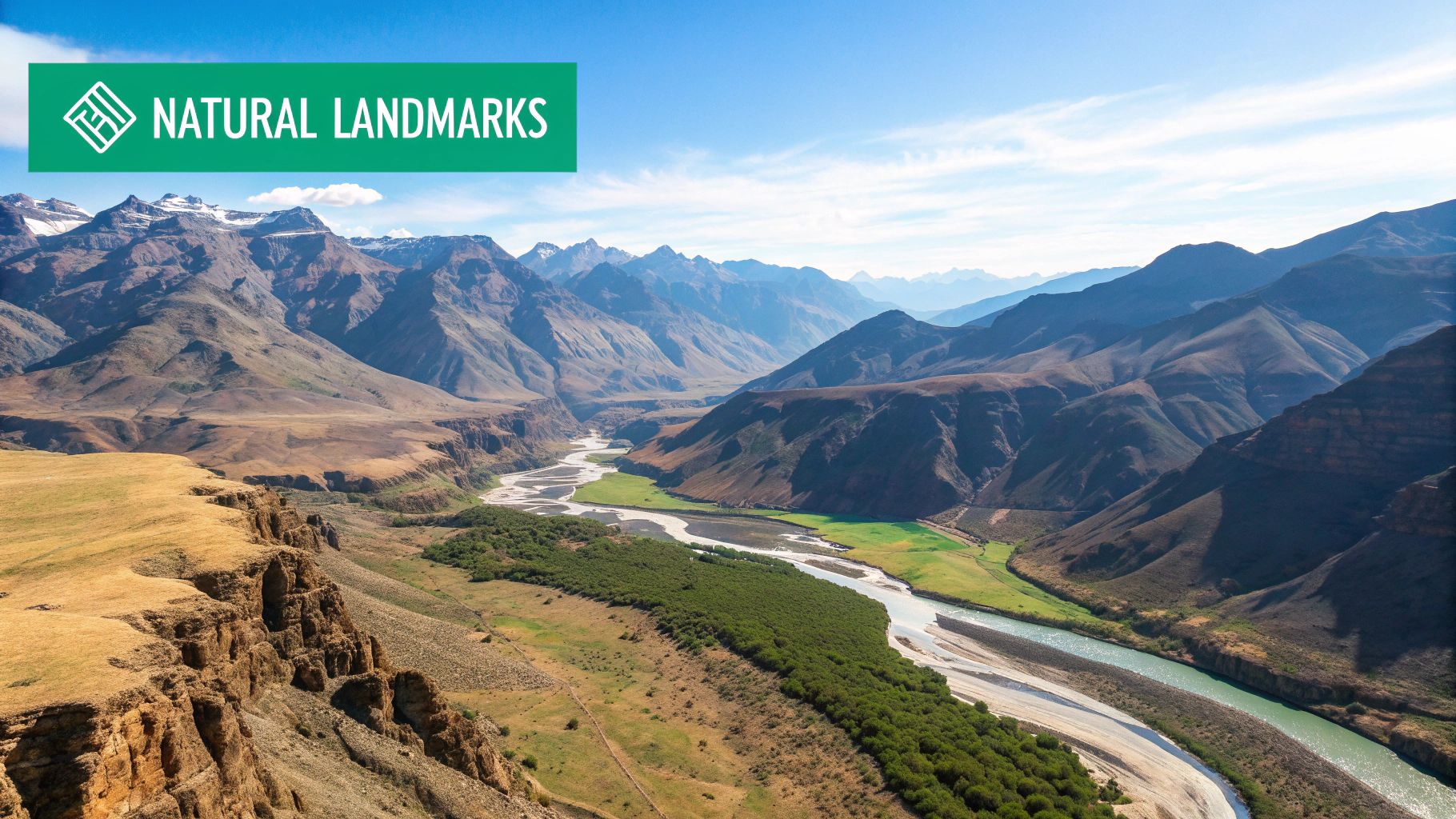
This format is frequently used in environmental science and advanced geography courses, popularized by institutions like the National Geographic Society. Its value lies in building a holistic view of how physical geography shapes climate, biodiversity, and human settlement patterns across the continent, making it an essential part of any comprehensive Latin American countries quiz.
How to Excel in a Landmarks Quiz
To master this quiz type, focus on the big picture:
- Use Satellite and Topographic Maps: Switch to satellite or terrain view on mapping tools. This visualizes mountain ranges, river basins, and deserts in a way that flat political maps cannot.
- Connect Features to Human Activity: Understand how major landmarks influence life. For example, link the Andes to historical Inca settlements or the Amazon River to trade and transportation routes.
- Study Cross-Border Features: Recognize that many features, like the Amazon rainforest or the Andes, are not confined to a single country. Learn which nations share these incredible natural wonders.
5. Cultural Traditions and Festivals Quiz
A truly immersive Latin American countries quiz moves beyond maps and flags to explore the region's vibrant cultural soul. This quiz format challenges your knowledge of famous festivals, traditional music and dance, and unique cultural practices. Questions might cover everything from the origins of Brazil's Carnival and Mexico's Día de los Muertos to the significance of Peru's Inti Raymi festival, offering a deeper appreciation of the area's rich heritage.

This quiz type is valuable in educational settings like Spanish language classrooms and cultural competency training. By connecting traditions to history, it provides context that pure geographical data lacks. Organizations like UNESCO promote this knowledge through their cultural heritage programs, underscoring its global importance.
How to Excel in a Cultural Quiz
To master this engaging quiz format, try these specific approaches:
- Connect Traditions to History: Understand the "why" behind a festival. For instance, link the syncretism in many traditions to the blending of Indigenous and European colonial histories.
- Use Multimedia Resources: Watch documentaries or performance videos of events like the Tango in Argentina or a Cumbia in Colombia. Visual and auditory cues create stronger memory associations.
- Focus on Regional Nuances: Recognize that traditions vary. Día de los Muertos, for example, has unique regional expressions within Mexico. For more details on how culture shapes places, explore this overview on what is cultural geography.
6. Famous Landmarks and Archaeological Sites Quiz
Another engaging format for a Latin American countries quiz is one that focuses on its most iconic landmarks and archaeological sites. This quiz moves beyond pure geography to test knowledge of the region's rich cultural and historical tapestry. Questions cover ancient wonders like Machu Picchu and Chichen Itza, colonial architecture, and modern marvels, challenging participants to identify sites and connect them to their respective countries.
This quiz type is frequently used in educational programs by institutions like the Smithsonian and in travel-focused media, such as National Geographic Traveler, to highlight the region's profound heritage. It offers a visually rich and narrative-driven way to explore Latin America’s history.
How to Excel in a Landmarks Quiz
To master this type of quiz, try these specialized approaches:
- Categorize by Era: Group landmarks by historical periods: pre-Columbian (Inca, Maya, Aztec), colonial (Spanish and Portuguese architecture), and modern (20th-century monuments). This helps organize a vast amount of information.
- Focus on Key Features: For each site, identify a unique, memorable feature. For example, associate Easter Island with its moai statues or Teotihuacan with the Pyramid of the Sun.
- Explore Historical Context: Understand the story behind each landmark. Connecting a site to the civilization that built it or the historical event it represents makes it easier to recall. Many of these locations are officially recognized for their importance; you can explore a comprehensive world heritage sites list to deepen your understanding.
7. Languages and Linguistics Diversity Quiz
Moving beyond geography, a Languages and Linguistics Diversity Quiz offers a deeper cultural exploration for any Latin American countries quiz. This format tests knowledge of the region’s rich linguistic tapestry, from official languages like Spanish and Portuguese to the hundreds of Indigenous languages such as Quechua, Guarani, and Nahuatl. Questions can cover language families, dialects, and the sociolinguistic dynamics in bilingual communities.
This type of quiz is featured in academic settings and promoted by organizations like UNESCO to raise awareness about linguistic heritage and preservation. It provides a more nuanced understanding of Latin America, highlighting the diverse identities that exist within and across national borders. Its engaging format makes complex linguistic topics accessible and memorable.
How to Excel in a Linguistics Quiz
To master the linguistic landscape of the region, use these targeted approaches:
- Map Language Distributions: Use resources like the UNESCO Atlas of the World's Languages in Danger to visually map where major Indigenous languages are spoken. This connects languages to specific countries and peoples.
- Focus on Language Families: Group languages by their origin, such as Tupian (Guarani) or Uto-Aztecan (Nahuatl). This helps organize the vast number of languages into manageable categories.
- Listen to Audio Samples: Whenever possible, listen to pronunciations and basic phrases in different languages. This creates a stronger auditory connection and aids memory retention far better than text alone.
8. Economic Systems and Natural Resources Quiz
Beyond geography and culture, an Economic Systems and Natural Resources Quiz offers a deeper look into the engines driving Latin American nations. This quiz format examines your knowledge of the region's diverse economic landscapes, from Venezuela's oil reserves to Chile's copper mining and Brazil's agricultural dominance. Questions cover major industries, key exports, and the roles of trade blocs like MERCOSUR and the Pacific Alliance.
This type of Latin American countries quiz is frequently used in international business, economics, and geography courses to connect physical resources to economic outcomes. It moves beyond simple memorization to test your understanding of complex global supply chains and regional integration, making it a challenging and rewarding format for advanced learners.
How to Excel in an Economics Quiz
To master this quiz, focus on understanding broad economic profiles rather than just memorizing facts:
- Connect Resources to Economies: Link a country’s primary natural resources to its major industries. For example, associate lithium deposits in the "Lithium Triangle" (Argentina, Bolivia, Chile) with the growing global demand for batteries.
- Study Trade Blocs: Understand the purpose and main members of key economic alliances like USMCA (formerly NAFTA), MERCOSUR, and the Andean Community. This helps explain trade patterns and political-economic relationships.
- Focus on Key Trends: Instead of memorizing exact GDP figures, focus on major economic trends like the rise of the service sector in Panama or the growth of manufacturing in Mexico. This provides a more durable and practical understanding.
9. Political Systems and Government Structure Quiz
For those seeking a deeper analytical challenge, the Political Systems and Government Structure Quiz moves beyond pure geography into the realm of civics. This Latin American countries quiz tests knowledge of the diverse political frameworks in the region, from federal systems like Mexico and Brazil to unitary states like Colombia and Chile. Questions often explore presidential versus parliamentary structures, electoral processes, and the roles of different government branches.
This quiz format is a cornerstone of comparative government courses and Model United Nations preparations. It encourages a nuanced understanding of how these nations govern themselves, reflecting their unique histories and political evolutions. Online resources from organizations like Freedom House often provide the data needed to create or study for such a quiz, focusing on democratic health and institutional design.
How to Excel in a Political Systems Quiz
To master this complex topic, focus on comparative analysis:
- Categorize by System: Group countries based on their government type. For instance, list all federal republics or identify nations with bicameral versus unicameral legislatures. This helps in drawing parallels and noting exceptions.
- Focus on Institutions, Not Politics: Concentrate on the foundational structures of government rather than day-to-day partisan politics. Understand the constitution and the separation of powers in key countries.
- Historical Context is Key: Link a country's current political system to its history. For example, understand how post-dictatorship transitions in the late 20th century shaped many of today's democratic institutions in South America.
10. Climate, Biodiversity, and Environmental Challenges Quiz
Beyond borders and capitals, a Climate, Biodiversity, and Environmental Challenges Quiz offers a deeper, more contemporary perspective on the region. This type of Latin American countries quiz shifts focus to the continent's rich ecosystems, from the Amazon Rainforest to the Galápagos Islands, and the critical issues they face. Questions cover topics like deforestation rates, biodiversity hotspots, the impact of climate change on coastal communities, and innovative conservation efforts.
This quiz format is championed by organizations like the World Wildlife Fund (WWF) and Conservation International, which use educational tools to raise awareness. It moves beyond static geography to engage with the dynamic relationship between people and their environment, making the subject matter relevant and urgent.
How to Excel in an Environmental Quiz
To build a comprehensive understanding of Latin America's environmental landscape, try these methods:
- Focus on Hotspots: Concentrate your study on major biodiversity hotspots like the Atlantic Forest, the Mesoamerican Biological Corridor, and the Tropical Andes. Understand what makes them unique and the specific threats they face.
- Balance Problems with Solutions: Don't just learn about deforestation and pollution. Research successful conservation stories, such as Costa Rica's ecotourism initiatives or Brazil's protected areas, to gain a complete picture.
- Connect Local to Global: Understand how regional issues like Amazon deforestation connect to global climate change discussions. This contextualizes the importance of Latin America's ecosystems for the entire planet.
Latin American Countries Quiz Topics Comparison
| Quiz Title | Implementation Complexity 🔄 | Resource Requirements ⚡ | Expected Outcomes 📊 | Ideal Use Cases 💡 | Key Advantages ⭐ |
|---|---|---|---|---|---|
| Capital Cities Challenge: Latin American Quiz | Low to Moderate - straightforward question formats | Minimal - quiz platforms, maps | Basic to intermediate geographic knowledge | Educational settings, standardized testing, geography bees | Easy to grade, adaptable difficulty, broad age range |
| Flag Identification and Symbolism Quiz | Moderate - requires visual materials and symbolism | Moderate - flag images, multimedia aids | Enhanced cultural and historical understanding | Classrooms, interactive learning apps, cultural education | Engaging visuals, connects culture and history |
| Colonial History and Independence Timeline Quiz | High - complex timeline and historical depth | High - timelines, biographical and primary sources | Deep understanding of regional history and politics | University courses, history exams, documentary supplements | Develops critical historical perspective |
| Geographic Features and Natural Landmarks Quiz | Moderate - geography skills plus map/photo analysis | Moderate - satellite images, maps | Improved spatial and environmental awareness | Environmental science, geography education, virtual field trips | Connects nature with human activity, ecological insights |
| Cultural Traditions and Festivals Quiz | Moderate - multimedia and cultural content required | Moderate - audio, video, images | Appreciation of cultural diversity and anthropological concepts | Language classes, cultural training, tourism education | Celebrates diversity, promotes cultural sensitivity |
| Famous Landmarks and Archaeological Sites Quiz | Moderate - photo IDs with historical context | Moderate to High - images, historical data | Knowledge of heritage sites and archaeology | Travel education, heritage preservation advocacy, quizzes | Combines history, geography; encourages tourism awareness |
| Languages and Linguistics Diversity Quiz | Moderate to High - sociolinguistic complexity | Moderate - audio samples, maps | Awareness of linguistic diversity and language preservation | Linguistics studies, cultural programs, language revitalization | Highlights indigenous culture, challenges language assumptions |
| Economic Systems and Natural Resources Quiz | High - involves economic data and system analysis | High - economic reports, statistics | Understanding of economic geography and trade dynamics | Business schools, international studies, economic policy education | Connects resources to economic outcomes |
| Political Systems and Government Structure Quiz | High - complex political frameworks and sensitive topics | Moderate - political data, institutional descriptions | Civic knowledge, comparative politics understanding | Political science, MUN training, democracy promotion | Encourages critical thinking on governance |
| Climate, Biodiversity, and Environmental Challenges Quiz | High - interdisciplinary scientific concepts | High - environmental data, satellite imagery | Environmental awareness and conservation education | Environmental science, conservation programs, global education | Promotes environmental consciousness and solutions |
Continue Your Journey of Discovery
Navigating through our comprehensive Latin American countries quiz has done more than just test your memory; it has provided a structured journey across one of the most vibrant and diverse regions on Earth. From identifying the historical significance behind the stripes on Argentina's flag to pinpointing the unique ecosystems of Costa Rica, each question was a deliberate step toward building a more profound and nuanced understanding of Latin America. The real value lies not just in getting the answers right, but in grasping the intricate connections between a nation's geography, its history, its culture, and its modern identity.
You've moved beyond simple trivia, exploring the complex narratives of colonial history, the economic importance of natural resources like Chilean copper and Venezuelan oil, and the linguistic diversity that stretches far beyond Spanish and Portuguese. Recognizing the Andes Mountains as a continental backbone or understanding the symbolism of a quetzal on a flag are the building blocks of true global literacy.
From Knowledge to Actionable Exploration
The key takeaway is that learning is an active, continuous process. This quiz is a fantastic starting point, but the real adventure begins when you apply this knowledge. Here are your next steps to continue this intellectual expedition:
- Dive Deeper into a Specific Area: Did the section on cultural festivals or ancient archaeological sites spark your interest? Choose one topic and explore it further through documentaries, books, or online courses.
- Challenge a Friend: Use this Latin American countries quiz as a template to create your own trivia night. Teaching others is one of the most effective ways to solidify what you've learned.
- Plan a Virtual Trip: Select a country you found particularly fascinating and use online tools to explore its cities, landmarks, and natural wonders. This virtual immersion can make your knowledge feel tangible and real.
By actively engaging with this information, you transform abstract facts into a powerful lens through which to view the world. Mastering these concepts provides a deeper appreciation for global interconnectedness and the rich tapestry of human civilization. Keep that curiosity burning, because every question answered is another door opened to a new world of discovery.
Ready to turn your quiz knowledge into a hands-on adventure? EarthChasers offers immersive, game-based experiences that let you virtually explore the very landmarks and cities you've just been tested on. Start your next expedition and see Latin America like never before at EarthChasers.