
Discover south korea famous landmarks: 12 Iconic Spots
Explore south korea famous landmarks with a concise guide to 12 must-see sites, from royal palaces to futuristic towers, click to plan your trip.
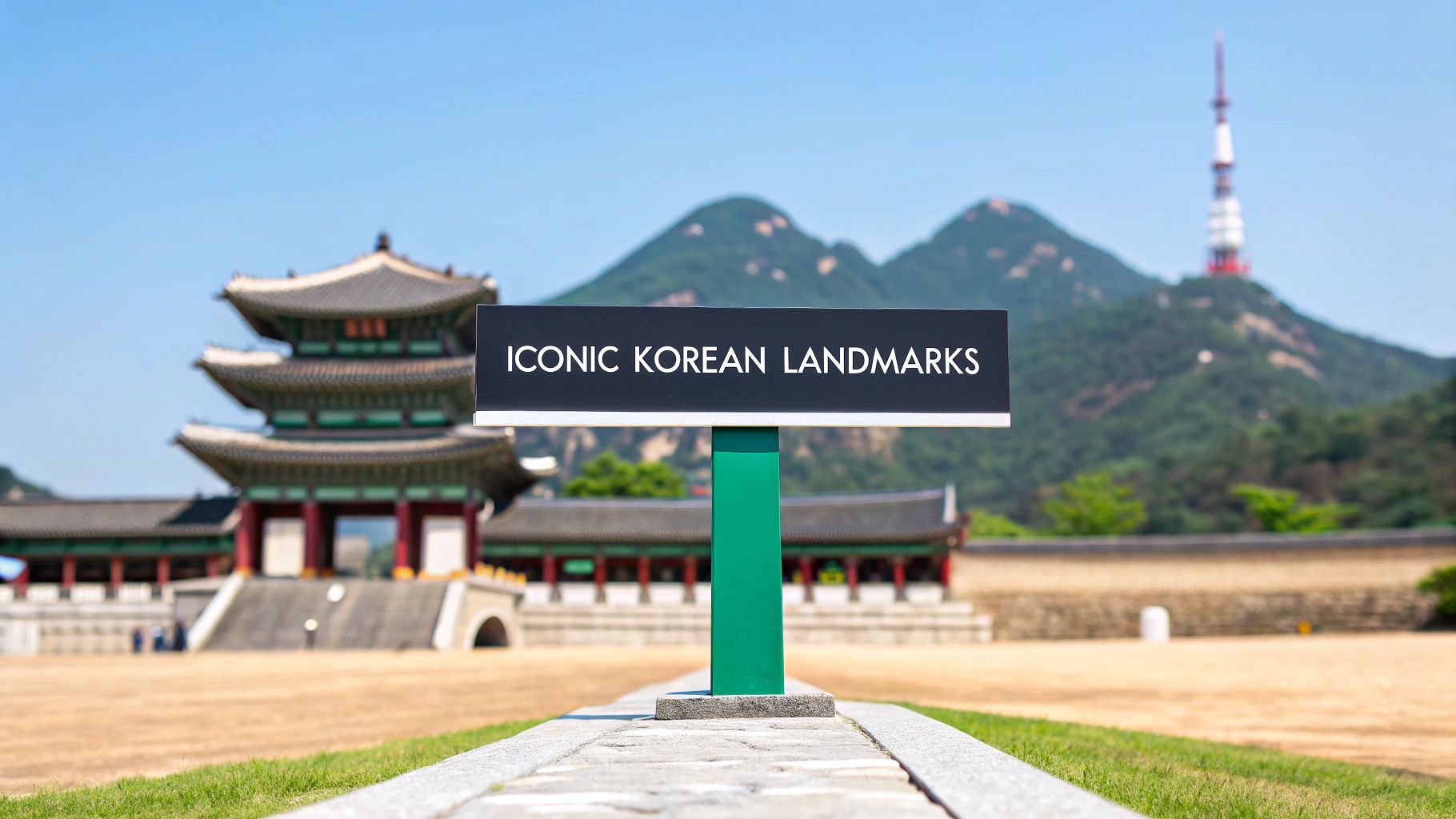
South Korea, a nation where ancient dynasties meet futuristic skylines, offers a breathtaking tapestry of history, culture, and natural beauty. For the modern explorer, geography enthusiast, or avid gamer, its landscape is a treasure trove of stories waiting to be discovered. This guide goes beyond a simple travelogue, providing a curated exploration of 12 South Korea famous landmarks that define the nation's soul. From the stoic walls of Joseon palaces to the volcanic peaks of Jeju Island, each location offers a unique window into the past and a challenge for the present.
This listicle is designed to be a comprehensive resource. We will delve into the historical significance of sites like Gyeongbokgung Palace and the ancient capital of Gyeongju, while also providing practical, actionable travel tips to maximize your visit. We'll explore the solemn tension of the Demilitarized Zone (DMZ), the vibrant energy of Myeongdong, and the architectural brilliance of Hwaseong Fortress. To truly immerse yourself in the culture and enhance your visit to these famous landmarks, consider learning some essential Korean phrases.
For our community of virtual explorers using EarthChasers, we have integrated unique challenges and mapping ideas for each landmark, allowing you to traverse these iconic locations from anywhere in the world. Whether you are planning a trip or satisfying your geographical curiosity from home, this article provides a detailed road map. Prepare to journey from the bustling heart of Seoul to the serene temples of Gyeongju as we uncover the sites that have shaped Korean identity for centuries.
1. Gyeongbokgung Palace
As the main royal palace of the Joseon Dynasty, Gyeongbokgung Palace is arguably one of the most iconic South Korea famous landmarks. Constructed in 1395, this sprawling complex was the heart of the capital city, serving as the home of kings and the center of government. Its name, translating to "Palace Greatly Blessed by Heaven," reflects its significance in Korean history.
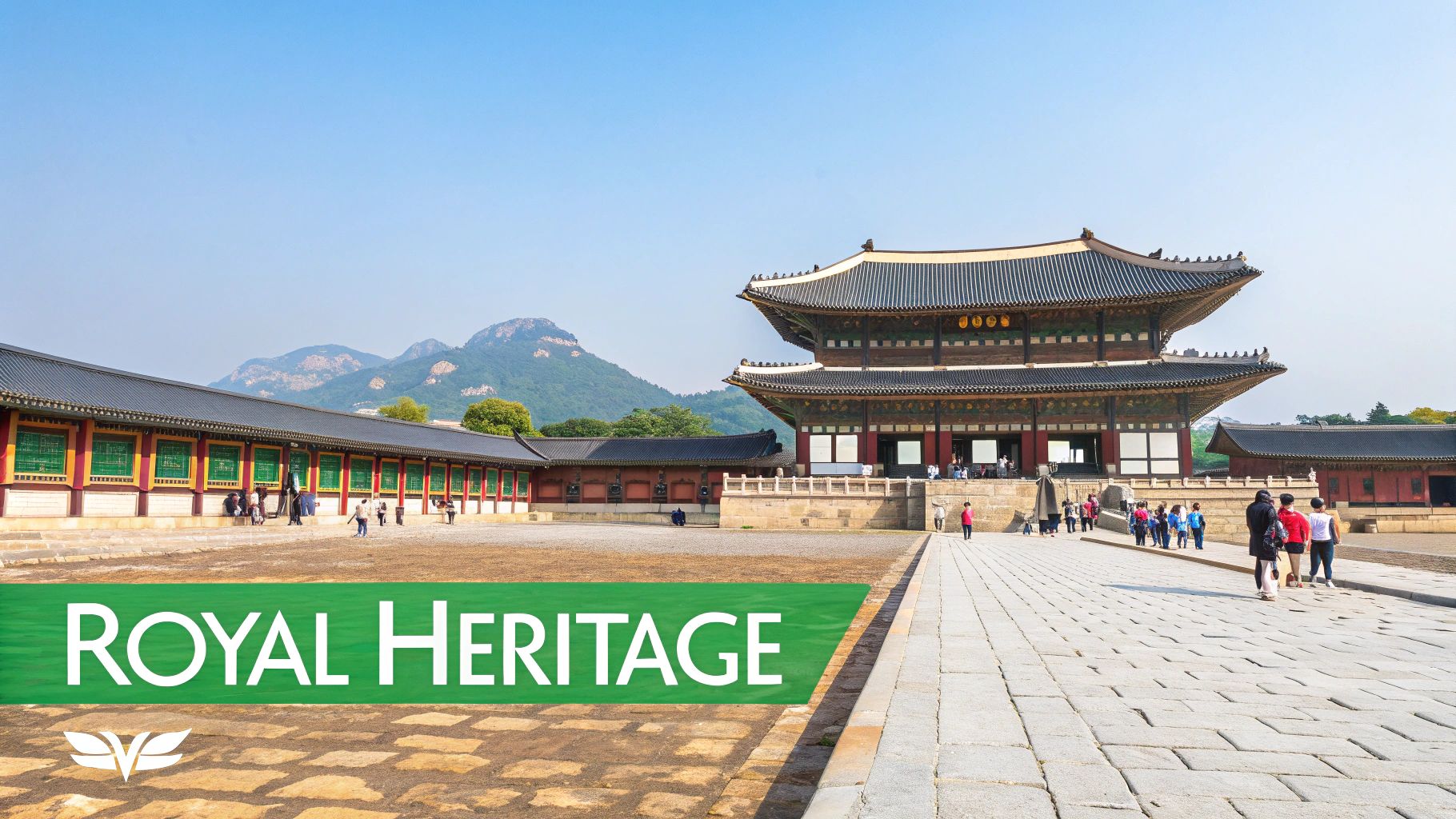
The palace's turbulent past, including its destruction during Japanese invasions and subsequent meticulous reconstruction, makes it a powerful symbol of national resilience. Its grand halls, tranquil ponds, and elegant pavilions showcase the pinnacle of classical Korean architecture, set against the stunning backdrop of Bugak Mountain.
EarthChasers Challenge & Travel Tips
For gamers and geography buffs, Gyeongbokgung offers a perfect blend of historical context and geographical significance. Its precise layout, aligned with ancient principles of feng shui, makes it a fascinating real-world location to study. You can deepen your understanding of its place in the region by exploring this historical landmark in our Asia map quiz.
Visitor Essentials:
- Best Time to Visit: Arrive at the 9 AM opening to experience the grounds before the largest crowds appear.
- Must-See Event: Don't miss the Royal Guard Changing Ceremony, held at Gwanghwamun Gate at 10 AM and 2 PM.
- Plan Your Time: The complex is vast. Allocate at least 2 to 3 hours for a comprehensive visit and wear comfortable shoes.
- Guided Tours: Consider hiring an English-speaking guide on-site for a richer understanding of the palace's history and architecture.
2. Namsan Seoul Tower
As a beacon of modernity overlooking the sprawling capital, Namsan Seoul Tower is one of the most beloved South Korea famous landmarks. Perched atop Namsan Mountain in central Seoul, this 236.7-meter communication and observation tower has been a symbol of the city since it opened to the public in 1980. It offers breathtaking 360-degree panoramic views, making it a must-visit for both tourists and locals.
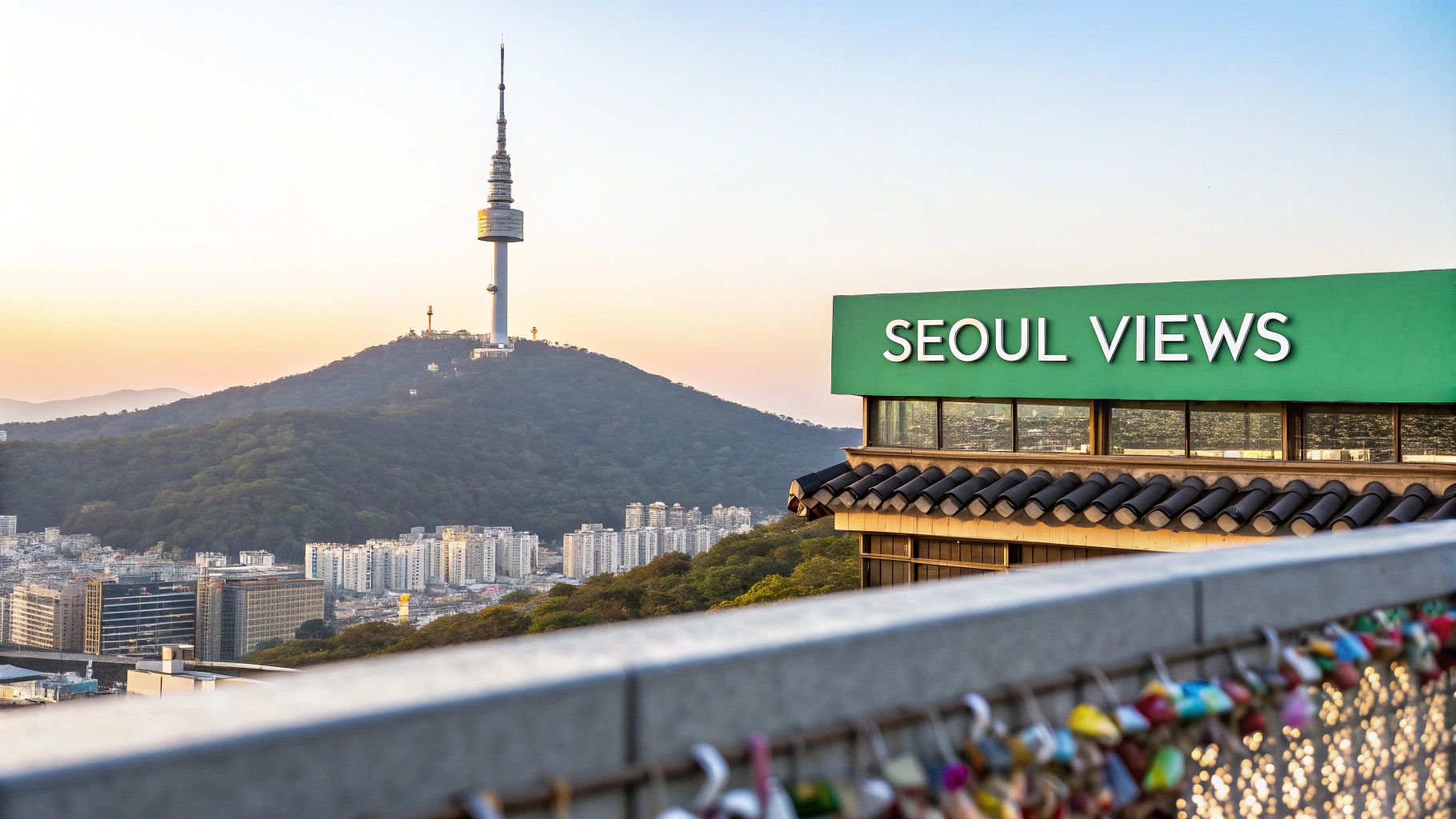
More than just an observation deck, the tower has evolved into a vibrant cultural space. It is famously known as a romantic destination where couples attach "love locks" to the terrace fences, symbolizing their everlasting affection. At night, the tower illuminates the skyline with dynamic LED light shows, reflecting data on air quality and seasonal themes, blending technology with urban life.
EarthChasers Challenge & Travel Tips
For geography enthusiasts, Namsan Seoul Tower provides an unparalleled real-world vantage point to understand Seoul's topography and urban layout. Identifying other landmarks from its peak is a fantastic geographical challenge. You can test your knowledge of the city's districts by taking our Asia map quiz before you go.
Visitor Essentials:
- Best Time to Visit: Arrive in the late afternoon to experience the city's transition from daylight to a dazzling nocturnal landscape.
- Must-See Event: The "love lock" terraces are a cultural phenomenon worth seeing, offering a unique photo opportunity and glimpse into modern Korean culture.
- Plan Your Time: Purchase tickets online in advance to skip the long queues, especially on weekends or holidays.
- Optimal Viewing: Visit on a clear day for the best visibility. Weekdays are generally less crowded than weekends.
3. Bulguksa Temple
As a head temple of the Jogye Order of Korean Buddhism, Bulguksa Temple is a masterpiece of Silla Dynasty art and one of the most celebrated South Korea famous landmarks. Founded in the 8th century in the former Silla capital of Gyeongju, this UNESCO World Heritage site is home to seven of South Korea's National Treasures, including its iconic stone pagodas, Dabotap and Seokgatap.
The temple complex embodies the Buddhist journey to enlightenment, with its layout representing the land of Buddha. Its wooden buildings and stone terraces harmonize beautifully with the natural landscape of Toham Mountain, creating a site of profound spiritual peace and architectural genius. Its survival and preservation through centuries of history make it a vital link to Korea's ancient past.
EarthChasers Challenge & Travel Tips
For EarthChasers players, Bulguksa offers a chance to explore a site where geography, spirituality, and history converge. Its location in Gyeongju, known as the "museum without walls," makes it a key coordinate in understanding Korea's historical geography. You can test your knowledge of this culturally rich region with our Asia map quiz.
Visitor Essentials:
- Best Time to Visit: The shoulder seasons of spring and fall offer pleasant weather and stunning scenery with cherry blossoms or autumn foliage.
- Must-See Event: Arrive early in the morning to witness the serene atmosphere of the morning prayers, offering a truly authentic experience.
- Plan Your Time: Combine your visit with the nearby Seokguram Grotto, another UNESCO World Heritage site located on the same mountain.
- Immersive Experience: Consider participating in a temple stay program for a deeper understanding of Buddhist culture and monastic life.
4. Demilitarized Zone (DMZ) and Joint Security Area
As the heavily fortified border separating North and South Korea, the Demilitarized Zone (DMZ) is undoubtedly one of the most unique and tense South Korea famous landmarks. Established by the Korean Armistice Agreement in 1953, this 4-kilometer-wide buffer zone stretches 250 kilometers across the peninsula, serving as a stark, living monument to the Korean War and the ongoing division.
The area is a surreal blend of high-stakes military presence and untouched nature, where propaganda from both sides can sometimes be heard echoing across the landscape. Visiting the Joint Security Area (JSA) at Panmunjom, where North and South Korean soldiers stand face-to-face and where historic summits have occurred, offers a poignant and unforgettable geopolitical lesson unlike any other in the world.
EarthChasers Challenge & Travel Tips
For geography and history enthusiasts, the DMZ provides a powerful real-world case study of political borders and conflict zones. Its precise coordinates and the strategic placement of observation posts offer a compelling challenge. You can explore the geopolitical significance of such borders by testing your knowledge in our political map quiz.
Visitor Essentials:
- Book in Advance: Access is restricted. You must book a tour with a government-approved company well ahead of your visit.
- Strict Compliance: Follow all rules, including dress codes (no ripped jeans, sandals, or military-style clothing), and stay with your group at all times.
- Bring Your Passport: A valid passport is mandatory for identity checks at multiple military checkpoints.
- Emotional Preparation: A visit can be emotionally intense. Be prepared for a solemn and sobering experience that provides deep historical context.
5. Myeongdong District
As the beating heart of Seoul's commercial and entertainment scene, Myeongdong District is a quintessential modern South Korea famous landmarks. This vibrant hub is a whirlwind of activity, packed with international fashion brands, luxury department stores, and countless Korean cosmetic shops. Beyond shopping, it's a sensory explosion of street food, K-pop music, and dazzling neon lights, embodying the dynamic energy of contemporary Korean culture.
While not a traditional landmark, its cultural significance is immense. Myeongdong serves as a barometer for trends in fashion, beauty, and pop culture in South Korea. The area is also home to the historic Myeongdong Cathedral, a gothic-style church that offers a striking contrast and a peaceful sanctuary amidst the urban chaos, representing a unique blend of the old and the new.
EarthChasers Challenge & Travel Tips
For urban explorers and gamers, Myeongdong's dense, grid-like layout presents a fascinating case study in urban planning and commercial geography. Its high foot traffic and economic density make it a key point of interest. Test your knowledge of Seoul's key districts by locating Myeongdong in our upcoming South Korea map quiz.
Visitor Essentials:
- Best Time to Visit: Go on a weekday morning for a less crowded shopping experience, or visit in the evening to see the district come alive with neon lights and street vendors.
- Must-Do: Sample popular Korean street foods like tteokbokki (spicy rice cakes) and hotteok (sweet pancakes) from the numerous stalls.
- Plan Your Time: The district is best explored on foot. Wear comfortable shoes and allocate at least half a day to browse the shops and soak in the atmosphere.
- Travel Smart: Use the efficient subway system (Myeongdong Station, Line 4 or Euljiro 1-ga Station, Line 2) to avoid traffic.
6. Seokguram Grotto
Carved into the slopes of Mount Toham, Seokguram Grotto is a sublime hermitage and an undisputed masterpiece of Buddhist art, solidifying its place among South Korea famous landmarks. Constructed in the 8th century during the Silla Kingdom, this man-made stone grotto was designed as a private place of worship. It houses a monumental seated Buddha statue, renowned for its serene expression and architectural perfection.
This UNESCO World Heritage site is celebrated for its harmonious blend of architecture, mathematics, and religious artistry. The precise construction of the granite dome and the placement of the surrounding bodhisattvas and guardians create a uniquely spiritual atmosphere. The grotto symbolizes the journey to enlightenment, with the main Buddha representing a moment of profound spiritual awakening.
EarthChasers Challenge & Travel Tips
For geography enthusiasts, Seokguram Grotto is a fascinating study of how ancient civilizations integrated monumental architecture with challenging natural terrain. Its strategic placement on Mount Toham offers not just spiritual significance but also a commanding view of the surrounding landscape, a detail you can appreciate when exploring Gyeongju's topography on our South Korea map quiz.
Visitor Essentials:
- Best Time to Visit: Start with an early morning hike up Mount Toham to reach the grotto before the afternoon crowds and enjoy the tranquil mountain air.
- Must-See Event: Combine your visit with a trip to the nearby Bulguksa Temple, located on the same mountain, to fully appreciate the Silla Dynasty's Buddhist heritage.
- Plan Your Time: Allocate at least 4 to 5 hours for the complete experience, including the hike and a thorough exploration of the grotto and its surroundings.
- Guided Tours: Hire a knowledgeable guide to explain the intricate symbolism and artistic details of the Buddha statue and surrounding carvings, which can be hard to appreciate from a distance.
7. Gwanghwamun Square
Positioned at the heart of Seoul, Gwanghwamun Square is a vast public space that functions as a symbolic core of Korean history and modern civic life. This iconic plaza stretches from Gwanghwamun Gate of Gyeongbokgung Palace to Cheonggyecheon Stream, making it one of the most significant South Korea famous landmarks. It features commanding statues of King Sejong the Great, the inventor of the Korean alphabet, and Admiral Yi Sun-sin, a revered naval hero.
Redesigned and reopened to the public, the square is more than just a thoroughfare; it's a dynamic venue for cultural festivals, national celebrations, and public gatherings. It represents the powerful intersection of Korea's rich historical legacy and its vibrant contemporary democracy, serving as a backdrop for both reflection and forward-looking events.
EarthChasers Challenge & Travel Tips
For geography enthusiasts, Gwanghwamun Square serves as a central reference point for navigating Seoul's historical downtown. Its location provides a clear axis connecting royal palaces, government buildings, and modern commercial districts, offering a unique geographical case study in urban planning. You can test your knowledge of Seoul's layout in our upcoming city-specific challenges.
Visitor Essentials:
- Best Time to Visit: Visit during one of the many cultural festivals held here to experience the square at its most vibrant.
- Photography Tip: The "golden hour" just after sunrise or before sunset offers spectacular lighting for photos of the statues and Gyeongbokgung Palace.
- Explore the Area: The square is a short walk from Deoksu Palace and Seoul City Hall, providing great architectural context.
- Check the Schedule: Look up the official event schedule before your visit to see if any special performances or exhibitions are planned.
- Dining and Shopping: The adjacent Jongno district offers a vast array of dining and retail options to complete your visit.
8. Changdeokgung Palace
Distinguished by its seamless integration with the surrounding natural landscape, Changdeokgung Palace is a UNESCO World Heritage site and a truly exceptional South Korea famous landmarks. Built in 1405 as a secondary palace to Gyeongbokgung, it was favored by many Joseon Dynasty kings for its more intimate and less formal layout. Its design perfectly embodies the Korean principle of adapting architecture to the topography.
Unlike other palaces built on a strict grid, Changdeokgung's halls, pavilions, and bridges are arranged to complement the hills and streams of the land. Its most celebrated feature is the Huwon, or "Secret Garden," a 78-acre private royal garden filled with serene ponds, ancient trees, and elegant pavilions, offering a breathtaking glimpse into the leisurely life of the royal family.
EarthChasers Challenge & Travel Tips
For geography enthusiasts, Changdeokgung's layout is a masterclass in human-environment interaction, contrasting sharply with the more formal axial design of Gyeongbokgung. Analyzing its site selection and integration with the landscape provides a unique geographic perspective. Compare its design principles with other historical sites on our Asia map quiz to see how culture shapes the land.
Visitor Essentials:
- Best Time to Visit: Spring for cherry blossoms or autumn for vibrant foliage in the Secret Garden.
- Must-See Event: The Huwon (Secret Garden) tour is a highlight, but it requires a separate ticket and booking in advance is highly recommended.
- Plan Your Time: Allow at least 2 to 3 hours to explore both the main palace grounds and the extensive Secret Garden.
- Comfort is Key: Wear comfortable walking shoes, as the garden tour involves walking over uneven terrain and natural trails.
9. Jeju Island (Hallasan Mountain & Oreum)
Known as the "Island of the Gods," Jeju Island is an undeniable gem and one of the most treasured South Korea famous landmarks. This volcanic island, a UNESCO World Natural Heritage site, is celebrated for its breathtaking natural beauty, unique local culture, and dramatic landscapes. Dominating its center is Hallasan, a dormant shield volcano and the highest mountain in South Korea, surrounded by hundreds of smaller parasitic cones known as oreum.
Embedded content
The island’s distinct volcanic geology has created stunning lava tubes, pristine beaches, and dramatic waterfalls. From the legendary haenyeo (female divers) who harvest seafood without breathing equipment to its famous black pork cuisine, Jeju offers a cultural experience completely distinct from the mainland. This blend of natural wonder and unique heritage makes it South Korea's premier destination for both domestic and international travelers.
EarthChasers Challenge & Travel Tips
For geography enthusiasts, Jeju Island is a living textbook on volcanology. Identifying its location south of the Korean Peninsula is a key first step. You can situate this landmark and others by using our printable map of Asia to enhance your geographical knowledge.
Visitor Essentials:
- Best Time to Visit: Plan your trip during the shoulder seasons (April-May, September-October) for pleasant weather and fewer crowds.
- Must-Do Hike: Tackle Hallasan Mountain early in the morning to enjoy the best conditions and views before the afternoon weather changes.
- Getting Around: Renting a car is highly recommended for the flexibility to explore the island's many attractions at your own pace.
- Cultural Experience: Seek out a performance area to witness the incredible culture of the haenyeo divers.
- Plan Your Time: Allow a minimum of 3 to 4 days to fully appreciate the island's diverse offerings without rushing.
10. Gyeongju Historic District (Ancient Capital of Silla)
Often called "the museum without walls," the Gyeongju Historic District is a vast UNESCO World Heritage Site that served as the capital of the Silla Kingdom for nearly a millennium. This area is one of the most significant South Korea famous landmarks, offering an unparalleled window into the ancient civilization that unified the peninsula. Its landscape is dotted with royal tombs, temple ruins, and Buddhist artifacts.
As the heart of the Silla Dynasty (57 BC - 935 AD), Gyeongju contains a remarkable concentration of ancient Korean Buddhist art, pagodas, and palace sites. Exploring its different zones, from the distinctive Tumuli Park with its grass-covered royal tombs to the ancient Cheomseongdae Observatory, feels like stepping directly into the pages of history.
EarthChasers Challenge & Travel Tips
For geography and history enthusiasts, Gyeongju's layout offers a unique challenge: mapping the reach and influence of an ancient capital. Understanding its designation as a UNESCO site adds another layer of global significance. You can discover more about its status and others like it in our comprehensive list of World Heritage Sites.
Visitor Essentials:
- Best Time to Visit: Spring and autumn offer pleasant weather perfect for exploring the sprawling outdoor sites.
- Plan Your Time: Dedicate at least two to three days to do the district justice. Start at the Gyeongju National Museum to get historical context first.
- Getting Around: Renting a bicycle is a popular and efficient way to travel between the various historical sites scattered throughout the city.
- Expert Insight: Consider hiring a local guide who specializes in Silla history to gain deeper insights into the ruins and artifacts.
11. Bukchon Hanok Village
Nestled between Gyeongbokgung and Changdeokgung Palaces, Bukchon Hanok Village is a living museum and one of the most picturesque South Korea famous landmarks. This historic neighborhood is home to hundreds of beautifully preserved hanok (traditional Korean houses) that date back to the Joseon Dynasty. Unlike a re-created tourist site, this is a genuine residential area, offering an authentic glimpse into Seoul's architectural past and present.
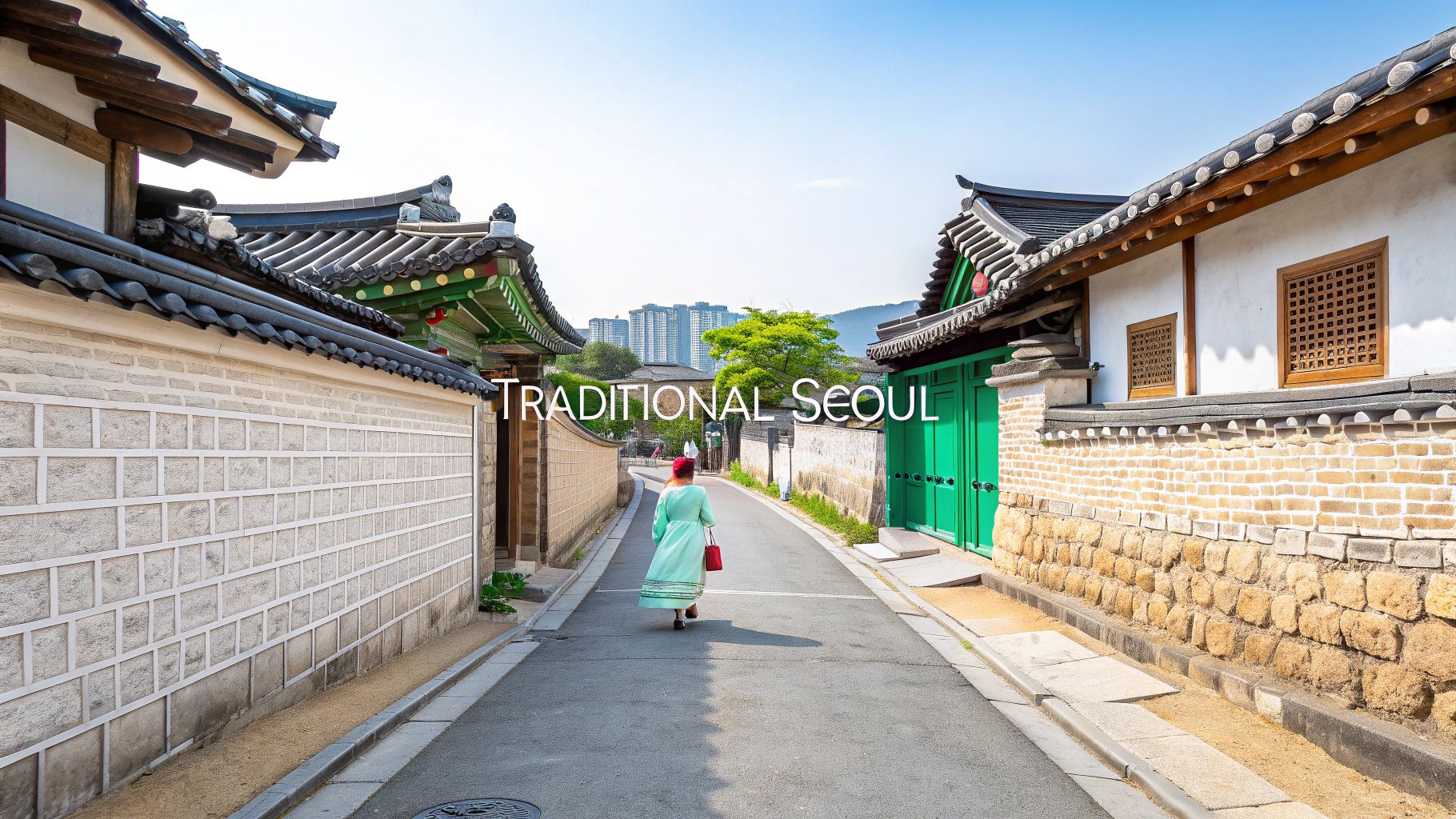
The village’s charm lies in its winding, hilly alleyways lined with elegant tiled roofs and stone walls, which transport visitors back in time. As a residential district where many artists and cultural practitioners live, it provides a unique window into how traditional aesthetics have been adapted for modern life. Its elevated position also offers stunning panoramic views of the modern Seoul skyline, creating a striking contrast between old and new.
EarthChasers Challenge & Travel Tips
For geography lovers, Bukchon Hanok Village presents a fascinating case study in urban preservation and cultural geography. Navigating its labyrinthine streets without a modern map can be a fun challenge, testing your sense of direction and observation skills. You can explore more unique cultural sites like this in our South Korea map quiz.
Visitor Essentials:
- Best Time to Visit: Arrive before 9 AM to experience the serene atmosphere and capture photos without the crowds.
- Be Respectful: Remember this is a residential area. Keep your voice down and respect the privacy of the residents.
- Immersive Experience: Consider renting a traditional hanbok (Korean dress) to wear while you explore, and stay overnight in a hanok guesthouse for a truly authentic stay.
- Go Beyond the Main Street: The most beautiful and quiet spots are often found by exploring the smaller, less-traveled side streets and alleyways.
12. Hwaseong Fortress
A masterpiece of 18th-century military architecture, Hwaseong Fortress in Suwon stands as one of the most impressive South Korea famous landmarks. Built between 1794 and 1796 under the direction of King Jeongjo of the Joseon Dynasty, this UNESCO World Heritage site was designed as a formidable defensive structure and a symbol of royal authority. Its innovative design uniquely blends Eastern and Western architectural principles.
Spanning nearly 6 kilometers, the fortress wall encircles the heart of modern-day Suwon, incorporating four grand gates, artillery towers, and command posts. Its construction, meticulously documented in the Hwaseong Seongyeok Uigwe, showcases an advanced understanding of engineering and materials for its time. Walking along its ramparts offers panoramic views of the city and a tangible connection to Korea's dynastic past.
EarthChasers Challenge & Travel Tips
For strategy gamers and history enthusiasts, Hwaseong Fortress provides a fascinating case study in defensive design and urban planning. Its layout and strategic placements of guard posts and gates are a real-world lesson in tactical geography. You can test your knowledge of its regional importance by pinpointing Suwon in our South Korea map quiz.
Visitor Essentials:
- Best Time to Visit: Spring and autumn offer pleasant weather for walking the fortress walls.
- Plan Your Time: Allow at least 3 to 4 hours to walk the entire perimeter of the fortress. Starting in the morning ensures you finish in daylight.
- What to Wear: Comfortable walking or hiking shoes are essential for navigating the stone pathways and inclines of the wall.
- Getting There: A train from Seoul to Suwon is the most direct and convenient way to access the fortress.
12 Famous South Korean Landmarks Comparison
| Site | Access & Logistics 🔄 | Time & Cost ⚡ | Experience Quality ⭐ | Highlights & Impact 📊 | Ideal Use Cases & Tips 💡 |
|---|---|---|---|---|---|
| Gyeongbokgung Palace | Central Seoul, subway access; can be very crowded; some buildings restricted | 2–3 hours; moderate entrance fees for full access | ⭐⭐⭐⭐ | Geunjeongjeon throne hall, live guard-changing, strong historical/educational value | Visit early morning; attend guard ceremony; hire English guide |
| Namsan Seoul Tower | Mountain summit via cable car, bus or hike; queues common for elevators | 1–2 hours; higher ticket & dining costs | ⭐⭐⭐ | 360° city views, revolving restaurant, seasonal LED displays | Go late afternoon→night; buy tickets online; visit weekdays |
| Bulguksa Temple | Located in Gyeongju; requires travel from major cities; uneven terrain | 1–2 hours on site; low–moderate cost | ⭐⭐⭐⭐ | UNESCO site, Silla stone pagodas and serene temple grounds | Combine with Seokguram; hire guide; visit in spring/fall |
| Demilitarized Zone (DMZ & JSA) | Highly restricted; group tours only with registration and ID; strict rules | Half-day to full-day tours; book well in advance | ⭐⭐⭐ | Panmunjom JSA, infiltration tunnels, powerful geopolitical context | Book authorized tour, bring passport, wear conservative clothing |
| Myeongdong District | Central, excellent transport but extremely crowded and noisy | Flexible (short to full day); shopping expenses vary widely | ⭐⭐⭐ | Dense retail/K‑beauty scene, street food, pop-culture atmosphere | Weekday mornings for fewer crowds; explore side streets for bargains |
| Seokguram Grotto | Remote mountaintop near Gyeongju; ~3 km hike to grotto entrance | 3–5 hours including hike; minimal fees | ⭐⭐⭐⭐ | UNESCO grotto with monumental stone Buddha and exceptional carvings | Combine with Bulguksa; start early; wear hiking shoes; bring binoculars |
| Gwanghwamun Square | Downtown Seoul, easy access; open plaza subject to crowds during events | 30–90 minutes; free public access | ⭐⭐⭐ | Admiral Yi statue, public events, civic and cultural programming | Visit during festivals or golden hour for photography; check events |
| Changdeokgung Palace | Central Seoul; Biwon (Secret Garden) requires guided booking | 2–3 hours; moderate fees, Secret Garden on scheduled tours | ⭐⭐⭐⭐ | UNESCO palace with Biwon garden, strong conservation and landscape design | Book Secret Garden tour in advance; visit spring/fall |
| Jeju Island (Hallasan & Oreum) | Requires flight/ferry; island car rental recommended for full access | 3–4+ days recommended; higher travel/accommodation costs | ⭐⭐⭐⭐ | Volcanic landscapes, Hallasan, waterfalls, UNESCO natural heritage | Rent a car, reserve lodging early, visit in shoulder seasons |
| Gyeongju Historic District | Outside Seoul; multiple spread-out sites—best explored over days | 2–3 days to cover major sites; local transport or bike rental | ⭐⭐⭐⭐ | Multiple UNESCO sites (Bulguksa, Seokguram), museums, archaeological parks | Plan 2–3 days, hire local guide, stay in Gyeongju for convenience |
| Bukchon Hanok Village | Central Seoul; free to wander but very crowded and residential | 1–2 hours typical; workshops or stays add cost | ⭐⭐⭐ | Large hanok concentration, traditional crafts, photography opportunities | Visit before 9 AM, respect residents, consider hanok stay or workshop |
| Hwaseong Fortress | Suwon day trip from Seoul by train; long 5.74 km perimeter walk | Half‑day to full day; low–moderate cost | ⭐⭐⭐ | UNESCO fortification, ramparts, Haenggung palace, panoramic views | Allow 3–4 hours, wear walking shoes, take train from Seoul |
From Ancient Capitals to Modern Marvels: Your Korean Adventure Awaits
Our journey through South Korea's famous landmarks has taken us across centuries of history, from the serene halls of ancient palaces to the poignant border of the DMZ, and from the natural splendor of Jeju Island to the futuristic gleam of Seoul's skyline. This curated exploration of twelve distinct locations reveals a nation defined by its profound respect for tradition and its relentless drive toward innovation. Each landmark is more than a pin on a map; it's a narrative thread in the complex and beautiful tapestry of Korean culture.
We’ve seen how Gyeongbokgung and Changdeokgung Palaces stand as proud symbols of the Joseon Dynasty's architectural genius and philosophical ideals. We've explored the spiritual heart of the Silla Kingdom at Bulguksa Temple and Seokguram Grotto, marveling at the artistry and devotion that have endured for over a millennium. These sites, along with the entire Gyeongju Historic District, offer a tangible connection to an ancient past that continues to shape modern Korean identity.
At the same time, we've witnessed the dynamic pulse of contemporary Korea. The Namsan Seoul Tower offers a dazzling panoramic view of a megacity that never sleeps, while the Myeongdong district immerses visitors in a whirlwind of commerce, fashion, and culinary delights. These modern landmarks highlight South Korea's incredible post-war transformation and its current status as a global cultural powerhouse.
Bridging Past, Present, and Future
What makes the collection of south korea famous landmarks so compelling is the dialogue they create between different eras. You can wander through the traditional homes of Bukchon Hanok Village in the morning, with the modern skyscrapers of Seoul visible just beyond their tiled roofs. You can walk the formidable walls of Hwaseong Fortress, a masterpiece of 18th-century military engineering, and then reflect on modern geopolitical tensions at the DMZ a day later. This constant interplay between history and modernity is the essence of the South Korean experience.
For travelers and virtual explorers alike, understanding these landmarks is crucial. They are not just static monuments but living spaces that tell a story of resilience, creativity, and national pride.
Your Next Steps: From Virtual Exploration to On-the-Ground Adventure
Whether you are a geography enthusiast mapping out global heritage sites or a gamer seeking inspiration for your next virtual world, these landmarks offer a rich field for discovery. We encourage you to use this guide as a launching point for your own deeper exploration.
- For the Traveler: Begin planning your itinerary. Consider grouping sites by region, such as focusing on Seoul's palaces and districts first before venturing to Gyeongju. To ensure you stay connected while navigating South Korea's incredible sights, consider getting a dedicated South Korea data SIM card to access maps, translation apps, and transit schedules seamlessly.
- For the Digital Explorer: Dive into these locations using geospatial tools. Use satellite imagery to trace the defensive perimeter of Hwaseong Fortress or analyze the urban density surrounding Gwanghwamun Square. The possibilities for digital discovery are limitless.
- For the Gamer: Think about how these diverse environments could inspire game design. Imagine a quest set within the Secret Garden of Changdeokgung Palace or a strategic challenge based on the geography of the DMZ.
Ultimately, the famous landmarks of South Korea offer a profound lesson in cultural and historical geography. They demonstrate how a nation's identity is forged in its landscape, its architecture, and its collective memory. From the volcanic cone of Hallasan Mountain to the bustling streets of Myeongdong, this is a country that invites you to look closer, learn more, and leave with a deeper appreciation for its remarkable story. Your Korean adventure, whether real or virtual, has only just begun.
Ready to turn your passion for geography into an interactive adventure? Join the EarthChasers community and explore these South Korean landmarks and thousands of other global locations in stunning detail. Use our platform to create custom map challenges, compete with friends, and discover the world from a new perspective by visiting EarthChasers today